


Animal Behaviour
Last updated: 17 April 2012
Adam visits a conference at Aberystwyth University to explore the latest research into animal behaviour.
Broadcast Tuesday 17th April at 7pm
Listen to the latest programme online
Last week scientists from all over the world converged on Aberystwyth University as it hosted the Easter Conference of the Association for the Study of Animal Behaviour. If you want to find out what's going on in animals' heads, Aberystwyth was the place to be.
Adam meets conference co-organiser Dr. Rupert Marshall from Aberystwyth University. He explains that a major theme in animal behaviour research at the moment is personality. Although many of us might think of our family pets as having a personality, animal behaviourists have a very strict definition of what they mean by animal personality and measure it in terms of boldness, timidity and aggression.
Rupert introduces Adam to one of his former students, Victoria Franks, who's now based at the Royal Veterinary College in London. She explains her work on guppies and how individuals learn to follow the boldest fish in the search for food. This research won Victoria the accolade of Best European Biology Student at the SET Awards in 2011.
Adam also gets together three other researchers for a discussion about personality in animals: Jolle Jolles from Cambridge University who's working on rooks; Charline Couchoux who's researching chipmunks at the University of Quebec; and Isabel Winney from the University of Sheffield who's researching sparrow populations on Lundy Island.
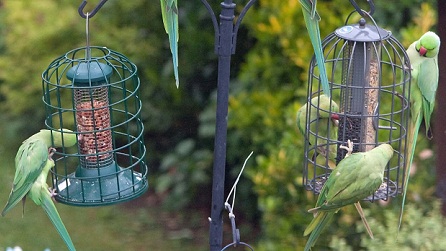
Hannah Peck from Imperial College is working on a colourful, noisy visitor to London - the rose-ringed parakeet. They're originally from India and although nobody's quite sure how they first came to British shores they clearly like it here because there are now tens of thousands of them living in London and surrounding counties, where they're a common sight on people's bird tables. Hannah tells Adam about her research into the effects of the parakeets' success on our indigenous bird species.
Now, you know how a dab of aftershave or perfume can be rather attractive but too much of it can be absolutely overpowering? Well, the same thing can happen in insects. Adam meets Dr. Sophie Mowles from Nottingham University who's at the conference to report on her research into the sex lives of wasps. She's been looking at a species of parasitoid wasp where the female uses a particular pheromone as an aphrodisiac. But if she's already mated and is approached by an over-amorous male she can increase the quantities and use the same pheromone as an 'anti-aphrodisiac'.
Links
New website

Listen online
A new look for BBC Radio online: listen live on your computer - and now on your smartphone.


