


A Science Policy for Wales
Last updated: 03 April 2012
This week Adam Walton examines the future of Welsh science as he and a panel of guests discuss the Welsh Government's recently released policy document Science for Wales.
Broadcast Tuesday 3rd April at 7pm
Listen to the latest programme online
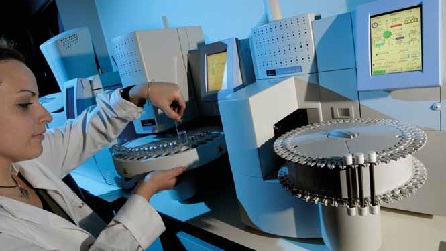
In scientific research Wales is currently punching below its weight. About 5% of the UK population live in Wales, yet the nation attracts just 3.3% of Research Council funding. Scotland, on the other hand, with 8% of the population, manages to attract 13% of the funding.
The Welsh Government's newly-published science policy aims to overcome this academic and funding shortfall and put Wales at the forefront of specific areas of science. At the heart of the new policy is an initiative called 'Sêr Cymru' (or 'Stars Wales') which identifies three of our strongest areas of scientific research and which aims to attract global stars in those disciplines to come and work in Wales. Funding of up to £50 million will be made available for National Research Networks and new academic 'stars' in:
• Life sciences and health
• Low carbon, energy and environment
• Advanced engineering and materials
In this week's Science Café Adam asks if the Government's ambitions for white hot research and a cast of superstar scientists can make Welsh science burn brighter and explores what the new science policy will mean for Welsh universities, businesses and for Wales' reputation internationally. He's joined by a panel of guests who've either been involved in devising the policy or will play a key role in making it happen:
- Prof. John Harries is the Welsh Government's Chief Scientific Advisor and Chair of the Science Advisory Council for Wales which produced the new science policy;
- Sir John Cadogan is inaugural President of the Learned Society of Wales;
- Prof. David Shepherd is Pro-Vice Chancellor at Bangor University, specialising in Research and Enterprise;
- Prof. Phil Jones is Chair of the Low Carbon Research Institute, a collaboration of university departments researching energy and low carbon technologies.
Links
New website

Listen online
A new look for BBC Radio online: listen live on your computer - and now on your smartphone.


