


The Moon (Repeat)
Last updated: 05 February 2012
Another chance to hear this programme about our nearest neighbour in space. The Moon with its constantly changing face physically affects the Earth, producing the daily tides in our oceans but there's a more bewitching fascination which has endured down the centuries. In this week's Science Cafe, Adam asks why we're still fascinated by the Moon, what we've learnt from the rocks which were brought back by the Apollo missions and what we're still discovering about the minerals and water lurking in the lunar shadows
Broadcast Sunday 5th February at 6.30am
Listen to the latest programme online
Adam is joined by Dr. Margaret Wood, Director of GeoMon, the Anglesey Geopark. She remembers the night of the first moon landing very well - it also happened to be the night she was giving birth to her first child, Richard. She recalls how the doctor seemed a lot more interested in watching the moon landing on TV! However, she soon found herself playing her own part in the moon landing story. Using the University of Manchester's mass spectrometer, she was involved in analysing the rocks which were brought back by the Apollo missions. The team found that the proportions of chemical elements in the rocks were quite different from what they'd expected.
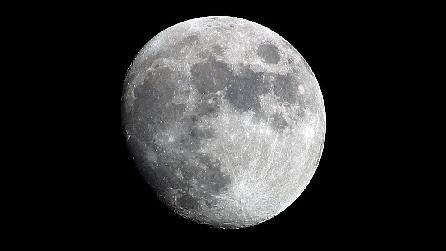
For both amateur and professional astronomers, our nearest neighbour is an obvious place to point their telescopes. Science Cafe reporter Tracy Cardwell meets members of the North Wales Astronomy Society and discovered that you can see plenty of detail, including craters, ravines and mountains, even with pretty basic equipment. Different details are revealed by different phases of the Moon, but the advice from the Society is that the First Quarter Moon is the very best time to observe.
Dr. Tony Cook from the Solar System Physics Group at Aberystwyth University also remembers watching the first moon landing. His particular interest is impact flashes, which happen whenever a meteorite slams into the Moon. It's a very common occurrence, happening every few days and usually creating a crater 5 - 10 metres across. He's also witnessed transient lunar phenomena, or TLPs, which are brief bursts of light. Scientists still aren't certain what these are - they could be the venting of ancient volcanic gases or they might be caused by charged particles.
Tony also talks about the importance of understanding the geology and chemistry of the Moon - especially if we're going to establish a permanent base there - and he tells Adam about Moon Zoo, a website where members of the public are asked to measure the diameter of some of the millions of craters on the Moon and help work out its age.
Links
New website

Listen online
A new look for BBC Radio online: listen live on your computer - and now on your smartphone.


