


National Astronomy Meeting 2011
Last updated: 19 April 2011
This week's Science Cafe comes live from Llandudno for the annual gathering of astronomers and space scientists from the UK and beyond: the National Astronomy Meeting 2011.
Broadcast Tuesday 19th April at 7pm
Listen to the latest programme online
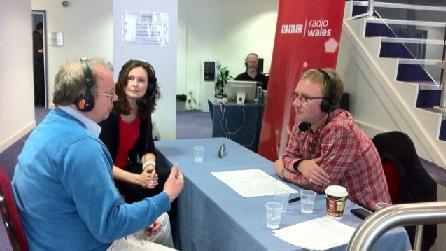
The National Astronomy Meeting, organised by the Royal Astronomical Society, is one of the highlights of the scientific calendar. Astronomers and space scientists reveal their latest research, meet the public and generally let their hair down. Between 17th and 20th April, NAM 2011 is taking place at Venue Cymru in Llandudno and the Science Cafe is there too.
Adam's first guests are astronomer Martin Lunn and historian Dr. Lila Rakoczy who are at the Meeting to put forward their idea that the supernova Cassiopeia A exploded around the year 1630, forty years earlier than most astronomers believe. If that's the case, then it's a good candidate for being 'King Charles Star', a star so bright that it was visible at noon and was an important piece of propaganda at the time of the English Civil War and the Restoration.
We talk to Dr. Jane Greaves of St. Andrew's University about her studies of Pluto's fluctuating atmosphere. Pluto's 248 year orbit is elliptical and that means that at certain times it's a lot closer to the Sun than at others. When it's closer the atmosphere warms up and becomes a gas. When it's further away the atmosphere collapses into ice - an extreme form of climate change.
Adam is also joined by solar scientist Dr. Lucie Green and space weather expert Dr. Mike Hapgood. They're talking about coronal mass ejections, huge bursts of radiation from the Sun. Earth's magnetic field protects us from the worst effects of these CMEs but they can still cause major disruption to satellites and electricity networks.
Sheffield University postgraduate students Chris Rose and Alex Baker came up with the bright idea of filming Earth from space on a shoestring budget. For just £350 they attached two camcorders and a GPS to a weather balloon and launched it 37 kilometres up to the edge of the atmosphere. Adam talks to Chris and Alex about their amazing pictures of the inky blackness of space and the curvature of the Earth.
Finally, Wales' Space Ambassador Dr. Paul Roche and Dr. Edward Gomez from the Las Cumbres Global Telescope Network join Adam to give their own personal round-up of the best events at NAM 2011.
Links
New website

Listen online
A new look for BBC Radio online: listen live on your computer - and now on your smartphone.


