


Review of the Year
Last updated: 21 December 2010
In this week's Science Cafe Adam Walton looks back over a year in science and picks his highlights.
Broadcast Tuesday 21st December at 7 pm.Listen to the latest programme online
It's been a busy twelve months at the Science Cafe so this week Adam takes the opportunity to look back over a year when a volcano grounded thousands of aircraft, one of the biggest oil spills in history threatened to destroy the Gulf of Mexico's ecology and economy and the Large Hadron Collider started doing some seriously interesting physics.
- One of the biggest stories of the year was the oil spill from the Deepwater Horizon rig in the gulf of Mexico. Eleven workers died in the initial explosion and as engineers fought to stop 53000 barrels of crude oil a day gushing from the wellhead, BP became the most unpopular company in America. As TV screens were filled with images of seabirds smothered in oil, Adam considered the long-term effects of oil spills by looking back to the Sea Empress incident off Pembrokeshire in February 1996 with marine ecologist Ian Horsfall from Swansea University and environmental consultant Jon Moore;
- It was ironic that the major environmental catastrophe of the Deepwater Horizon oil spill took place during the United Nations International Year of Biodiversity. Science Cafe kicked off the Year by examining some of the key indicators of biodiversity in Wales with Neil Hockley, an environmental economist from Bangor University. In July we returned to the subject when Adam discovered the biodiversity on his doorstep - or at least the local park - with Emma Broad, Wrexham's Biodiversity Officer;
- In August Wing Commander Andy Green unveiled the final design of Bloodhound SSC, the supercar which in 2012 he will pilot in an attempt to smash the land speed record and break the 1000 mph barrier. Staff at Swansea University's School of Engineering are closely involved in the project, using supercomputers to design the overall shape of the car. In September Adam paid a visit to the department to meet Dr. Ben Evans from the Bloodhound team and find out how computer modelling is far more sophisticated and flexible than a wind tunnel;
- This year saw the appointment of Wales' first Space Ambassador. And that's not as strange as it sounds - several Welsh universities and companies are closely involved in the space industry. His name is Dr. Paul Roche and he's an astronomer at Cardiff University and the University of Glamorgan. He joined Adam in August to discuss the challenges of promoting careers in space science to the next generation;
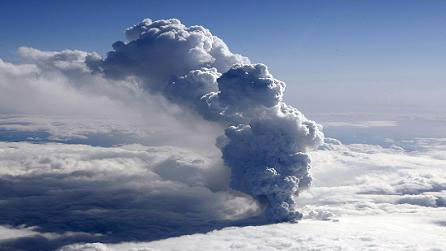
- Back in April an Icelandic volcano filled the skies with dust and emptied them of planes. When Eyjafjallajökull erupted, airlines lost millions of pounds a day and stranded travellers wondered if they'd ever get home. The only people who seemed to be pleased about the eruption were geologists. One of them was Dr. Richard Bevins from the National Museum of Wales and he popped into the Science Cafe studio to tell us about Wales' volcanic past;
- Probably the highlight of 2010 for the Science Cafe team was a visit to the largest, most complex machine ever built. The Large Hadron Collider is the atom-smasher which lies in a 27 kilometre circular tunnel under the Swiss-French border. It's designed to recreate what was happening a billionth of a second after the Big Bang and reveal the fundamental building blocks of the Universe. Adam spent a day with the Welshman who led the project to build the LHC: Dr. Lyn Evans, originally from Aberdare.
New website

Listen online
A new look for BBC Radio online: listen live on your computer - and now on your smartphone.


