

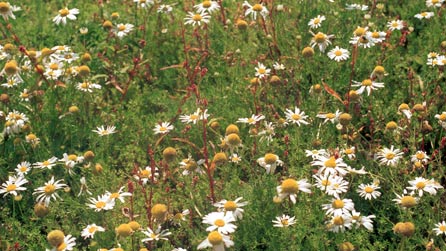
Q: Rowan Class at Templeton School are very interested in making our school grounds even more attractive to wildlife and giving us more places to see and study nature.
We have a path round the edge of our field which means we can have a good walk even when the field is too wet to use. There is a space between the path and the edge of the field on three sides. We were wondering if it would be a good idea to stop mowing this strip of grass and let it go wild? If you think it is, should we stop mowing altogether or should we strim at a certain time of the year? Should we try planting wild flower seeds and shrubs or just leave nature to take its course?
Also we have houses with gardens on two sides of the field. What can we tell the gardeners that might make them feel happier about having a weedy strip of ground next to their gardens? (Some of them have got quite solid fences but not all.)
Rowan Class, Templeton CP School
A: Dear Rowan Class,
I am so pleased to hear that you are thinking about making your school grounds more wildlife friendly. Your idea of leaving a strip of grass uncut is a fantastic example of how simply we can all do one thing for nature.
The long grass will create a more varied habitat, providing food and refuge for a whole range of animals. If you have a school pond, long grassy areas provide a good hunting ground and cover for frogs, toads and newts. Small mammals such as field voles feed on the grasses and may breed in areas of long tussocky grass. These creatures, in turn provide food for predators such as foxes and owls. Many butterfly and moth species lay their eggs in long grasses and spiders will have a fantastic place in which to catch their prey - the benefits to wildlife just go on and on!
If you do want to further improve the habitat, buying wildflower plugs will be more successful than sowing seeds in grass which is already established. Plugs are simply very young plants which can be bought cheaply and in bulk. There are lots of plant nurseries which specialise in traditional meadow flowers. The strip should be mown at the end of the summer, after any wildflowers have set seed. This will help the flowers to establish and reduce the dominance of the grasses. Ideally all the grass cuttings should be raked off the area - leaving them in a heap in a quiet corner can provide another valuable habitat for hibernating animals such as slow worms - but this may be tricky in a school!
I think it would be a good idea to write to your school neighbours and let them know how enthusiastic you are to make your school grounds better for local wildlife. Explain exactly what you are planning to do and that the area will be used for the pupils and teachers to study wildlife. Let them know that it will not be left to run wild but will be mown every year at the end of the summer in order to keep it controlled and manageable.
I very much hope you are able to create your wild area. You will be amazed at what you find!
See Also
Elsewhere on the web


Wildlife map of Wales

Explore Wales
Zoom in and discover wildlife in your area with our interactive map.


