 We spoke to Jeff Simpson, author of 'Top of the Pops: 1964-2002 - It’s Still Number One', about why it's taken so long for the beeb to write a TOTP book. We spoke to Jeff Simpson, author of 'Top of the Pops: 1964-2002 - It’s Still Number One', about why it's taken so long for the beeb to write a TOTP book.
"Reaching a milestone of 2000 editions would be pretty impressive for any programme - but when each of those shows has been packed with big name artists and all the favourite tunes of the moment, we can only be talking about Top of the Pops. The story of the show has included many fantastic high-points. The Christmas show of 1967 featured The Rolling Stones, the Monkees, The Bee Gees and The Beatles ‘All You Need Is Love’. Or how about John Lennon doing ‘Instant Karma’ live in the studio in 1970? Or Marc Bolan, Rod Stewart, Slade, ABBA and Blondie in the 70s. The 80s gave us Culture Club, Spandau Ballet, Duran Duran And we didn’t do too badly in the 90s as well - with the Spice Girls, Oasis, Blur and Pulp. 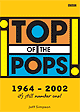 Nowadays, we can also enjoy spin-offs like Top of the Pops 2, plus CDs, the magazines, and, of course, the website. So it seems a little strange that until now, no-one’s got round to writing it all down in a book. But when you start to dig around in the history of the show, you start to realise why the BBC itself might be a little worried about exposing the story of Top of the Pops. It’s fair to say, Dear Old Auntie Beeb didn’t always get it right when it came to showcasing the weekly parade of popstars on TV. Until the modern era, the BBC used to be run by middle-class, white men over 50 who didn’t have a clue about why pop music was exciting. So when I finally convinced the BBC to let me do a book about the history of the show, it was on condition that I could be honest about the lows as well as the highs in the show’s history. Nowadays, we can also enjoy spin-offs like Top of the Pops 2, plus CDs, the magazines, and, of course, the website. So it seems a little strange that until now, no-one’s got round to writing it all down in a book. But when you start to dig around in the history of the show, you start to realise why the BBC itself might be a little worried about exposing the story of Top of the Pops. It’s fair to say, Dear Old Auntie Beeb didn’t always get it right when it came to showcasing the weekly parade of popstars on TV. Until the modern era, the BBC used to be run by middle-class, white men over 50 who didn’t have a clue about why pop music was exciting. So when I finally convinced the BBC to let me do a book about the history of the show, it was on condition that I could be honest about the lows as well as the highs in the show’s history.
In writing the book it was soon apparent that Top of the Pops is about much more than the music. For four decades it’s been the soundtrack to our lives, marking the arrival of each new generation, each new trend in music and fashion. And it’s been a fascinating window into television itself, and the workings of the BBC." |




