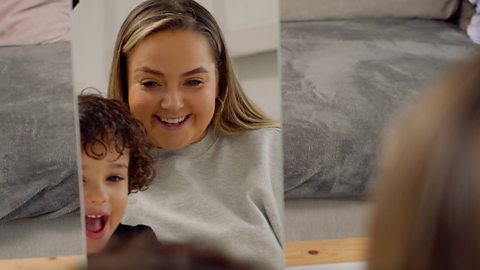
One of the most exciting parts of being a parent is discovering your child’s unique personality.
It can often be surprising how clear and defined their individuality is, even at a young age!
Here are our top tips for the best ways to celebrate what makes your child stand out…
Tip 1 - Watching and paying attention
The best way to understand your child is to observe their behaviour.
The more you watch what they're doing, the more you can follow their lead as they play. This is key to quicker learning - if you join them in what they're already interested in, they're more likely to pay attention to what you say as you talk to them about it.
It can also help with bonding with your child – showing an interest in their play and behaviour can help strengthen your attachment.

Tip 2 - Find ways to join in with their play
It's important to remember that not every child plays the same, and that's ok.
Every child plays in a way that’s best for them.
Play helps them to learn and explore the world, builds their confidence, and it can be a way to calm them down. You don’t need to ‘teach’ your child how to play, even if their style is different from other children.
There are lots of different ways to play, and they’re all valuable in building confidence and understanding.
Some children might enjoy repetition, while others might like putting things in order or positions. There are also six different 'styles' of play, but children may move back and forth between them and have different phases.
Tip 3 - Pay attention to their likes
Children at any ages will have likes, interests, and things they are better at.
As a parent, paying attention to these can be helpful , as the more they are able to do the things they enjoy, the more they'll be likely to concentrate and learn.
It can also be helpful when it comes to offering emotional support.
For example, if your child is stressed and they enjoy colouring, this can be a simple way to get them to calm down.
This will support them as they start to understand their emotions, and the things that will relax them, as well as the fact that you as parents want to help them.
Neurodiversity
It can be difficult to know if your child is neurodivergent from their behaviour in early years. You may have suspicions, based on the way they play.
Neurodivergence can mean that your child might need extra support. However, a lot of children play a little differently, communicate a little differently and may go through phases of behaving in certain ways.
If you think your child may be neurodivergent, your GP or health visitor will be able to provide support.