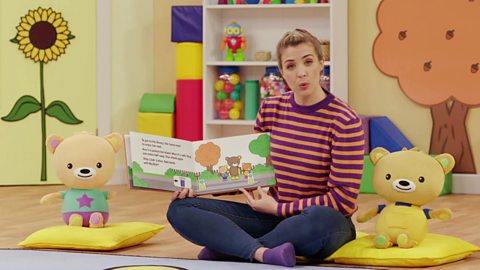
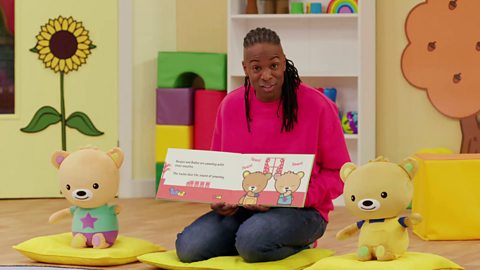
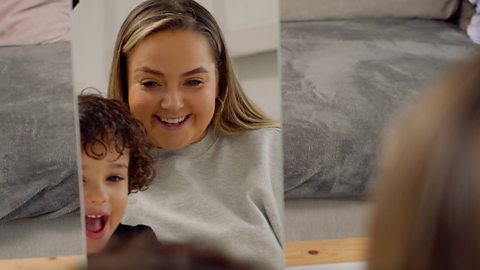
Come and join us for storytime at the Toddler Club. This story is all about going on a nature hunt.
You don’t always need a book for storytime. You can make up your own adventure as you go.
In the film below, Nigel Clarke and our families put on their wellies, splash in a puddle, tiptoe past sleeping bunnies and much more! Why not join in with them at home? Or make up your own adventure?
First, before we go on the nature hunt we have to put on our wellies. One welly and then we're going to put on another welly. That's it.
I already put mine on
You've got yours on good girl.
Let's go on our nature hunt. Should we pretend to splash in a muddy puddle? Is everyone ready? Here we go. One, two, three, splash.
Splash!
Let's do it one more time. Ready? One, two, three! Splash.
Splash!
Wow, lots of fun splashing in a muddy puddle. Now we have found a caterpillar. And the caterpillar is wiggling. Wiggle, wiggle, wiggle, wiggle. Should we all pretend to be wiggly caterpillars? Wiggle, wiggle lots of wiggly caterpillars.
We have seen some sleeping bunnies. Come on, let's pretend to tiptoe past the sleeping bunnies. Ready? Tip toe, tip toe, well done.
I think the sleeping bunnies are still asleep.
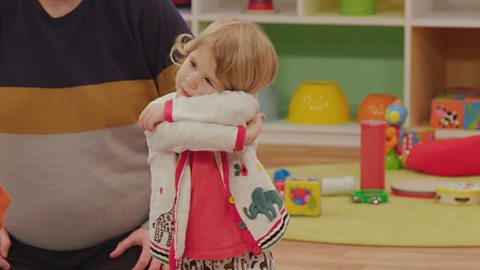
Okay, now we have seen a big tall tree. Can you stretch your arms around the tree like this and give it a big hug, oh great hugging everyone. That was so good.
What a fantastic nature walk.
Here are some top tips for setting up your own sensory story, like Nigel, at home.
Everyday adventures
Even stories about the wildest adventures can help your child learn about everyday routines, like getting dressed or getting ready to leave the house.
In our video, Nigel encourages the toddlers and their families to put on their wellies.
If you try this at home, repeat the main word and encourage your child to act it out. This will help them link the words with the action.
Build anticipation
Whether your adventure includes splashing in a muddy puddle or running away from a scary monster, try to build anticipation.
Announce what is about to happen in your story, and then count to three or say, “ready, steady…go”!
This gives your child a chance to work out what action they need to do, and process your words in their head.
It’s also a great trick for keeping them listening and engaged with your story the whole way through.
Testing motor skills
Encouraging your child to move differently for different characters in the story can help their coordination and motor skills.
Walking on tiptoes or wiggling your whole body, as the toddlers do in our story, encourages kids to use different muscles that they don’t move as often.
Practising and improving motor skills helps children become more independent.
Being loud and quiet
Storytime is a fantastic opportunity to teach toddlers about loud and quiet voices.
Use whispers and shouts in your story when appropriate. It’s great for keeping toddlers interested in the story but also for helping them understand when to use outdoor and indoor voices.
Why not ask them to copy your noise level to help them practise?
Want to find out more about all the possibilities of sharing stories with your child? Check out speech and language therapist Francesca’s top tips for making the most of storytime.
Want more? You can watch the full series of The Toddler Club on BBC iPlayer right now!