Conception to mass creation
Handwriting – one of mankind’s greatest inventions – has quite literally written the future by allowing us to pass on ideas from one generation to the next. Today it's hard to imagine how society could have advanced without it.
On paper it doesn’t sound as if writing has come all that far from its primitive beginnings, but the tools we have used have changed considerably and today’s high tech tablets are completely different to the stone slabs of the ancient world.
8000 B.C.
Knots, notches and symbols
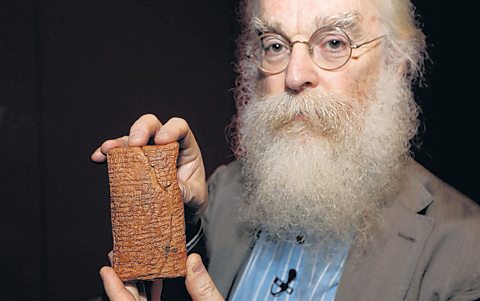
Tying knots in string and making notches in bone to record information can be dated back to early Neolithic man.
Around 8000BC the Azilians in southern France had begun painting symbols of squiggles, stripes and spots onto stone. By 5500BC the Vincas – which was also known as the Danube Valley civilisation – had created 210 symbols which they cut into wet clay. These symbols pre-date writing by over 1,000 years and are arguably the earliest form of writing ever found.
3000 B.C.
Cuneiform
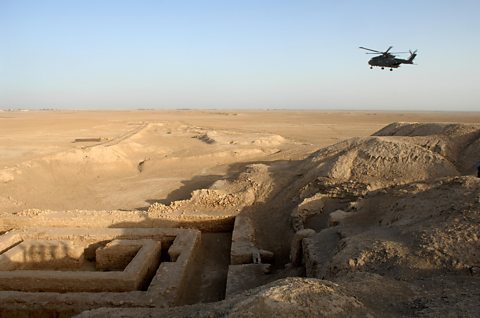
Influenced by the Vinca culture, in around 3000BC the Sumerians of Mesopotamia began carving pictographs in clay.
It was in Uruk, the first true city in the world, that scribes began to recognise that drawing realistic images took a long time and so came up with a standardised set of marks, each denoting a given object. The system took its name, cuneiform – meaning wedge-shaped – which were made by means of a blunt reed for a stylus.
2500 B.C.
Papyrus
Often the instruments used to inscribe the marks of cuneiform were made from papyrus reeds.
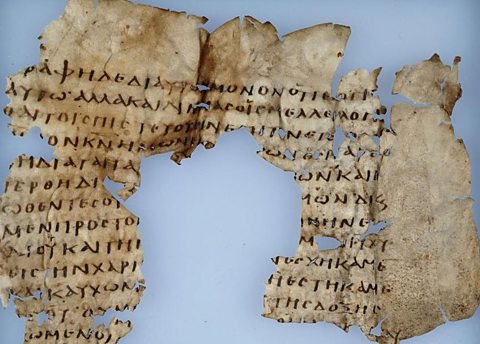
In ancient Egypt they started to use reed pens to write on papyrus, a paper like material made from the pith of the eponymous plant. The sheets of papyrus could be joined together and rolled into a scroll, creating a primitive type of book. It’s believed that much of the New Testament was written on these papyrus scrolls. The English word 'paper' is derived from the Greek word papuros and the Latin word papyrus.
6th Century
Quills
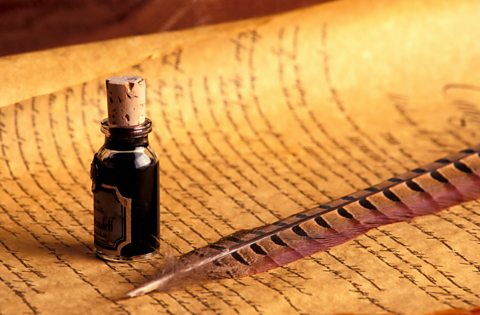
From the 6th to the 19th Century, quills replaced reed pens in the Western world as they allowed for much finer strokes on animal hide.
The best quills were made from goose, swan or, later, turkey feathers and all are graded by the order in which they are fixed in the wing – the expert calligrapher would use the first feather. Quills were cured to harden them for use. This involved exposing them to hot ash or water before pressing them into shape.

1795
Pencils
The modern pencil was developed in 1795 by Nicolas-Jacques Conté who created rods by mixing powdered graphite with clay, then fired them in a kiln.
The hardness of the graphite rods could be changed by adjusting the ratio with clay. Sticks of sawn graphite had previously been used throughout England for a number of years. Referring to the middle of a pencil as lead can be traced to the 16th Century, when a graphite deposit in the Lake District was mistaken for the substance.
1868
Typewriters
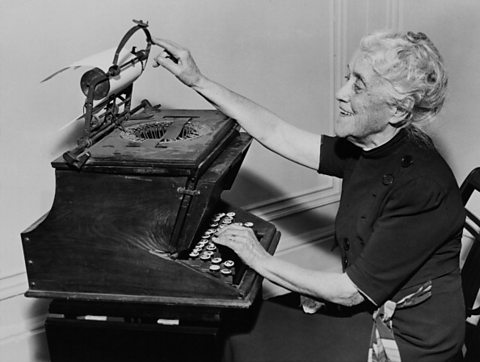
After a number of earlier incarnations, the first commercially viable typewriter was invented in 1868.
Conceived by Americans Christopher Latham Sholes, Carlos Glidden and Samuel W Soule, the patent was purchased by Densmore and Yost, who work with E Remington & Sons to commercialise the machine. The Remington typewriter was first produced in 1873 and, due to the machine’s success, its QWERTY keyboard was gradually adopted by other manufacturers.
1888
Ballpoint pens
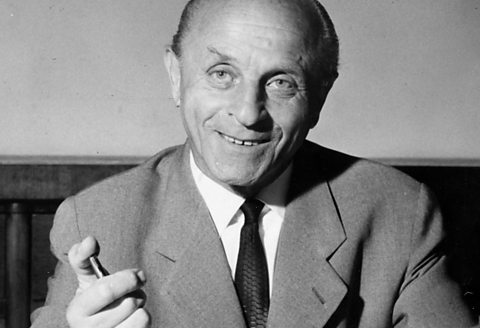
The ballpoint pen was first invented in 1888 by American John J Loud, but his invention was never commercialised and the patent lapsed.
This missed opportunity allowed Hungarians László and György Bíró to file their own design in 1938. The Jewish brothers set up shop in Argentina and their pens soon caught the eye of Marcel Bich, who bought the patent in 1950. Bich’s sales slowed until a campaign heralding the pen that "writes the first time, every time!", and a simple rebrand, helped Bic become a global brand.
1964
Word processors
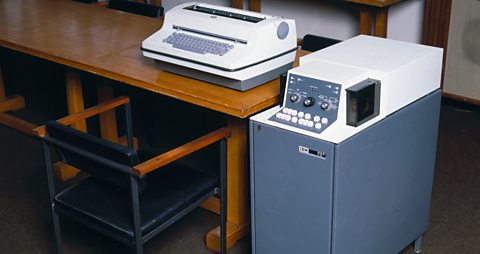
The term 'word processing' was coined by IBM in 1964 to market the MT/ST (magnetic tape/selectric typewriter).
More than just a typewriter, the machine used magnetic tape that enabled editing without having to retype the whole text. Information stored on the tape could be amended, automatically retyped and reprinted as many times as was needed. The tape could then be erased and reused, a development that laid the foundations for word processing as we know it today.
2007
Mobile tech
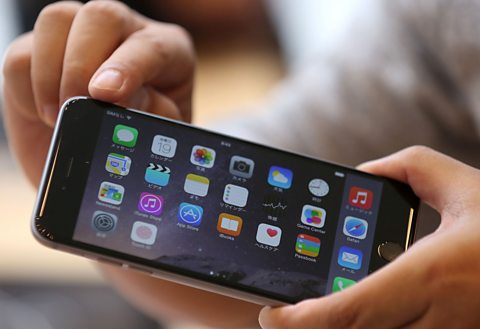
When Apple released the iPhone on 29 June 2007, they set in motion a whole series of changes to the way we communicate.
With many people now carrying a computer in their pocket, writing has become more instantaneous. Short, sharp interactions that mirror speech more than they do 'writing' are now widespread. And, with more people than ever communication via images and emojis, is how we define 'writing' changing?

2015
Finland phase out teaching cursive handwriting
In 2015 the Finnish government announced a new policy phasing out teaching cursive handwriting in favour of keyboard skills.
With texting and typing taking over as the primary means of communication, Finnish officials state that handwriting is no longer as valuable to kids. Minna Harmanen, who sits on Finland's National Board of Education says: "I believe children don’t have enough time to become speedy at it." Finland is one of the first countries to make the move, but how much longer before other nations follow?
