Compelling evidence
Our right to a fair trial, which underpins criminal law in the United Kingdom, the USA and many other nations, can be traced back to Magna Carta in 1215.
The Great Charter defined a person's right not to be imprisoned 'but by the lawful judgment of his peers'. Down the years our legal rights have continued to evolve, and some remarkable events have helped shape the law as it stands today.
1215
Trial by ordeal
Before Magna Carta a barbaric system of justice held sway in Britain and across much of Europe.
Between the ninth and 13th centuries a person's guilt or innocence was determined by trial by fire or water. Suspects were burnt with hot metal, or else bound and thrown into a pool, and it was left to God to spare the innocent. Though discredited now, trial by ordeal was considered highly effective in this superstitious era as most guilty criminals preferred to confess and so avoid trial. The practice, overseen by the church, was banned by Pope Innocent III in 1215.
Harry Potter explains the method behind trial by ordeal. Clip from The Strange Case of the Law.
1640
Justice on the rack
Until the mid-17th Century someone accused of a crime could find themselves facing another terrifying ordeal: torture.
In the century after 1540, 81 torture warrants were issued in England. To extract information, criminal suspects were suspended from manacles or stretched on the notorious rack. Things changed after the trial of John Archer in May 1640. Accused of high treason after his arrest during a riot, Archer, a glove-maker, was tortured on the rack. But his torturers learned nothing and his was the last recorded warrant for judicial torture.
Harry Potter describes the last recorded use of judicial torture. Clip from The Strange Case of the Law.
1670
'A verdict or you shall starve'
We take it for granted today that a jury should be left to settle on a verdict of its own choosing in its own time. But this wasn't always the case.
In 1670, as the state clamped down on non-conformist religions, one plucky jury refused to deliver the guilty verdict expected of it by a judge. The jury in the trial of Quakers William Penn and William Mead was promptly locked up without food or water in England's worst jail to reconsider its not guilty verdict. After juror Edward Bushel, in his prison cell, sought a writ of habeas corpus from Chief Justice Sir John Vaughan, a ruling was made which safeguarded the future independence of juries.
How the trial of William Penn, founder of Pennsylvania, led to jury independence. Clip from The Strange Case of the Law.
1896
A case of mistaken identity
The strange case of a Norwegian shipbroker accused of a string of swindles on women led to another milestone in criminal law.
Despite maintaining his innocence Adolf Beck was twice tried at the Old Bailey and convicted of fraud, in 1896 and 1904. On each occasion he was visually identified by his alleged victims. After five years in prison it took, among other things, proof that he was circumcised, and had been in Peru at the time of some the crimes, before his innocence was finally established and a pardon issued. The case led to the establishment of the Court of Criminal Appeal.
Harry Potter on the unfortunate Adolf Beck. Clip from The Strange Case of the Law.
1907
Taking the stand
It was unheard of for a defence barrister to put his client into the witness box until one brilliant counsel took a daring gamble in December 1907.
Defendants had enjoyed the legal right to give evidence on oath since 1898, but it was considered ill-advised or reckless to let them do so. With his client Robert Wood facing a death sentence if convicted of the grisly murder of Camden Town prostitute Emily Dimmock, Edward Marshall Hall KC decided to fly in the face of convention. Wood, an artist, charmed the jury from the stand and was duly acquitted. Many more defendants would follow him into the dock, if not always with the same success.
The legend of Sir Edward Marshall Hall. Clip from The Strange Case of the Law.
1920
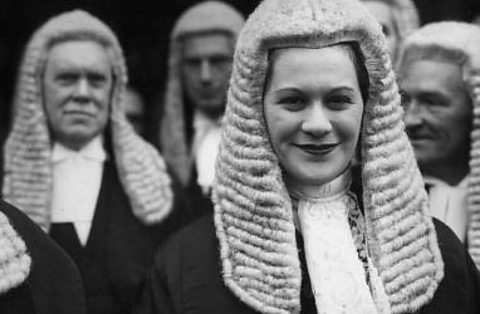
Ladies of the jury
With the exception of the accused, the key roles in the criminal justice system were the sole preserve of men until after the end of World War One.
The first female jurors were sworn in at Bristol Quarter Sessions on 29 July 1920, where they heard evidence in the case against William Henry Ayton, 52, who was accused of stealing parcels at Weston-super-Mare station. In 1949 Rose Heilbron and Helena Normanton became the UK's first female barristers, and in 1972 Dame Rose went on to become the first female judge to sit at the Old Bailey.
1935
Presumed innocent
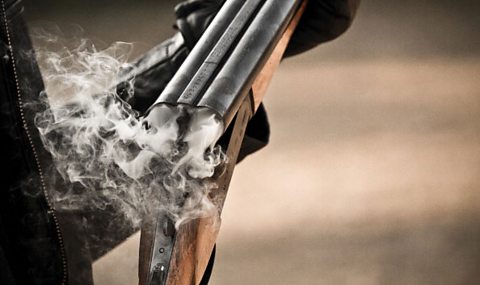
When Reginald Woolmington sawed the barrel off his shotgun and killed his wife in November 1934, he had no idea it would end up shaping legal history.
At his trial the following year the 21-year-old Dorset farm labourer claimed the gun had gone off by mistake and he'd had no intention of hurting her. When the judge ruled that it fell on the defendant to prove the shooting was accidental, the jury found Woolmington guilty and he was sentenced to death. Three days before he was due to hang, the House of Lords ruled that defendants should be considered innocent until proven guilty, and Woolmington walked free.
2007
The World's End murder trial
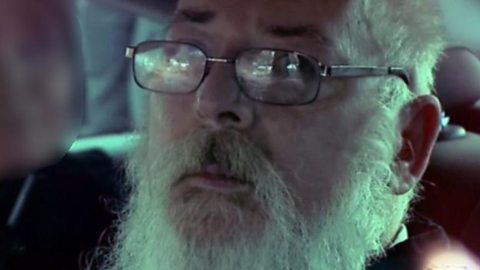
The 2007 acquittal of Angus Sinclair, later revealed as a serial killer, sparked a profound change in Scotland's judicial system.
Sinclair was cleared of raping and killing two teenage girls after they left Edinburgh's World's End pub in October 1977. At the trial the prosecutor had failed to put vital forensic evidence before the jury, but by law Sinclair could not be tried twice for the same crime. The case led to legislation in 2011 which allowed this given 'compelling new evidence'. Sinclair was tried again in 2014, convicted and jailed. England and Wales ended double jeopardy in 2003, and Northern Ireland in 2005.
2014
Trial in secret
In 1923 Lord Chief Justice Hewart coined the phrase: 'Not only must justice be done; it must also be seen to be done.'
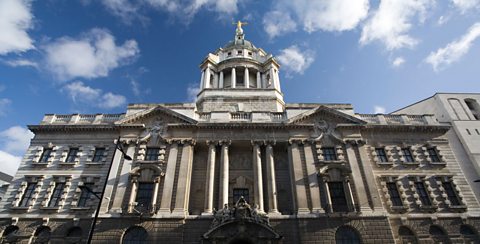
This key legal principle was challenged in 2014 when the Crown Prosecution Service sought to stage an Old Bailey trial in total secrecy. When this bid was overturned by the Court of Appeal the trial, of 26-year-old suspected London terrorist Erol Incedal, was held in partial secrecy. Some evidence was heard completely in secret. Incedal, a law student, was found guilty of possessing a bomb-making document. No trial has yet taken place in its entirety without public and media access.
