Fact Sheets Thirteen and Fourteen
Download here THE GARDENERS DIARY
WEEKS 13 and 14
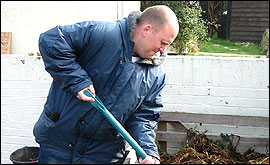
19th and 26th December 2004 THE DIARY FLOWER GARDEN JOBS: Dig your way into the next millennium. With Christmas now over and the new year now upon us why not lose some of those pounds from all that over-indulgence and take a trip into the garden. Why not unlock the shed and go out and complete such jobs as tidying up and cleaning pathways or continue to turn over areas that are ear-marked for planting schemes this New Year. Land dug now and left rough will have at least three months to weather. When forked in the spring the large lumps will fall easily into a fine tilth which is better all round. If you have a very heavy and sticky clay soil add some hop manure or Clay-breaker to give nature a helping hand in breaking the soil down and improving the structure.
FRUIT JOBS: Give fruit a winter wash.
Dust down the sprayer and make up a mixture of Winter Wash which is available from all good garden centres. This will help to kill off any insect eggs that have been laid on the tree to over-winter and hopefully keep the risk of infestation down to a minimum next season.
DISEASE PROBLEM: Black Leg on cuttings.
This disease affects a wide variety of plants which stem cuttings are used for propagation: Pelargoniums are just one to mention. The base of the cutting turns black due to the invasion of the Botrytis fungus. Once the disease has been identified remove the infected cutting as soon as possible. The cause is due to one of two factors; over watering or over compaction of the compost that has subsequently prevented proper drainage. Next time you take cuttings of this nature; make sure your planting medium is kept drier and if you covered the cuttings remember not to next time.
ORNAMENTAL JOBS: Transform Bleak Areas With Winter Colour.
After this weekend it'll be time to regain control of the wondrous wilderness outside the back door. Gardens can look so bleak and depressing at the turn of the New Year. You have the power and hopefully if you have the money left on the credit card you can transform the garden giving winter colour and improving the garden. The question to ask yourself is which plant to consider for which area. If your patio looks bleak then why not get some Camellia's and place them into containers. Camellia's prefer to grow in ericaceous compost and will grow in any shelter as long as it isn't east facing. If your borders look bleak then why not place some Hellebore's, winter flowering heather or Winter Viburnum to gain some extra colour. If you have a wall that needs something exciting happening to it then why not plant a winter flowering Jasmine or a Garrya elliptica (Tassel bush). One thing to consider if planting at this time of the year is ensure that there is absolutely no frost present in the soil as this can damage the plants. Also break up the soil as much as possible and add plenty of soil improver to give your plants a good start. So stop nursing your hangover and get out in the great outdoors and work off some of those extra calories gained over the festive period.
GREENHOUSE JOBS: Start sowing.
Its time to blow the dust of the propagator, give it a good clean and start sowing inside the greenhouse. There are various seeds that can be sown this month. Everything from half-hardy annuals like Petunia and Salvia through to hardy annuals like Sweet Peas and even hardy perennials like Aquilegia and Hollyhocks and not forgetting Lettuce and Onions can be sown from now onwards. The main thing to remember for good germination is to insure that the seedlings have some bottom heat. So for better germination insure that you use a heated propagator. Also make sure the chill is taken off the compost so bring in your bag of compost inside the night before as there is nothing more infuriating than having opened your packet of seed and finding the compost is frozen solid. Also read the packets before sowing as some seeds need a spell in the fridge before sowing and some may need no bottom heat at all. Sow thinly so it is easier to prick out once they are large enough to handle. LAWN CARE JOBS: Clean up tools. If you are fed up of having nothing to do then make a fleeting visit to the shed to make sure that all your turf culture tools are in good working order. Clean any that missed a good scrub the last time they were used. Machinery should be serviced now, as it will save you a job in the spring.
DISEASE PROBLEM: Check summer flowering bulbs.
Any over-wintering summer flowering bulbs that are in storage should be checked regularly for signs of mildew. If a bluish, grey mould is present then apply some green or yellow sulphur. This will hopefully control the spread. Make sure that they are quite free from damp and frost. Any badly diseased should be thrown immediately before the disease can spread to other bulbs in the same tray. The unaffected bulbs should be placed in some fresh saw dust, dusted with the sulphur and then scrutinised regularly for any further cases of the disease. Listen to The Gardener's Diary with Luke Ashmead on BBC Three Counties Radio every Sunday afternoon at 2.00pm Contact The Gardener's Diary Here BBC Three Counties Radio 98, 103.8, 95.5 and 104.5FM |