Fact Sheet One - Download here
THE GARDENERS DIARY
WEEK 1
3rd October 2004 How To Prepare Your Vegetable Plot Choose a fairly open area to give you access all the way round.
Clear area of all debris, both organic(leaves, grass cuttings etc) and non organic( bricks, rubble, wood etc).
Split up plot into sections. You can do this with bricks or wooden planks or pegs and string. If you plan to plant 4 different types of veg split the plot into four sections.
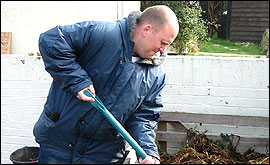
Dig a trench of the required length according to your plot size and place all the soil in a wheel barrow. The trench should be one spade length deep if you want to single dig or two spits of a spade if you want to double dig.
Once you have dug the trench half fill it with compost and then start another trench next to the first.
The soil that comes from the second trench should then be used to fill in the initial trench and you should carry on this process across the area you are preparing. Don't forget to turn the soil as you go.
If you're planning to plant next year your plot is now ready and can be left till late Jan early Feb. If your soil is particularly clumpy the frost and cold over the winter period will help break it down so leaving your plot fairly rough after it has been prepared can be a good thing.
If you are planning to plant winter crops now is a good time to get this done.(Tune in to next week's programme where you can hear exactly how to plant your winter crop).
THE DIARY Ornamental Garden - It's time for a clean up
All rubbish that will rot (leaves, dead plants etc) should be placed onto the compost heap and all coarse wooden and diseased material put into the incinerator or taken to the tip.
If using an incinerator or chiminea to burn your garden waste, let the fire go out of its own accord and then spread the cool ashes onto the garden (not the lawn) for a good source of potash for the coming year.
Plants that now have fully finished flowering such as summer flowering shrubs like Buddleia, Lavatera, Roses etc. should be trimmed half their height as to stop the winter rock. Anything still flowering can be left. Enjoy the flowers while you still have them.
It is now time to give your hedges the last trim. Try and give them a rounded top to avoid snow disrupting the shape of the hedge during the winter months.
Lawn - Repair edges
Broken edges can be badly damaged after the summer months. Some may think that unless they reshape their lawn that the damage is beyond repair. This is not true.
Just cut out a small square of turf that includes the damaged edge. Prise it up gently with a spade to free it and then simply turn the piece of turf round so the damaged area is inside the edge of the lawn. The damaged area can then be filled with top soil and a sprinkling of grass seed.
You can continue to cut your lawn but raise the cut on your mower.
Fruit & Veg
This week is an ideal opportunity to prepare and to plant all kinds of top fruit (apples, plums, pears etc) and soft fruit (gooseberries, raspberries etc). It is also the time to prepare your vegetable patch.
Follow the preparation steps in the 'How To' section above and in the coming weeks we will be showing you exactly what you need to do to plant your fruit and veg.
Listen to The Gardener's Diary with Luke Ashmead on BBC Three Counties Radio every Sunday afternoon at 2.00pm Contact The Gardener's Diary Here BBC Three Counties Radio 98, 103.8, 95.5 and 104.5FM |