| 24 September 2014 |

| |
| BBC Homepage | | |
| |||
| Contact Us | | |
Literature and WritingYou are in: Beds Herts and Bucks > Entertainment > Theatre, Arts and Culture > Literature and Writing > A novel approach to the environment 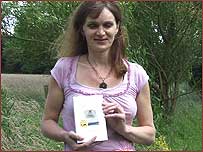 Chrissie Daines with her book A novel approach to the environmentKaty Lewis Find out more about a local author's creative approach to the environmental issues that we face and discovered some curious co-incidences along the way! We are bombarded every day by ‘do this’ and ‘don’t do that’ messages with regard to the environment that it would be very easy to get ‘greened out’! So it’s hardly surprising that a local author is trying a different approach. After becoming increasingly concerned about the impact of human behaviour on our planet, and the predicament of many of our creatures, Chrissie Daines wrote a novel about it all, to give a ‘voice to the Earth and the animal kingdom’, so that rather than being preached at, readers can enjoy a story, and hopefully think about the issues at the same time. The aim is to help inspire a shift in the way we relate to nature, and to raise funds for conservation programmes. 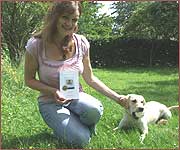 Written under the pen name of Billie Shears and set around Ware and East Hertfordshire, The Haymaker's Survey - Our Secret Inheritance, is an ambitious project which consists of both a novel and a Website and uses characters from the past and the present. It explores global environmental issues from a moral, ethical and spiritual perspective. But since finishing the book, she has discovered that world events to do with climate and the environment are matching things that happen in her story! ExploreHer story begins in the present when Ben Whittenbury takes a vow to become Nature’s Champion. His experiences are shared with several characters, each contemplating the implications of climate change. As the tale unfolds, different perspectives on environmental issues are explored, including fear, guilt, doubt, cynicism and hope, all against the backdrop of local myth, ghosts and magic. The story then goes back 200 years to the start of the industrial revolution and the discovery of a journal by the essayist, Charles Lamb. It reveals how visionary leaders and artists, people like William Wordsworth, Mary Shelley and William Blake, met to leave us a ‘Secret Inheritance’ as guidance on the eco-challenges ahead after reflecting upon the possible consequences of the industrial age on some future generation. Alongside the story is a Website which, amongst other things hosts a curious watch of current world events, which seem in some way to be linked to the story. Co-incidence or something deeper? Intrigued, I went to find out more from Chrissie, about why she embarked on this project and the strange things that have happened since! The book is called The Haymaker’s Survey, it’s a novel and a Website, a whole project, how did it come about?Chrissie: There’s an array of fantastic organisations and individuals campaigning, giving information and looking at solutions with regard to environmental issues, but somehow it’s not enough – despite these grand efforts, the pace of change is slow and patchy. I felt that we needed something more to re-engage people in a new way. People have been calling for a novel about climate change for a while. I decided to have a go. I began by thinking that I wanted to do something different, that made people think and look at the issues surrounding the environment in a different way. I then thought perhaps what we need to do is look back 200 years to people like William Wordsworth, William Wilberforce and William Turner etc and use people who had been inspirational in the past, who had shown leadership and character and helped to direct society in a different way. But while I wanted to use them as the foundation for the story, I also wanted to use people from the current time who have different perspectives on the issues around the environment. So basically I have included a whole family of people who are asking how we can respond to the challenges that the environment is throwing up to us. Some are cynical, some are apathetic, some are hopeful, some are challenging and others are looking for solutions. This is the Whittingbury family in the novel?Chrissie: Yes. They decide that they want to take a stand but in a different way, and in doing this they embark on a magical adventure which leads to the discovery of a journal from somebody called Charles Lamb, one of the lesser known Romantic poets. In this diary there are details of how famous people came together and decided, in their wisdom, to leave us a secret inheritance. That inheritance is a message to us, that we need to reflect on our relationship with nature. So the family in the story find a journal by Charles Lamb and in this journal they get messages about what we should be doing now to save the environment?Chrissie: Yes, but it’s guidance which allows people to reflect on our relationship with nature. It’s not pointing the finger, it’s saying ‘have you thought about things from a different perspective’? I don’t want to give too much away or it will spoil the story but you have to read it to understand.
There’s a metaphysical and spiritual aspect to it also which comes out through the story. People like Mary Shelley and William Blake had a kind of relationship with the unknown, they could sense things, and I wanted to build on that in the story. I’m a great believer in synchronicity in that if you throw a pebble into a pond the ripple spreads far. A lot that’s happened in the past has a great bearing on what happens now and what we do now has a great bearing on the future and I think a lot of that is wrapped up in the story. So these people who are living 200 years ago are looking at what might happen in 200 years time and giving a warning about what might happen to the world? And what they are warning might happen is actually happening at the moment?Chrissie: Exactly yes. People like William Wordsworth were deeply in love with nature. They valued it greatly and at the start of the industrial age were concerned about where all this would lead. Through the story they have an insight into what’s happening now. They look at it and say you need to respond in some way, which is what they do. So it is a piece of fiction, you haven’t actually found this journal, but it’s based on what people like the Romantic poets thought and what their work was about? Why is the book called ‘The Haymakers Survey’?Chrissie: All is revealed in the story, although it’s named, in part, after a painting from 1785 called the ‘Haymakers’ by the artist George Stubbs. I wanted to use art to help symbolise the challenges we face with the environment. The work somehow ‘grabbed me’ when I saw it on display a few years ago. I saw something unique within it and decided to use it as the foundation for the project. The Haymaker’s Survey is not written in chapters but as a series of questions – are those the survey questions?Chrissie: Yes, they are. The survey is a series of questions, and those questions emanate from the gathering of the famous people that we’ve talked about. It so happens that the experiences of the family in the current time match the questions as they unfold, so they decide to link their experiences to the questions. So the gathering of people (romantic poets) have come up with these questions and the family in the story are relating the questions to the current time? How did the novel develop in this way?Chrissie: The whole project is quite organic. I had a concern about nature and about protecting our rural environment so, to begin with, I started to write about nature and capture how it feels at the moment with the challenges that we have, and ask what the human angle of all of this is. I then looked beyond that to think about what the solutions are, beyond the information that’s given out by the array of organisations that are out there. I wanted something in the middle to say this is how it feels for us. Then I thought that maybe we need to look creatively at solutions rather than say let’s just switch off more lights or drive our cars less. I wanted to look at the whole thing in a holistic way and use some mechanism to allow for that to happen, so I thought it would be good to have quite an eclectic mix of questions that people can look at and think ‘yes that’s quite interesting’. So instead of just having a pamphlet saying ‘switch off the TV’, this is a more creative way of getting those messages across?Chrissie: Yes, I think people get fed up with people saying you should do this or that so if you get them to think about it in a different way it helps. Then it extended beyond there. I started looking at the news and thinking that a particular story linked to my story, so maybe there was something deeper going on. Maybe there is something about our planet that we’re not quite gelling with yet. I’m open minded about all of these things really, I just want to do something new and refreshing that can grab people and make them look at it and say let’s think about doing things slightly differently. The messages are there from page one, it’s not a subtle introduction, you really want to make sure that the message gets through I suppose?Chrissie: My whole reason for doing this is to give a voice to the earth and a voice to the animal kingdom. That’s been the real impetus for doing it and it would be wrong of me to shy away from bringing out some of the key things that are happening but I don’t want to point the finger – I’ve tried to show that these things link into our everyday lives and how they may impact in the future on our everyday lives. Tell us about interactive element?Chrissie: As well as the novel there’s an interactive Website where we follow up activities but part of that is in the story. The Whittingburys are steered towards monitoring world events linked to the questions in the survey and then from that they begin to see strange co-incidences or curious events that seem to vindicate the power of the survey and give it a deeper meaning. One of the things on the Website is the “Watch” which is quite curious. I started this in January 2007. It began by just monitoring world events linked to climate, animal populations etc, then beyond that I started to see different stories emerging that sat within my story itself. So what was happening in the world was linking to what you’d written?Chrissie: Yes – it was very, very strange. For example, one of the questions in the story is ‘Do you like surprises?’ I use art within the story to symbolise our relationship with nature and recently a work of art called ‘La Surprise’ was discovered in a stately home where they hadn’t appreciated its value. I thought it was quite interesting that this happened because ‘do you like surprises?’ is one of the questions in the survey and then this piece of art that people thought was lost was discovered. Other examples are that there have been animals born with hearts on their fur and in my project we use heart shapes to illustrate art love and nature which are the three underpinning themes to the story. I thought that this was quite interesting – is mother nature saying we need to love our planet more? One of these was found on a pig and Ben Whittenbury wants to restore a pig farm so there are lots of little co-incidences happening. There are about 200 that I’ve identified so far. One of the most interesting ones was that Mary Shelly is in the story. She wrote Frankenstein when there was what’s called a year without a summer and last year we had a year without a summer. I’m finding these all the time, they are still happening now. Could this just be pure co-incidence? Or do you think that you were in some way meant to write this book?!Chrissie: I really don’t know. I’m keeping an open mind on it! It’s fascinating really. It could just be that I’ve written a story and there are these co-incidences that happened. But is could be something deeper so I keep an open mind. It’s interesting to look at though?Chrissie: Yes it is and I hope that people enjoy looking at the co-incidences and making what they will of them. On balance, my view is that there is something more to earth than we can see and perhaps we are being alerted to something. There’s a lot of scepticism around climate change but the pace at which we’re using up the world’s resources worries me and I know it worries a lot of people. Maybe now is the time to reflect on things, maybe there’s something a bit subjective here that we can look at and say let’s stop and do things slightly differently. What else is on the Website?Chrissie: It gives a bit of background to the places where the story unfolds because it takes place in and around Ware and East Hertfordshire and includes some local myth and legend. We have the old Roman road which is now the A10, and the Murderous Pie-man of Ware. There’s also the Jack o’ Legs who was a big giant who used to roam the fields of Hertfordshire. The story also includes scenes from the Ware Dickensian evening, the Royston Cave (on the Herts/Cambs border) and St John’s Church at Widford. I’ve also got information about the key characters in the story from 200 years ago known as the Blakesware set. But beyond that I wanted to allow people to do the survey online. So people can actually do the survey in the book for themselves?Chrissie: Yes. When completing the survey online I would like people to reflect on what the question is actually saying and think about what this really means for their lifestyle. The more people that take part, the more we’re sending a message back to planet earth that says we do care and we are trying to reflect on how we can respond. So it’s getting people to think about the issues involved?Chrissie: Yes, and how they feel about the issues as well. A lot of this has to come from the heart really. That’s really been my driving force for it, to try and be creative and step outside of the boundaries to what’s normally done on these kinds of projects. I’m already involved in a sequel because there are some unanswered questions within the current story. This will be part of a trilogy and the idea is to keep this watch of world events going so the way we react to the story will influence the sequel and the third book, so in a way we can all shape its development. I plan to release the sequel in 2010 with the final book issuing 2012. Why have you used the author name Billie Shears?Chrissie: One of the characters is a strong Beatles fan and I wanted to use something that was particularly British that people could look to for creative influence. I thought the Beatles in the modern era would be a good example to use. It’s a figurehead that would say that we’re British, this is the creativity that we’re capable of achieving to address the challenges that we’ve got. So it’s a book for the people, by the people, using our creative influences and abilities to look at solutions to these big issues. What’s the ultimate aim of the book? You want to raise money don’t you?Chrissie: I don’t have any real expectations, but I guess what I would like to achieve is to make people look at nature in a different light and also to raise funds for conservation projects. I’ve written to a range of organisations that are interested in the environment to try and get them involved in the project in some way and hopefully we can get sufficient sales because 30 per cent of the proceeds will be going to these projects. If the project takes-off, there’s a potential to raise millions for conservation and sustainable living projects – this is my dream! And you’ve gone down the self-publishing route. Why have you done that?Chrissie: It’s very, very difficult for new authors to break through. Because of the nature of my project, the fact that it’s not your archetypal novel but stepping outside the boundaries, I decided to be brave and push this through. There were lots of people who really liked the story and felt that it had some potential and momentum and so I thought let’s go with it and see what happens. If people do buy into it and it becomes popular then maybe that’s a stepping stone for me to go more mainstream. How many copies are in the first print run?Chrissie: Just 2,100 and that’s a particular number that I’ve chosen because it’s relevant to the story! Some people might say that as the novel’s all about climate change and saving resources, is printing 2,100 copies of 500 pages helping to save the planet?Chrissie: It’s a fair question and it’s something I’ve reflected on myself?! It’s partly why I’ve limited the copies at this point, but it’s produced from a sustainable resource with the relevant certificates. I’m looking at doing an e-book and so on but I think that whatever we do in life, we all have a carbon footprint of some kind so it’s about managing that. But if people like the book they can share it with friends and it’s available in Ware library as well so it’s about shared resource in a sense. And at the end of the day we can always recycle the book! What’s been the reaction so far?Chrissie: Some people think it’s quite a novel approach, if you’ll pardon the pun, to looking at and presenting an idea. And some people may think it’s a bit too complicated, but once you get into it a lot of people have said to me it’s really quite curious and interesting and a different way of presenting the ideas. People have been enjoying reading the story, it’s early days yet but the feedback has generally been very positive which I’m very encouraged about and it has opened people’s eyes a bit to some of the challenges that we face and the potential consequences and how we relate to the environment at the moment. I’m very encouraged. last updated: 04/08/2008 at 15:07 You are in: Beds Herts and Bucks > Entertainment > Theatre, Arts and Culture > Literature and Writing > A novel approach to the environment  Rhythms of the World! |
| | About the BBC | Help | Terms of Use | Privacy & Cookies Policy |