 | 24 September 2014 |

| |
| BBC Homepage | | |
| |||
| Contact Us | | |
Nature FeaturesYou are in: Beds Herts and Bucks > Nature > Nature Features > It’s official - it's wild in Beds, Herts and Bucks! 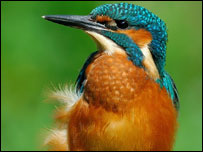 It’s official - it's wild in Beds, Herts and Bucks!Kingfishers, terrapins, grass snakes, and bats are being spotted by people living across the Three Counties. British Waterways received an impressive one hundred and forty six sightings as part of a recent survey. More than 300 Kingfishers were sighted by members of the public on canals and rivers managed by British Waterways in the National Waterway Wildlife Survey. They were the fourth most widely spotted birds after mallards, swans and herons. But there were also some sightings of rarer species including water voles, otters and bats, and even some seals and a massive North American alligator snapping turtle! 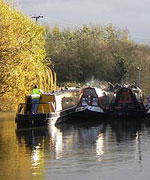 Ecologists for the waterways organisation believe that the wet summer and warm autumn confused a number of species, with common darter dragonflies being spotted later in the year than normal and two southern insects - the saw fly and gristled skipper butterfly - seen in the Midlands for the first time. In all more than 4,000 sightings of birds, insects and animals were recorded by the public for the survey. British Waterways, which is responsible for some 2,200 miles of canals and rivers in Britain, said there were a number of kingfisher habitat improvements planned, including installation of nesting boxes, posts and tunnels in a number of locations such as the Regent's Canal in London and the Grand Union Canal at Leighton Buzzard, Bedfordshire. Hannah Graves, an Ecologist for South East Waterways, told the BBC: “We’re really pleased with the results of the survey; there are some excellent signs of wildlife thriving on the waterways” said Hannah. 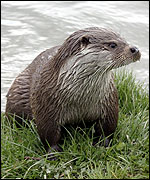 “To find such species as otters, bats and kingfishers is really good news. These species are all fairly near the top of their food chain and depend on having a good quality habitat available for their survival, so if we’re getting good signs of these species being around then it’s a really good indication that the rest of the ecosystem is healthy and there is plenty of food available.” And it’s not only the countryside where these creatures are making themselves at home. “Even in urban areas like the centre of Aylesbury you can see bats’ flying around at night - around dusk is a good time to spot wildlife. If you live near a waterway you may even be lucky enough to spot otters, they’re quite shy, and you’ll need to be very quiet – but they are there!” Hannah told us. To find out more, visit the British Waterways’ website: The BBC is not responsible for the content of external websites last updated: 28/02/2008 at 12:49 SEE ALSOYou are in: Beds Herts and Bucks > Nature > Nature Features > It’s official - it's wild in Beds, Herts and Bucks!     Walks Through Time where you live |
| | About the BBC | Help | Terms of Use | Privacy & Cookies Policy |
