| We That Are Left | Watford Palace Theatre 19 April - 5 May 2007 Box Office: 01923 225671 Gary Owen was inspired to write the piece after hearing a woman describe events in the summer of 1940 during a radio broadcast, in the small hours of the morning. Gary’s previous credits include The Drowned World (which won the 2002 George Devine Award) and Crazy Gary’s Mobile Disco. Gary was also the winner of the Arts Council England 2003 Meyer-Whitworth Award for new writing for the theatre. |
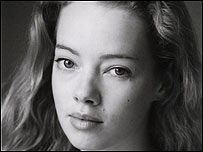
The Watford Palace Theatre’s spring season comes to a close with the premiere of Welsh author Gary Owen’s new play We That Are Left, a beautiful story of a love affair during the Battle of Britain and its effects 60 years on. Making her professional debut is AMY HALL, who spent much of her childhood sitting at the back of the main RSC theatre in Stratford while her mum worked on costumes. From there she decided she had to act but before that, and to fund her acting studies, she worked as a camera assistant on blockbuster films such as Batman Begins and Bridget Jones: The Edge of Reason. She told us all about her role and her life before it, but first explained what the play was about. Can you tell us about We Are That Are Left?Amy: It's two parallel stories which run continually through the play. One of them is based in the 1940s during World war II, then there's the modern side of it. They run in parallel and kind of feed off each other in some ways. I play a character called Ginger who is a gunner for the ATS. They weren't officially allowed to be gunners but she has this very difficult job of having to go and shoot at planes in the sky. So in one sense she's quite tough and she's quite cheeky and perky, but she's also riddled with anxieties and insecurities. Her fiance is fighting over in Dunkirk and then she meets a guy called Billy which is where the play kicks off. They are at a country dance in a village hall, he approaches her and a relationship begins. I don't want to give it all away though! The 1940s is basically about Ginger and Billy and their quiet moments in between the huge amounts of bombing. They snatch these moments and together they form a relationship which comes out of a need to connect to somebody and deal with this horrendous situation of the German invasion. Everybody at that time believed it was going to happen, so a lot of that fear which was an absolute reality for them, is so prevalent in the script. It's them dealing with the war and fear and a need of comfort and support. So that's the 1940 story, what about the modern day one?Amy: Again it's two actors and they play older characters who were in the war and how they are dealing with relationships and life from that period. There's a lot of reflection of the past and how they're dealing with the war and their memories. They are separate characters though - it's not Ginger and Billy 60 years later?Amy: They are separate but they are connected. There are some beautiful revelationary moments in it, which I don't know that I should really give away, but
there is a connection between the two stories. You go on a journey with these four characters and the connections start happening and you realise why there's two stories going on at once and that's a lovely moment. Thinking about your characters, do you think it's a tribute to people in that situation at that time?Amy: I wouldn't call it a tribute but what I've found and I think people watching it will feel to is that we owe that generation such a huge amount. I didn't realise how close it was to our future today being completely different. It certainly does evoke the history and period and make people think. I did history A level but I did Ancient History so I actually didn't know that much about it. This play has taught me an enormous amount, not only about the facts and figures and how close we were to being invaded, but about the people of the time and about what they went through which was huge. It's very easy to just pop on a poppy and that's it, but this play makes you stop and really think about these people. This is your first professional role, but you've been in the business for a while behind the scenes in film, so what came first - did you want to be an actor and started working in film or was it the other way round?Amy: I've always wanted to act. It's what I've always, always wanted to do. My mum was in costumes and when I was a kid I was kind of brought up around the RSC in Stratford so it's always kind of been there. My mother Sue was in wardrobe at the RSC for about ten years. She put all the blood and the mud on the clothes. I would arrive after school and she'd say go and watch a technical rehearsal and get out of my hair for an hour or two so I'd go and sit in the back of the theatre and that's where a lot of the love for it comes, from being around actors and wanting to be up there on that stage. I saw every production from when I was between 11-17 so it becomes a blur. I do remember David Tennant though - I remember being in the dressing room once and him running through in his underpants shrieking. He saw me and said 'oh hello'! But knowing my parents' friends who were out of work actors, they advised me correctly I think, to go and do a degree because it's such a crazy business. And also I think it's important for actors to have a good grounding in life because that's your material. You need to know all sorts of things so that you can bring it to your acting. So, I did that and then thought "OK - now I'll do what I want to do" and looked into doing an MA in acting. But the fees were rather astronomical so I thought I'd better get a job and earn some cash. I managed to get a job as a runner on Spooks for the BBC and did it free for a week and they asked me to stay and stay. Eventually they said they'd love to keep me but they hadn't got any money in the budget but gave me a job interview instead and it was for a camera assistant - and that's how it all started. I started doing camera and realised it was brilliant to be in the industry because in camera you're right there with all the actors. It escalated and I went from doing TV to film and had some incredible experiences and was privileged enough to work with some incredible actors. I worked on Bridget Jones 2 and Batman Begins, which were the last two before getting into drama school. It was great to learn the technique of acting for camera and also it's very important to know as an actor that it's not just you, there's a whole team of people behind you and an enormous amount of work that goes into it. Yes, you may have your picture on the poster at the end, but without every single one of those people who work 12 hour days, it wouldn't happen. I then got a place at the Drama Centre doing an MA in performance for two years and it's gone from there. You must have worked with some big stars in film?Amy: Oh yes, very many. Renee Zellweger was an absolute sweetheart and very grounded and I remember her helping me get soup from a big ladle into a little polystyrene cup! She sent me flowers when I got into drama school and that was lovely. I had spoken to her about it and she was very encouraging. She was a delight really - just lovely to work with. Things could also get quite bizarre. I did Batman for seven months and nearly every day I'd be standing next to Batman and he'd just be standing in costume waiting to go onto set and we'd be having a cup of tea. He'd have his full mask on and everything and he'd drink it through a straw. Weird but great times! What's your big ambition now?Amy: I kind of have two. A big ambition is of course to have a fantastic career and to keep working, but one of them would be to get onto the stage of the RSC because that would just be a marker - from having watched all the time to be up there doing it - and the other one would be to do a film with my old camera crew but I don't know if that would work. Maybe I'd be really distracted and they'd really mess me up. But those would be two things that would be markers of how far I'd come. Is it easier now your not working 12 hours a day, six days a week?Amy: It's just very different. when I was doing film work there was physical exhaustion but I never felt tired emotionally or mentally, whereas with this I have felt an exhaustion that was physical, emotional and mental but it was lovely. When I got home I thought this is the exhaustion that I need. You're thinking about it [the play] they whole time, it takes over, whereas in other jobs you do your job, go home and close the door. So it's a whole different bag - but I like it! |