| The Asian Earthquake | The number of people known to have died across south-east Asia in the aftermath of the most powerful earthquake in 40 years is now expected to rise to over 150,000. The epicentre of the earthquake was off the western island of Sumatra in Indonesia, striking at about 0100 GMT (0800 local time) on Boxing Day. Dozens of buildings were destroyed in the initial quake before a huge wall of water, up to 10m high in places, hit the provinces of Aceh and North Sumatra. Officials said Aceh was the worst hit area, which lies closest to the epicentre. In Sri Lanka, a wide stretch of the eastern coastline - from Jaffna in the north to the popular tourist beaches in the south - have been devastated, while in India, more than 2,000km (1,243 miles) of southern coast was swamped by tidal waves, including the states of Tamil Nadu - whose capital, Madras, was particularly badly hit - Andhra Pradesh, and Kerala, as well as the federally administered territory of Pondicherry. The western coast of southern Thailand has been badly affected, including Phuket and Phi Phi islands and the mainland resorts of Krabi and Phang Nga. High waves and floods inundated the Maldives and people are reported to have been swept away from beaches near the northern island of Penang in Malaysia. Waves also struck Somalia, Kenya, Burma, Mauritius, Reunion and the Seychelles. |
Duncan Ridgley, his wife and young family had just begun to start a new life in Sri Lanka when the disaster struck. Arriving at Gatwick Airport with just the beach clothes they were wearing when the Tsunami hit Sri Lanka, a relieved Duncan said: “I’ve just been through hell for a couple of days. It was a natural disaster and we were in it and we are so grateful to be alive and safe. “For so many people they have lost their friends and families – up to 20 members of a family – that’s a life-changing thing. “We are so grateful to you guys at Three Counties Radio for getting us out. My three kids are here and the people at Gatwick have got them clothes. It’s difficult to know how this will affect us but we are alive and well and thank you so much for your help.” | "We were really moved by the family’s plight and realised that there was no one else to help them get out " | | Stephen Rhodes, BBC Three Counties Radio |
BBC Three Counties presenter Stephen Rhodes first heard about the Ridgley family when he heard a distressed Duncan talk to BBC Five Live as the family waited in the dark on high ground for help on Boxing Day night. They were rescued by helicopter the next day and were staying in a flat in Colombo. Stephen pledged to get the family home after a moving interview on Tuesday. He talked to various authorities to arrange for the family to be flown back to Gatwick Airport – with just the beach clothes that they had on - no shoes, no money, no passports nor credit cards. Sasha, 12, the eldest of the three children, had almost lost her life after a plank of timber with a nail sticking out of it had caught in her foot as waves flooded into Arugam Bay. Both Sasha and Duncan required some medical attention. 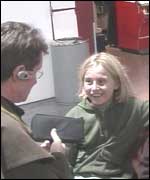 | | Stephen Rhodes interviews Sasha Ridgeley |
Mum Penny and Claudia, 8, and Angus, 7, have all been traumatized by both what happened to them and by what they saw around them. The family have gone to Duncan’s sister Verina’s home in Hampshire so that they can be fed, clothed and attended to by a doctor. Stephen Rhodes added: “We were really moved by the family’s plight and realised that there was no one else to help them get out – so the BBC consumer programme stepped in – and now they are safe after what’s been a harrowing ordeal for them all.” Listen to a Special Report on the Ridgley family plight using the links on the right.
|