Digital forms of communication are not simply substitutes for traditional methods. They have the power to enhance learning.
Teachers aren’t expected to be experts in all forms of communication. You should encourage learners to communicate their ideas in a variety of different ways with the young people taking the lead.
This involves encouraging learners to choose independently from the range of communication tools on offer, taking full advantage of the free software available to schools.
In Hwb, you can create a virtual “class”, add learners and create “discussions”, enabling whole-group online interactions.
Tools like this can overcome distances and connect young people with exciting new learning opportunities.
Different communication methods will help achieve different learning outcomes. For example, they might choose a vlog to broadcast their ideas, a podcast for personal expression, video calls for research and infographics for revision.
You can challenge learners to identify the tools that they think will be most useful in helping them achieve their communication goals.
There is significant scope for developing this digital competency during group projects. For example, when a class is collaboratively planning a virtual field trip to research a particular topic.
When assessing, give particular attention to how chosen communication methods have helped improve performance. Less confident individuals who struggle with public speaking, may find podcasting a more effective means of expression.
By learning how to select the right digital tool for a given task, learners are able to communicate more effectively and work more efficiently.
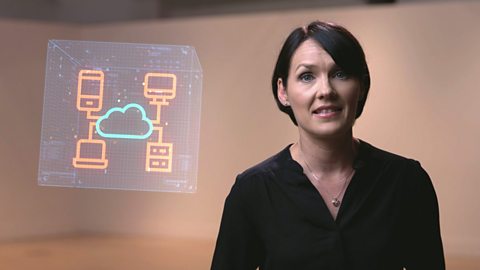
In this short film for teachers Jennifer Jones discusses the need to encourage students to make the most of the digital communication tools available to them.
Teacher notes
Digital communication is not a replacement for traditional learning but it can enhance the experience. Teachers should let students take the lead in choosing which method of digital communication would be best suited for a particular project.
Different methods should be used to achieve different learning outcomes, for example vlogs would be ideal for a presentation whereas infographics would be suitable for revision. Hwb is ideal for them to connect with other classmates for class discussions and projects.
Teachers should let the students identify which methods and tools would be the best for them to use in different scenarios.
Digital tools are also very useful for increasing student confidence, e.g. a podcast may be a good option for a student who is nervous about public speaking. The correct use of digital communication tools makes learning more effective and efficient.

More from this series:
Collaboration. video
In this short film for teachers Rhys ap William explains how using digital collaboration tools enhances group learning and collaborative skills.

Storing and sharing. video
In this short film for teachers Jennifer Jones talks about the importance of encouraging students to store files in an organised manner so that they can be found easily.
Planning, sourcing and searching. video
In this short film for teachers Rhys ap William talks about using digital tools to help students plan for a research project.