Evidence shows that the negative consequences of experiencing bullying can last well into adulthood.
By Martha Evans, Director, Anti-Bullying Alliance
In this article for teachers Martha Evans - Director of the Anti-Bullying Alliance - explores how schools can actively challenge bullying, and how they can encourage students to reach out. BBC Teach have worked in partnership with the Anti-Bullying Alliance to create a special Live Lesson to mark Anti-Bullying Week 2022. Anti-Bullying Week 2022 takes place from the 14 to 18 November and has the theme - Reach Out.
This article was published on 15 November 2022.
Research
In a survey of nearly 30,000 pupils in England, conducted by the Anti-Bullying Alliance and analysed by Goldsmiths, University of London, nearly one in four children (24%) told researchers they were being frequently bullied face-to-face in the last few weeks, with the situation even worse for those with SEND (31%) or those in receipt of free school meals (30%). 6% of children reported being bullied frequently online, with children with SEND and in receipt of free school meals again more likely to experience it.
The findings have been published as three-quarters of schools in the UK celebrate Anti-Bullying Week, reaching over 7 million children and young people. The campaign urges children across the country to reach out to friends and trusted adults if bullying is taking place.
The research finds that both those being bullied and the children who bully others have a bad experience of school life, dislike going to school, feel less safe and have poor relationships with their teachers. Interestingly, those who frequently bully others have the poorest wellbeing whether they bullied online or face-to-face.
How can schools prevent bullying?
A clear and effective bullying prevention strategy can help to lessen the chances of children and young people experiencing bullying in your school or setting.
We believe there are four main elements that should form your bullying prevention strategy:
- Promote a respectful ethos: Evidence shows that schools with a strong ethos and messages that are role modelled among adults about how we treat each other see good results with preventing bullying.
- Celebrate difference in all: Often children are bullied due to perceived differences, because they ‘stand out’ more than other children. It’s vital that we work to celebrate what makes us all unique to help prevent this happening.
- Challenge discriminatory and derogatory language: Often derogatory and discriminatory language - no matter how small - can be an indicator that bullying is happening or could easily spiral into bullying. Therefore, it’s vital that it be challenged at every opportunity if bullying is to be effectively prevented within your school or setting. Ensure staff have the skills and confidence to be able to challenge discriminatory and derogatory language when it takes place.
- Whole-school understanding of what bullying is: Learning to understand and manage conflict is an important part of growing up. Bullying is not simply a 'falling out' and bullying is often disguised among young people as ‘just banter’. Understanding the difference between relational conflict and bullying is an important part of your bullying prevention strategy.
Reaching out
Children who are going through a bullying situation can feel very alone. It is also a very challenging time for parents and carers, who may have lots of different emotions, including fear, sadness, and anger.
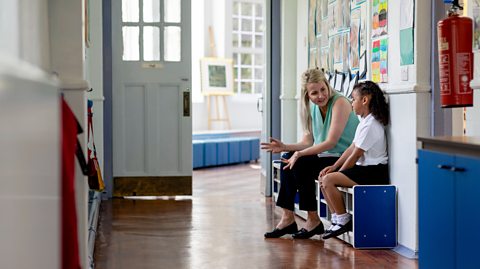
We really want schools to be asking how they can encourage children to reach out if they are worried about bullying. Whether a pupil is being bullied, seeing bullying taking place or even displaying bullying behaviour, we can’t stop it without having open and honest conversations. To do this we must talk to our pupils about identifying signs that someone might be experiencing bullying or struggling with loneliness - for example, spending time alone in the playground or at break times, not being picked for sports or games, being deliberately left out by others, and seeming sad, depressed, or angry.
Encourage your pupils to show friendship and kindness to people who are outside of the main group, particularly those children who are seen as ‘different’ from other children. Talk to them about the importance of not joining in with cruel and hurtful comments and actions – whether face to face or online. Encourage your child to talk to you, a teacher, or someone they trust, if they are worried about another pupil.
Bullying is a group behaviour. It rarely happens between two individuals in isolation. Children who are not necessarily taking part in the bullying can have a lot of influence on what happens. So, it’s important to consider the wider peer group when you’re dealing with any problems around bullying.
Very often children don’t know how to reach out for help. It is vital that we give all pupils the skills and confidence to speak up when they see something they are worried about.
How can we reach out to pupils?
Research from Ditch the Label’s Anti-Bullying Survey shows that 35% of children who have been bullied don’t tell anyone about it. There are several reasons that children tell us they don’t tell anyone about the bullying they experience:
- They don’t think it’ll be taken seriously or that anything will happen
- The reporting system isn’t accessible to them
- They’re worried about the reaction of an adult
- They did something they don’t want adults to see
- They worry about ramifications
One young person told us: “It can be hard to tell because you might be upset, and you might not wanna tell anyone ‘cos they might think you’re like, weak”.
And a parent said: “He would often comes home from school moody and unable to express what happened”.
We need to challenge ourselves to create school environments that enable all children to reach out about the things they are worried about, including bullying.
That’s why we want to use Anti-Bullying Week 2022: Reach Out as a chance to ask children how they feel about reaching out.
Tips
Do you know what bullying is taking place in your school? Do you have a picture of the types of bullying taking place in your school, who is post likely to experience it and where it happens for example? Without this understanding, it can be hard to create an effective anti-bullying strategy.
Ask pupils open ended questions: Rather than asking accusatory questions, start by asking open ended questions. This allows children time to express what has happened in their own words.
Have a reporting system that is accessible for all pupils: Try to avoid a ‘worry box’ in the middle of the school hall for example, and think about children’s communication needs.
Use stories and the media to help encouraging reaching out: The stories we read, hear and watch when growing up go on to have a significant impact on our lives as adults. We know schools often use the power of stories to help prevent bullying. There are many books and films that help raise the issue of bullying and give children ideas about empathy, help them become ‘upstanders’, stop bullying behaviour or realise that they can reach out about bullying.
Be clear that it’s a child’s right to go to school free from harm
Encourage children to think about two important questions:
- 1. Who can I reach out to if I need help with bullying?
- 2. How can I help reach out to someone who is being bullied?
Related links
The BBC is not responsible for the content of external websites. By clicking the link to access the external website you will be redirected. Please note that the BBC is not the data controller of the personal data you enter into the external website and it is not responsible for the services provided by any external organisation. When using an external website, you are subject to their Terms and Conditions and Privacy Policy.

Anti-Bullying Week 2022 – Live Lesson. video
In partnership with the Anti-Bullying Alliance, this half-hour interactive programme for primary schools highlights some of the issues around bullying and the support available.

BBC Own It - Anti Bullying Week 2022. document
Take a look at the Own It anti-bullying toolkit to help you and your friends unite against bullying.
BBC Teach: Anti-Bullying Week - Teaching Resources. document
A collection of teaching resources for primary and secondary schools designed to compliment Anti-Bullying Week programmes.