Female nurse, brown hair, blue and white stripy top: There's 1000 ml in a litre.
We often monitor fluids quite strictly, because we've got fluid balance charts which a lot of the patients have, so where we monitor their fluid intake and we monitor their fluid outtake in ml.
Male, grey hair, green top: In the lorry, if you fill it up with diesel, you get 100 L of diesel in the lorry.
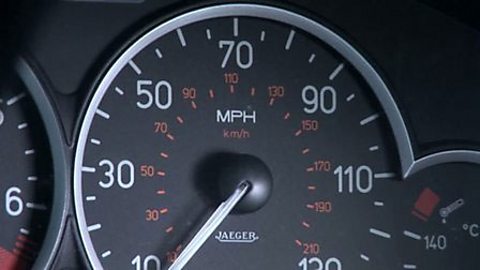
Male, black suit, white shirt and tie: I need to make sure that I have enough petrol for any journey that I'm about to do.
My car takes 60 L of petrol, and does seven miles to the litre.
So I need a full tank to drive 420 miles.
Capacity is a measure of how much something can hold, before it becomes full. A millilitre is the volume of one cubic centimetre. A thousand millilitres is a litre.
Quick tips for tutors
Capacity includes:
- The meaning of capacity and volume
- Discussion of appropriate units of capacity
- How to read scales and some common errors in reading scales
- Methods to work out the volume of a range of shapes
- Standard and non-standard units of capacity
- Activities to practise understanding of capacity and volume
Downloadable Factsheets
Entry 3 - Labels
Summary of capacity labelling on everyday items.
Entry 3 - Instruments for measuring capacity
Summary of how to choose the most appropriate instrument for measuring capacity in everyday situations.
Entry 3 - Non-standard measures of capacity
Summary of average capacity of everyday containers.
Entry 3 - Reading scales when measuring capacity
Summary of reading scales in metric units of capacity on everyday items.
Entry 3 - What is capacity?
Summary defining capacity and giving examples of everyday containers.
Level 1 - Cubes and cuboids
Summary of how to find the volume of cubes and cuboids.
Level 1 - Introduction to volume
Summary comprising definitions of volume and capacity.
Level 1- Practical examples of working out volume
Summary of how to work out the volume of everyday items.
Level 1 - Capacity and volume
Summary of the difference between the terms capacity and volume.
Downloadable Worksheets
Entry 3 - Matching exercise
Exercise in matching an estimate of the size of containers to the correct capacity.

Entry 3 - Reading scales to measure volume
Exercise in reading scales on a jug when measuring volume.
Entry 3 - Spot the mistake
Exercise in using scales on a jug to measure volumes of liquid.
Entry 3 - Choosing litres or millilitres
Exercise in measuring the capacity of a range of everyday items, and choosing units of measurement.
Level 1 - Finding volume by counting
Exercise in finding volume by counting unit cubes in a series of different shapes.
Level 1 - Working out volumes of everyday objects
Exercise in calculating the volumes in everyday situations.
Level 1 - Choosing the right container
Exercise in matching up foods with the appropriate container.
Level 1 - Choosing units and instruments to measure capacity
Exercise in choosing the right metric units and instruments for measuring capacity of a range of everyday objects.