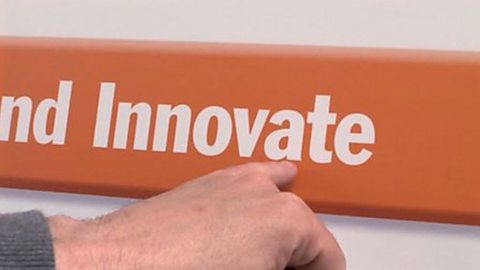
Male wearing glasses and pink shirt: It's very important when you're looking at a job description, because we need to not only read, but we also need to understand what the employer is looking for.
Let's look at what they are actually asking for.
They want people to do the picking and packing.
Now, you've done picking and packing before.
Male wearing red top: Yeah.
Male wearing glasses and pink shirt: So we can actually put that in.
We need to make sure that we understand the skills and experience that is needed for this job.
Collins: Literacy I think is important for all soldiers, no matter what employment they undertake in the army.
They have to be able to interpret orders, written and computerised orders, whether that's a demand through a military logistics computer system or that's a written demand.
So they have to be able to interpret and understand what is the intent of that particular order?
What, what is the requirement?
Female Florist: Here I have an order that came in.
So what I need to read and understand here is what time the flowers need to be there, that names are correct, and that I have the order correct, otherwise it is a big disaster and a very unsatisfied customer.
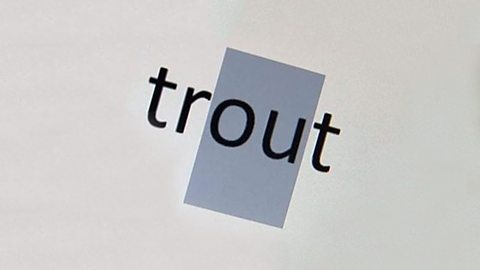
Reading text means more than just saying all the words out loud. It is important that you are also able to understand what is being said. A good way to check if you've understood some text, is to write a brief summary after you've finished reading it.
Quick tips for tutors
Reading and understanding includes:
- Recognising a variety of text formats (e.g. newspaper articles, charts, summaries, adverts, reviews)
- Using skills covered in other topics to aid reading: skimming, scanning detailed reading
- Using skills covered in other topics to aid understanding: fact and opinion, images and charts, summarising, use of dictionary
- Creating different texts: an advert, a poster, a book review
Downloadable Factsheets
Entry 3 - Understanding what you read
How to understand the text you read.

Level 1 - What is summarising?
A summary is a shortened version of a longer text.
Level 1 - Summarising a written text
How to summarise a written text.
Level 1 - Glossary of terms
A summary of useful terms.
Level 1 - Inference and meaning
Using text to infer mood, tone of voice or body language
Downloadable Worksheets
Entry 3 - Reading out poetry
This reading aloud worksheet is based on the poem 'Ferry me across the water' by Christina Rossetti.

Entry 3 - Strategies for reading
Exercise in strategies for reading.
Entry 3 - Understanding texts and charts
Exercise in understanding texts and charts.
Level 1 - Mood language
Activity about understanding mood, tone of voice and body language from text.
Level 1 - Reading between the lines
Match the phrases from the letter to what Jackie is really thinking.
Level 1 - Choosing the right words
Taken from the BBC One drama 'Secrets and Words'.
Level 1 / 2 - Creating a poster
Exercise in creating a poster.
Level 1 - Understanding summaries
Exercise in understanding summaries.
Level 1 / 2 - Writing a book review
Excercise in writing a book review from a longer account of the book.
Level 1 - Writing your own advert: holiday articles
Excercise in writing an advert.
Level 1 - Writing your own advert
Exercise in writing an advert.
Level 1 / 2 - Writing about an event
Exercise in writing about an event.
More videos on this topic
Chris's story income protection insurance
Chris talks about his struggle to get his income protection insurance company to pay out after he became too ill to work.

Andrew and Chaska's story fire insurance
When Andrew and Chaska's home burned down they were shocked to find that their insurance company would not settle their claim.
Neil and Denise's story gap insurance
Neil and Denise talk about their struggle to get a full payout on their gap insurance policy.
Rhoda's story rogue traders
Rhoda talks about her role as a consumer champion following her experiences with a rogue trader that cost her thousands of pounds.
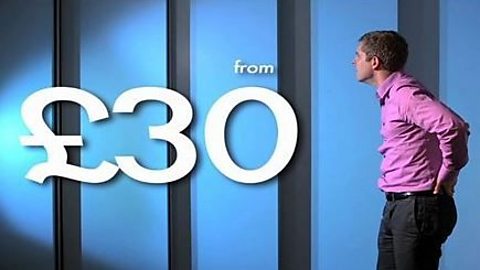
Catches in adverts
Find out what the catches and small print in adverts actually mean and what you can do if you feel you have been misled by an advert.