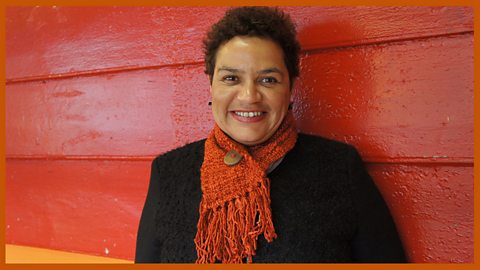
Duration: 15:00 (Photo: Goldsmiths, Univ of London)
Synopsis
The author and poet Michael Rosen introduces and reads some of his best-known poems for children:
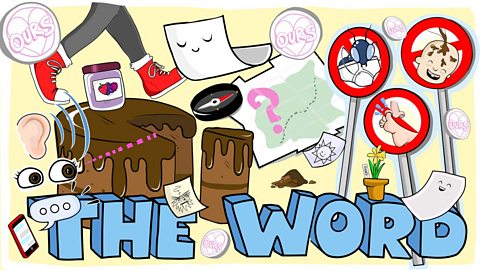
The space on the page
The 'space' is a ‘friend’ to whom Michael Rosen can tell anything.
Words are ours
Words don’t just belong to special people - they belong to all of us!
Introduction song
A poem written to help us all start the day in the best possible way.
Don't
Michael has fun with the idea of things we're not supposed to do.
Do I know you?
A nonsense poem about a very serious feeling - being lost.
Chocolate cake
A narrative poem about a true event from Michael Rosen's childhood.
If you wish to listen to the poems individually, these can be found below.
The poems
The space on the page. Duration: 01:56
Words are ours. Duration: 02:34
Introduction song. Duration: 01:26
Don't. Duration: 01:55
Do I know you? Duration: 01:04
Chocolate cake. Duration: 05:42
Curriculum guidance
There are eight programmes in this series. Each of the first 6 programmes profiles a different contemporary children’s poet who introduces and then reads a selection of his or her work.
The final two programmes focus on classic poetry and include a selection of well-known poems often taught at Key Stage 2. These poems are read by the actors Maxine Peake and Julian Rhind-Tutt.
Using the audio
The programmes can be used in a variety of ways. You can listen to them in their entirety or listen to and focus on one poem at a time. Students can read the text of the poem before, during or after listening to the recording and there are suggestions in these notes for pre-, during-, and post- listening activities.
Using the images:
Each programme is accompanied by a composite picture inspired by the poems in that programme. These can be used:
to stimulate pre-listening discussion about what the poems might be about;
to explore themes in the poet’s writing;
to support reading of individual poems – the image can act as a visual reminder of topics, themes or narratives for students while they are completing work on poems;
to stimulate creative writing: pupils could pick two or three elements of the picture and combine them to stimulate a story. This might work well with a ‘consequences’ story frame: a framework of actions already written where pupils add in nouns taken from the image to make a story.
More detailed guidance can be found in the Teachers' Notes below

More from Talking Poetry
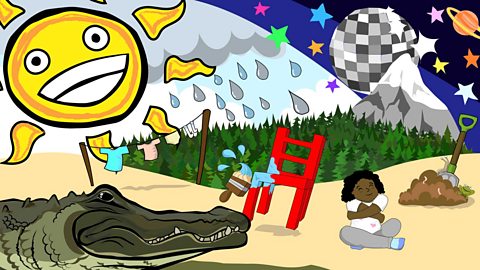
2. Grace Nichols. audio
Grace Nichols introduces and reads some of her best-known poems for children, including 'Cosmic disco' and 'Sun is laughing'.
3. Roger McGough. audio
Roger McGough introduces and reads some of his best-known poems for children, including 'First day at school' and 'Didgeridoo'.
4. Jackie Kay. audio
Jackie Kay introduces and reads some of her best-known poems for children, including 'Brendon Gallacher' and 'Red running shoes'.