 Image source, Getty
Children’s Mental Health Week is an annual awareness week that helps shed light on the importance of young people’s mental health.
2023’s theme was Let’s Connect, which looked to encourage both children and adults to consider how we can make meaningful connections.
Moodboosters spoke to psychologist Mireille Wallace to find out how connecting with others can improve your relationship with your mental health.
The importance of connection
So what exactly is connection? Mireille told Moodboosters: “Connection is one of our strongest human needs. It is essentially a bond that we create with another person and is based on genuine, positive, and caring interactions.
“When we connect with another person, we are exchanging positive energy which makes us feel seen, heard, understood, and valued.”
Connections form the basis of human relationships, they are about being in the moment together, sharing experiences and emotions, and feeling good with that person.
Image source, GettyHowever, it’s important to note that connections can be varied and that they won’t always be the same. While we have the closest connections with our inner circle, comprising of family and friends, we also have wider connections with our community, school or workplace.
But what is so important about connecting with others? Mireille explains: “From the moment we are born, we form bonds with our caregivers and rely on these to keep us safe. These bonds create trust and a sense of belonging.
“We are social creatures and being together and connecting with others is how we survive and thrive."
In turn, these connections can help us feel happy and secure. Strong connections improve the quality of our lives, whilst keeping us healthy and resilient.
“Social connectivity supports our mental health and reduces stress, anxiety and depression. Positive connections support our self esteem and improve our mood.”
Differences in adults and children
With this week’s emphasis on children’s mental health, is there anything fundamentally different between the mental health of children and adults?
Watch Rhys Stephenson and George Webster connect in 'Copy Me'
Mireille explains that while both can experience the whole spectrum of emotions, the key difference between the two is that adults have often had more life experience. This means that adults tend to use more logic and reasoning when responding to emotions, whereas children may be more reactive or lack perspective.
“With brain development, maturity, understanding, experience, we develop a better sense of control over our emotions and are more able to think through consequences, outcomes, and use reason to guide our behaviour.”
“This doesn’t necessarily mean that a child is more or less likely to be anxious than an adult, but these are some of the differences we see in terms of presentation.”
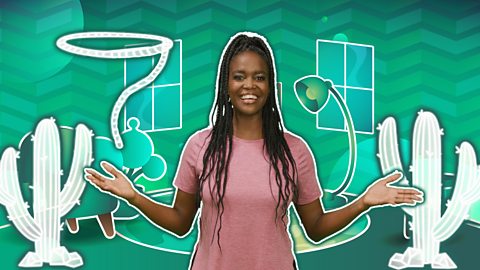
But despite any differences, there are plenty Moodboosting ways that both children and adults can connect with those around them.
Setting aside the time to connect can involve anything from arranging a walk with a friend, meeting up with a family member for a coffee or even trying out an act of random kindness. You could also try joining a club, scheduling a phone call with someone you’d like to catch up with or eating lunch in a communal place.
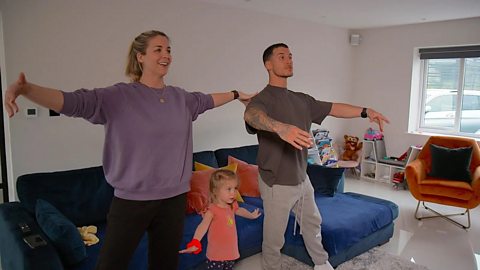
If you have children, you could also try connecting at school or at home, by copying each other’s movements in the classroom or doing a country and western style dance at home with your family.
Remember, words aren’t always the only way that we can connect with others. Non-verbal communication can also be vital for connection. This can be anything from touch and eye contact, to smiling and nodding.
Connecting in the age of technology
Connecting online is something most of us do on a day to day basis. The ability to connect digitally with others, especially friends or family members who may live far away, can be essential in maintaining those relationships.
Mireille explains that when you’re connecting safely with others online, whether that be through social media, forums or gaming, it is important to remember that technology should only enhance our connection with others, it should never replace it.
 Image source, Getty
“Online connection can’t beat the real thing. Connecting face to face is what our brains know best, we evolved to need human connection long before anyone could ever even imagine doing it on screens.
“When we connect face to face, we share a much richer experience where we can really engage with all aspects of an interaction, the shared space, the body language, the eye contact, and these all help make the connection a much more genuine and enjoyable experience.”
Avoiding reliance on solely online connections can also prevent loneliness. Loneliness occurs when we are lacking genuine human connection to other people. This was demonstrated during the pandemic, with researching showing that not being able connect in ways we were used to had a negative impact on many people’s health and well-being.
“So even though we had endless ways to connect online, it was the real-life connections, the hugs, the closeness, the shared moments that we needed the most.”
While life can get busy, making some time to connect with others, nature and the other things that make you feel good can go a long way.
Image source, GettyFurther information
To access more mental health and wellbeing related videos and activities go to bbc.co.uk/moodboosters.
For more information about mental health and wellbeing, check out the dedicated area on the NHS website.
BBC Action Line has details of organisations that can offer support.
The BBC is not responsible for the content of external websites. By clicking the link to access the external website you will be redirected to a site controlled by a separate organisation. Please note that the BBC is not the data controller of the personal data you enter into the external website and it is not responsible for the services provided by any external organisation. When using an external website, you are subject to their Terms and Conditions and Privacy Policy.
This article was written in February 2023.
About Moodboosters. video
Watch a short clip introducing Moodboosters and find out about some of the ways the fun activities can benefit primary school aged children.
Watch Gemma and Gorka try out Family Moodboosters
Gemma Atkinson, Gorka Marquez and daughter Mia try fun activities to get moving for mental health and wellbeing at home.
Amy Dowden on landing her dream TV role and why it’s ok to be different
Amy Dowden marks Children's Mental Health Week with her first appearance on CBeebies Bedtime Stories.