micro:bit - the next gen > Gladiators micro:bit challenge > Five ways technology is changing sport
The joy of sports and exercise is something people have enjoyed for centuries. In the modern age, technology has changed how we look at fitness in new and exciting ways.
We spoke to Gladiators' resident menacing muscle man Phantom about the interesting ways computers are helping people upgrade their fitness routines and keep competitive sports fun and fair.

Computer coaches
When training, it's always a good idea to review your progress. Professional sports coaches (and your PE teacher) are excellent for giving you advice on how to improve but with a little extra technology, you can really level up your skills.
Smart watches are very popular with fitness fans and they do more than just tell the time - they're often equipped with a heart rate tracker that can feel your pulse through your skin. Great for telling you what exercises really get your blood pumping. They often also have a pedometer - a step counter. Though there is no perfect daily step count, for most school-aged children it’s advised to walk at least 6,000 steps a day.

For Phantom, using trackers like these help him give a focus to his workout routine.
“I pay a lot of attention to metrics like my heart rate,” he explains. “I love getting some sort of measurement from any activity. Whether it’s counting reps or timing a run, I don’t like to do ‘aimless’ runs.”
The sports centres that train professional athletes have even more exciting computers handy, able to do things like detect your movement and warn if your posture could risk an injury. The term for measuring and understanding how your body moves is 'biomechanical analysis'. You'll definitely impress your science teacher with that phrase!
Robot referees
Have you ever argued with your friends who was first to cross the finish line in a close race? Then you might need a help from a computer to make a call!
Sports competitions often use cameras and motion tracking software to look at a close call and detect who is where. For example, many football stadiums use a video assistant referee (or VAR) system to help decide goals, penalties and red cards. Slow-motion cameras all across the stadium record the match for a team to inspect the little details and help the referee on the pitch make correct calls.
Phantom uses timing gates himself so he can measure his running laps to the millisecond.
He said: “I use a watch that sends a signal to finish line poles that every time you cross them will pause my stopwatch automatically.
“It’s amazing, because you don’t need to have someone timing you and you get really accurate times when you’re running.”
Wimbledon has talked about their 2025 tennis championships using an electronic system to call if a ball is in or out, following the Australian Open and US Open tournaments. They all still have an umpire on the court of course, having a human judge who understands the rules and how to play fair is still essential! Plus, a computer wouldn’t be able to enjoy the strawberries and cream.
My favourite thing about being a Gladiator is the ability to inspire. It's great when you see kids come to the Gladiator arena, wearing a hoodie and trying to mimic me. It just dials back to what inspired me as a kid before I became anything.
Technological tacticians
Have you ever played a video game that learns how you like to play to become more challenging? Some sports teams use that idea to get the tactical edge on the competition.
Top sports teams value a good strategy just as much as being strong or fast, and teams who have been together a long time might have favourite tactics to use on the field.
Because computers are really good at collecting a large amount of data and recognising patterns, they can be really useful for looking at how a single athlete or a whole team likes to play.
For the Gladiators, they've seen lots of competitors run through the show's challenges. A computer could look through the episodes to make guesses at how a challenger might tackle a game, but the lived experience of the Gladiators is just as important.
Relying on computer analysis too much might leave you surprised, if your opponent does something unexpected. It always pays to try new things!
Upgraded sports kit
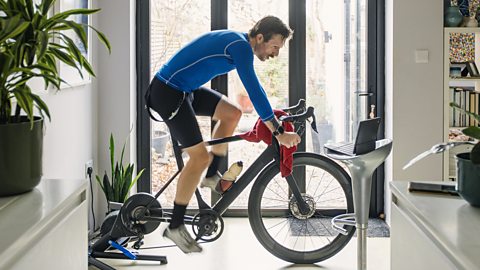
Not all technological advances in sport are about computing. Sometimes breakthroughs in physics or biology also change the way we make sports clothes and equipment. Even your PE kit has changed – the fabrics we use for athletic clothing are better at keeping you at the right temperature, and some are even designed to help improve your blood circulation while you exercise.
Before he became a Gladiator, Phantom used to compete in track and field and the invention of new types of running shoe really changed the game. Did you know that some running shoes have a carbon fibre plate inside to help push against the floor with better grip and power?
“When you sprint, it’s all about the force you’re able to deliver to the floor,” Phantom explains. “But weight is a big thing when it comes to running well. You don’t want to be wearing a footplate that weighs a ton!”
Engineers at shoe companies worked on making lighter plates for running shoes that still give the runner good grip and power but without being too heavy.
“It’s evident in some of the track and field times you see now, where people are still improving their times because of an advancement in technology.”
Looking to the future
While technology has already changed sport and exercise a lot, there are still new things for engineers and sport scientists to discover!
Phantom thinks learning about design and technology now can be important for the future: “Technology design wasn’t something I was privy to as a kid bit it’s definitely the way the world is going."
“Technology is a huge part of our lives and it’s going to be even bigger… so being able to get a foot in the door early on is going to pay a lot of dividends!”
Learn more about Phantom and have a go at being a sports technology inventor yourself on the Gladiators micro:bit challenge activity page.

More from BBC micro:bit - the next gen



Coding made easy with the MakeCode platform
Find out more about using MakeCode and the training resources available to get you started.
FAQs
Get the answers to all of your questions about the micro:bit.
Our partners
Find out more about the organisations supporting our micro:bit initiative.