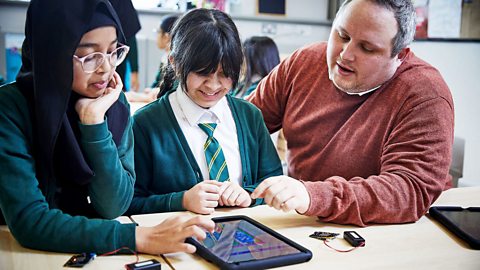
Turning something you love into a full-time job is the ultimate dream for many people – and FalseSymmetry has managed to do just that.
The gamer and video creator has amassed almost 450k subscribers on her YouTube channel alone and when not making videos, she’s teaming up with other creators on fun projects or attending gaming events.
Last year, FalseSymmetry took part in the launch week of BBC micro:bit - the next gen and for National Careers Week (4 – 9 March), we caught up with her again to get some advice for others who’d like to follow in her footsteps.
FalseSymmetry (also known as Katy) has been gaming for almost as long as she can remember and has achieved many people’s ambition of turning her pastime into a career.
But where did it all begin? She told us: “Like a lot of people I got into gaming as a child, starting with early games consoles like the original PlayStation and also the Game Boy. From there, my family had a shared PC so I got into computer gaming and my interest never really stopped, though it wasn’t until I started playing Minecraft that I moved almost entirely to PC gaming.”
Watch as FalseSymmetry fronts an assembly video for the BBC micro:bit - the next gen campaign alongside Newsround's De-Graft Mensah
One, two, three.Let’s go crazy.Ready for the duck? Boom.Whoa!
Hey there future coders!I’m FalseSymmetry, your favourite gaming pro.
And I'm De-Graft.
Now today we are unboxingand diving into the insanely cool worldof coding with the micro:bit.
This tiny tech wonderis about to transform your worldand maybe your future.
Think of it as a mini brain ready to learn,play games and create music,whatever your interest might be.
The micro:bit will allow youto create something incredible.
So who's ready to leapinto our digital wonderland?
Gear up. It's time to create, innovate and explore.
It's unboxing time.
It’s tiny.
It's astonishing that you can play and creategames on this little tiny computer.
But don't be fooled by its size.It's easy to use,and it's packed with features.
Now the BBC micro:bitcomes with a built-in LED screen,a speaker, a microphone and a touch sensor.
This is your gatewayto endless coding possibilities.
Let's see what this challenge is, shall we?Let's see what they've got for us.
Which one of you can code their micro:bitinto a game of rock, paper, scissors the quickest?
Challenge accepted.
Let's get it started.
There you go, I'm done.
You know what? You may have won this challenge,but I'm going to win the next game.
Okay, that's fighting talk. Let's go.
Let's go.
With just a little bit of code your micro:bit becomes a magical play machine.
So you think you're lucky do you?
Game on.
Perfect let's go.
Ooo.Ahh.
That's a draw.
It's a draw again.
Draw again.
Best of three?
Oi.
I guess so.
Right, here we go.
Paper.Ahh!
You beat me!Ugh.
Coding your game and playing it isgreat and so so easy to do.
Check this out - with a bit of coding magicI've managed to turn my micro:bitinto a game of teleporting duck.
I love this game, let'ssee how far the duck can travel, shall we?
All right cool, let's try from here first.Boom!
I've got the duck - your go.
Whoa!Okay, you know what? I'm going totry over there.
Go for it.All right, So if I go here.Ready?
All right, ayy and back at you.
Right. Sending it back again.
Hey, I've got the duck,but do you know what Katie?
I'm going to go even further awaythis time.
Yeah, go for it, go for it.Let’s go crazy.
Ready for the duck? Boom!
I've got it and back again.
Ahh, you know what?This might be one of my favourite games.
It is one of my favourites,too. It’s such a good game.
Just imagine what elsewe could create with this micro:bit.
Now, you know, we love a good game,but there's so much more youcan do with the micro:bit.
For example, you can be an explorer.
The micro:bit does many things and can tellyou which direction north, south, east and west are.
So you know what? Let's give it a go.
Well, look at that.
The micro:bit can turn into a compassfor all of our exploring needs.
Look, it's pointing towards north.
I think we should do a bit of exploring.Yeah let me go.
I'll catch you later.
See you later.I mean, where exactly are you heading?
Guessing that I'm heading north.
Heading north?
All the way north?
Yeah I could just head all the way north.
More north and north as you go.
I'll catch you later.
Hey, at least you’ll never get lost.
So we've played games and even donean exploration experiment.
And guess what?
You can do all of this and morein your classrooms with the micro:bit.
I mean, the possibilities are really endless.
Check out the websitefor more information and coding tips.
“I realised YouTube was a viable career choice and that the creators I'd watch were doing it full-time”
In 2011 Katy started making Minecraft videos for YouTube, however, even before then she knew that for some people making videos could be a serious business.
She explains: “Before starting my channel I realised YouTube was a viable career choice and that the creators I'd watch were doing it full-time. However, when I started making my own videos, I always thought it would just be as a hobby. It wasn’t until I started getting more regular viewers that I thought I could potentially make it a career.”
Katy was invited to join the Hermitcraft community in 2014 and it was at this point she realised creating content could be more than a hobby: “When I got invited to join the Hermitcraft Server I decided to give it a go full-time as it gave my channel the boost in viewership it needed for that to happen. I was lucky enough to not only be invited, but that the timing was after finishing my degree and before I had fully committed to another job. So I was able to give it all my attention to see if it could work out.”
As it turns out, Katy never looked back and she now uploads weekly videos as well as livestreaming a couple of times each week.So what does she enjoy most about her job? “I really enjoy the community aspect of what I do and it can be inspiring for someone like myself to work alongside other people who have different ideas.
“The best way to learn most things is to just do it"
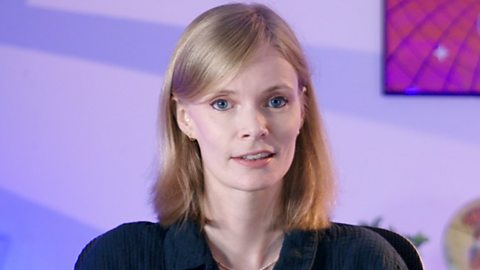
“There are many enjoyable aspects about the job – I’m not sure I could list them all. Being able to meet and work with other like-minded creators on fun projects, meeting viewers at events I've been able to attend and put faces to the numbers. And just being able to create the videos I wish to make has been incredibly rewarding.”
What advice then does she have for those who’d like to make it their career, just like she did? “The best way to learn most things is to just do it, and that’s the same with making videos. Even if you don’t upload it, you’ll learn so much from watching it back. If you’re unsure where to start, do some research. You can learn almost anything on the internet which makes it very easy to get going and find what you’re passionate about.
“I enjoy gaming, but also art and creating things. So it made sense to me that Minecraft-based videos where I get to build cool things would be my focus. Because I'm enjoying what I do in the videos means the viewers hopefully enjoy it more too! But for you that passion may be different games or telling stories. So create something that interests you!”
Katy says she’s noticed an increase in the number of female gamers since she first started playing over ten years ago, telling us: “I've definitely seen a rise, both in the viewership side of things and also in the content creation itself. I’ve noticed a lot of Minecraft creators coming up in the space have been women and on social media there are a lot more women in the tech and gaming industries in general which is really great.”
She puts part of this down to gaming being more accessible than ever before: “The internet and social media have made it easier for people to get into gaming spaces and learning new things online in general has become a lot easier.”
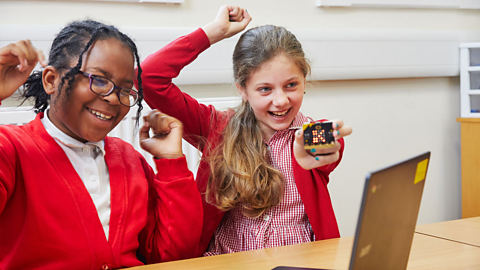
Last year Katy fronted an assembly video for the BBC micro:bit – the next gen campaign, which aims to boost digital skills in primary school children. She believes initiatives like this will help to boost interest even further in careers in both coding and gaming: “It feels as though it’s become a lot easier to find different ways to learn coding because there's so much information online. It’s much more straightforward now to find what you need and to learn in a way that works for you."
Things have definitely moved on from her own childhood, as she told us: “When I was at school there wasn’t an option to do any sort of coding or technical stuff so I think it’s a really positive thing that children can use the micro:bits at a young age and have a go and hopefully they will stick with it.
“I’m very passionate about making learning fun and I think the micro:bit will definitely inspire primary school children to go on to code their own games or go into a career in coding.”
If you’re interested in learning more about careers in Science and Technology, visit our Bitesize Careers site.
The BBC micro:bit playground survey was created to help children aged 7 - 11 get to grips with data science and digital skills in a fun and practical way. Find out more about the seven activities and get free resources on the playground survey site.
This article was published in February 2024.

More from BBC micro:bit - the next gen
BBC micro:bit playground survey
Discover seven cross-curricular activities to find out more about your playground.
Classroom resources
Check out resources that will help you get ready once you receive your micro:bits.

Training resources for teachers
Find out about the free courses - both online and in-person - to help primary schools teach about the micro:bit.