Watch again: Live Lesson video clips
This set of shorter video clips is taken from the Live Lesson programme and can be used to teach individual topics.
Electrical circuits and symbols
Steve:
So the question was.
Leah Boleto:
Yeah.
Steve:
How do we use electricity to make things work?
Hacker:
Hey Tucker I know this, I know it, I know it, I'm a scientist, it's obvious innit? You just take the switch, it's obvious, like this. Lights off.
Ben Shires:
What?
Hacker:
Lights on.
Leah Boleto:
Oh dear.
Steve:
OK.
Ben Shires:
What are you…
Hacker:
Lights off!
Steve:
Yeah, Hacker.
Hacker:
Lights…
Steve:
Hacker, Hacker.
Hacker:
On.
Steve:
Hacker! Hacker.
Hacker:
Lights off.
Steve:
Hacker! Can you, can you leave the lights on please?
Hacker:
Yes I can.
SteveOK. [LAUGHS]
Hacker:
Lights on. [LAUGHS]
Steve:
Yeah.
Steve:
Alright. So let's…
Hacker:
It's fused, it's fused, it's stupid.
Steve:
Let's get back to basics.
Leah Boleto:
Please, yes.
Steve:
All right. So electricity is the flow of electric charge and it gets interesting when you look at the way this electric charge moves and what it does. So this electricity moves through wires; a bit like water moving through a pipe, and as it goes, it can do things. So it can make a light bulb shine or make a buzzer buzz.
Leah Boleto:
So how does the charge then move around?
Steve:
Uh, good question. So, uh, I can show you here, we've got an example.
Leah Boleto:
Super.
Steve:
So we've got some components. So we've got, uh, wires, a bulb, we've got a battery here. This is the sort of thing that people are used to in schools already, um. And so, we've got a diagram here actually you can see.
Leah Boleto:
Yeah.
Steve:
So this shows different symbols that represent different components, so there's a symbol there for batteries, there's a symbol for a light bulb and then you just use lines for, for wires.
Leah Boleto:
Great.
Steve:
So, um, let's, let's see if we can, uh, connect all of these…
Leah Boleto:
Yes.
Steve:
… things together.
Ben Shires:
Hang on there guys, I wanna see some science.
Steve:
OK, uh, first of all, by the way, batteries. We normally talk about things, uh, these are batteries, but actually, they are properly called cells.
Leah Boleto:
Why?
Steve:
And you only call them batteries when you connect loads of them together, like we've done here. So this is, this is a batter.
Ben Shires:
You're selling it to me Steve.
Leah Boleto:
Super, super.
Ben Shires:
Carry on.
Leah Boleto:
Right, let's connect this all together.
Steve:
OK, here we go. So let's put that, uh, wire on there, let's connect this and once I connect this, everything will be connected together.
Leah Boletoe:
Hang on. So that's strange, because we've got [STUTTERS] everything connected together…
Steve:
Yeah.
Leah Boleto:
… we've got the bulb, batteries…
Steve:
OK.
Leah Boleto:
… wires, but, it's, it's…
Steve:
Yeah.
Leah Boleto:
… not on.
Steve:
They are connected together, but they are connected in a line.
Leah Boleto:
OK.
Steve:
Not a circuit and that's important, it needs to be a circuit. The clue is in the name, circuit, like, circle. So it has to be a continuous loop without any breaks in it. And we can do that, we can turn it into a circuit by closing the loop like this. There you to, the light comes on.
Leah Boleto:
Ah.
Ben Shires:
Ooh. Oh I think we need an ooh for the bulb…
Leah Boleto:
Come on.
Hacker:
Ooh it works Steve, it works.
Steve:
I'm so glad you're here.
Hacker:
[UNSURE OF WORD]
Steve:
OK, so, and this is how a switch works. So look, when you close the loop, that's like turning the switch on. When you break the loop, that's like turning the switch off.
Ben Shires:
Oh exactly and this is the symbol that represents a switch. Excellent. Now, uh, what do batteries actually do in this case then Steve? I think we got a…
Steve:
Good question.
Leah Boleto:
Here we go.
Leah Boleto:
How about this?
Ben Shires:
… a lovely diagram here haven't we?
Steve:
Alright. So the, the job of a battery is to push the electric charge around the circuit, so that's what this does, pushing the electric charge around. The stronger the battery is, the harder it's pushing that charge around the circuit and the harder you push charge through something like a bulb, the, the brighter the bulb will get. So that's the basics of electric circuits and how weuse electricity to make things work, but we can definitely have more fun with it.
Leah Boleto:
Yeah.
Ben Shires:
Excellent. Well look, before we get down to the fun stuff, we do have to point out, of course, that electricity is dangerous. Steve here is a science expert and he knows exactly what he's doing with these demonstrations today, uh. So some of the ones we are doing can be dangerous, please don't try them at home or at school. OK, I think now, we're all up for some science fun, aren'twe audience? [APPLAUSE]
Ben Shires:
That is the right response, excellent. But Steve, it's, it's not just about having fun with the experiments is it? [STUTTERS] As trainee scientists we can all be doing something important whilst the experiment is underway. So what, what could we be doing?
Steve:
Yeah, you can be doing important things, in fact, right now, just by observing what's happening, you are starting to think and act a scientist, because observation is really important in experiments, and we'll see that as we go through.
Ben Shires:
Excellent, that gives me an idea. Hey Hacker.
Hacker:
Hello Ben Shires.
Ben Shires:
Yes, yes. Hacker are you alright, are you still with us over there?
Hacker:
… you alright?
Hacker:
I'm here love, can you not see me?
Ben Shires:
Yeah, I can just about see you. Now, Steve has just said something very important for you to write down, OK. Terrific scientists observe what's happening throughout.
Hacker:
Watch me though, watch, I am now on my way to becoming a top notch scientist. I'm observing and writing, observing and writing, observe, write it down. Stephen, what are you waiting for cocker?
Steve:
Oh sorry, yeah, sorry, I thought you were still going.
Leah Boleto:
Yes.
Steve:
OK. So we're gonna change something and then we're gonna observe what happens, OK? So we're gonna change the bulb for a buzzer. OK, so, this is where the bulb was before, it's now a buzzer. The switch is currently off, like it is in this diagram here, but look, when we turn the switch on.
Leah Boleto:
Oh.
Ben Shires:
I am buzzing for that. That's great.
Leah Boleto:
Loving that. Brilliant. So we've observed Steve putting his circuit board into action time for you lot in the studio and watching in your classroom, to get involved.
Ben Shires:
Yes absolutely. Now, for the studio audience. You will have seen your activity packs by your seats and if you're watching in the classroom, you should have downloaded the worksheets. Everyone needs the worksheet called Activity One, Circuits and Symbols. On it, you'll see three sets of circuit diagrams. Here's the problem we're trying to solve.
Hacker:
Oh Ben, this stupid torch won't work. Help me cocker, I need, I need to see me playlist so I can put Cotton Eyed Joe on for all the fantastic live audience. [SINGING] it's not working. Ben and the others.
Ben Shires:
As, as much as I don't want to hear Cotton Eyed Joe, I do feel like the audience could help us on this. So back to the problem, which of the three circuits would you use to switch Hacker's torch on? Is it circuit A? Circuit B? Or circuit C? Now don't forget to join in you classrooms. I'm talking to you, yes, you, what do you think? You've got 60 seconds from now. Start thecountdown. [60 SECOND COUNTDOWN]
Leah Boleto:
OK, time's up. So we asked you which circuit do you think would put Hacker's torch on? Hands up is you think circuit A.
Leah Boleto:
OK. Hands up if you think circuit B.
Leah Boleto:
Perfect. OK. And finally, hands up if you think circuit C.
Leah Boleto:
Oh. OK.
Ben Shires:
OK, some interesting results there. A lot of hands up for circuit B, uh, I'm gonna go to [Sheroze] here in our audience. [Sheroze] you put you hand up for circuit B, why did you not think it was circuit A.
Sheroze - boy in audience:
It's because the switch is off.
Ben Shires:
OK. So that wouldn't make the torch work?
Sheroze - boy in audience:
No.
Ben Shires:
OK, uh, Steve, is [Sheroze] right?
Steve:
Yeah, let's have a look. So this is the diagram in circuit A. The switch, you're right, that means the switch is off, because the circuit is broken, it's not a complete loop. So if we switch the switch on, we're closing the loop and it the bulb comes on. So now, this is circuit B, and it's working. So the answer is definitely circuit B. Circuit C was a buzzer and not a bulb, so it's definitely notcircuit C.
Leah Boleto:
Ta da! Hacker.
Hacker:
What?
Leah Boleto:
Is your torch on? That was easy.
Hacker:
Well it's easy for you cocker, I've got no thumbs have I?
Leah Boleto:
Oh.
Hacker:
You should try switching stuff on with hooves like I've got.
Leah Boleto:
Well we did switch the torch…
Hacker:
Turn it on Lea.
Leah Boleto:
… on. Relax, relax, there you go.
Hacker:
And it works! La, la, la.
Leah Boleto:
So Hacker, Hacker, Hacker, how's your note taking going? How's…
Hacker:
What?
Leah Boleto:
… your observing going?
Hacker:
Yes, I have observed the lightness cockers, now get this, you'll like this.
Leah Boleto:
OK.
Hacker:
Turn the music up loud. Watt's up? Do you see?
Leah Boleto:
Yes.
Hacker:
Watt?
Leah Boleto:
I do.
Hacker:
Double T, it's electric joke. La, la, la. [SINGING]
Electrical circuits and symbols
A look at a simple series circuit and the use of electrical symbols in a diagram.
Your class will need this downloadable activity sheet:
Conductors and insulators
Leah Boleto:
Hello, you're watching Live Lessons and we're learning how to be Terrific Scientists, with the help of our science expert, Steve Mould, thank you very much. We're going to continue having some fun with our circuits, but we're going to make them more interesting, just like a scientist. Isn't that right, Steve?
Steve Mould:
Yeah, that's right. So the next thing a scientist would do now is add a variable. So a variable is one thing in the experiment that you change.
Ben Shires:
Okay, alright. Well, that sounds quite interesting. Now, Hacker…
Hacker T Dog:
Not now.
Ben Shires:
Hacker, are you there?
Hacker T Dog:
Hello.
Ben Shires:
Did you get that? Okay, variable, write that down. Variable. We're going to now introduce variables to our electricity experiment. This is what Terrific Scientists do.
Hacker T Dog:
I know that, Ben Shires, I'm writing it down. Now, variables…
Ben Shires:
Yes, variables.
Hacker T Dog:
Are they like vegetables? Because I'm starving.
Ben Shires:
No, no, I distinctly said "variables" and they're definitely not like vegetables. Write down "variables".
Hacker T Dog:
Will do. I have done, me old cocker. I am now going to carefully observe those variables. My eyes are glued. Quite literally.
Leah Boleto:
Oh dear [LAUGHS]. Actually, what Hacker said there, vegetable, could we use a vegetable as a variable? Interesting.
Steve Mould:
Good question. We might be able to. I'll tell you what, yeah, leave it with me.
Ben Shires:
Slightly unexpected undertaking. I like where that might be going. Now, we know how electricity travels around a circuit but, Steve, what impact will this variable have on our circuit?
Steve Mould:
So a variable is something that you change, so we could change, for example, the length of the wires, or we could change how many batteries are in the circuit.
Ben Shires:
Uh-huh.
Steve Mould:
And it's important to only change one variable at a time, because when you notice something different, you want to know that it's because of one particular thing that you've changed.
Ben Shires:
Okay.
Steve Mould:
In this case, our variable is going to be what the wire is made of. We're going to change what the wire is made of.
Leah Boleto:
Okay.
Ben Shires:
Right, okay.
Leah Boleto:
And, I guess, it's conductors isn't it?
Steve Mould:
Yeah, so the different things that we use as our wire, some of them will be good at conducting electricity. They're called conductors. Some will be bad at conducting electricity, and they're called insulators. So I'm going to need the help of the audience for this one.
Leah Boleto:
Brilliant. So, audience, we need your help. Those of you watching from your classrooms, you should download something like this: Activity Sheet number two. And in the studio, by the way, inside your packs you'll find the same Activity Sheet number two. Now, on that worksheet there is a Venn diagram and a list of materials. Now, working in pairs, decide which materials will conduct electricity… a reminder that they're the conductors… and which materials wouldn't; they'll be insulators, got it? And, teachers, send in your class' answers now, and you've got 60 seconds from… now.
Ben Shires:
Okay, that is time up. Now, before we speak to some of the audience and find out what they thought, let's remind ourselves of the materials on the worksheet. So we had a metal spoon, a rubber band, a graphite pencil, a metal key, a wooden spoon and a plastic toothbrush. Now, I've got Lauren here. Lauren, what did you pick, and do you think it's a good conductor, or more of an insulator?
Lauren:
I picked a plastic toothbrush and I think it's an insulator.
Ben Shires:
Okay, Steve, a plastic toothbrush is an insulator. Is Lauren correct?
Steve Mould:
Well, let's find out. So we've got our plastic toothbrush here, and let's put it in the circuit.
Leah Boleto:
Ah.
Steve Mould:
There you go. No bulb lighting up, so it is an insulator. That's because it doesn't let electric charge pass through it.
Leah Boleto:
Insulator.
Steve Mould:
So, let's put it in the insulator circle.
Leah Boleto:
There you go.
Steve Mould:
Alright. Next.
Ben Shires:
Fantastic stuff. And we've also got Eve here. Eve, what object would you like to pick, and do you think it's a good conductor, or not?
Eve:
I've chosen the metal spoon and I think it's a good conductor because it's metal.
Ben Shires:
Okay, fantastic. So we've got a metal spoon from Steve-- from Eve, Steve. Is that a good conductor.
Steve Mould:
Let's find out.
Leah Boleto:
Interesting.
Steve Mould:
So, let's put it in the circuit. There we go, it lights up.
Leah Boleto:
That makes a brilliant conductor.
Steve Mould:
And a brilliant explanation from Eve as well. It's made of metal. Metal is a good conductor. So that's because it allows electric charge to pass through it, so let's stick that in the right place. So that goes in the conductor circle there. Alright, what's next, Ben?
Ben Shires:
Okey-doke, that's fantastic from our studio audience. Let's take a look at what you've been saying on social media. So, first up, Class Five; Y5B at West Jesmond Primary School in Newcastle say "We are loving Hacker T Dog". Well, I'm sure Hacker's pleased with that one, and…
Hacker T Dog:
Yes, yeah.
Ben Shires:
… "We think that rubber is a good insulator." Are they right, Steve?
Steve Mould:
Let's find out.
Leah Boleto:
There you go.
Steve Mould:
Okay, rubber band, here we go, let's put it into the circuit. And there's no light, so, yes, it is a good insulator. It's a bad conductor. So stick that on the board. So it's a lot like plastic, it doesn't allow electric charge to pass through it.
Ben Shires:
Okay, we've got another one come in here from Year Five at St Christopher's Academy. And they say the "Wooden spoon is an insulator." Steve, are they right on that?
Steve Mould:
Give it a go. Yeah, we've got another insulator there. Let's put that on the board. Wooden spoon goes in the insulator section. Wood does not let electric charge pass through it.
Hacker T Dog:
It's an insulator, init?
Steve Mould:
Yes.
Ben Shires:
Hacker's learning. Look, we've got one more here. Let's have a look at this. This is from Frodsham Weaver Vale Primary School, and they said, "Sam in Year 6 thinks that graphite pencils will conduct electricity. Niamh in Year 5 placed it in the circuit, but the bulb didn't like up. Who was right?" Steve?
Steve Mould:
That's interesting, isn't it, that they disagree?
Leah Boleto:
Yeah, that's a good one.
Steve Mould:
Yeah, okay, well, first of all, let's just put the little points there on the outside. Look at that.
Leah Boleto:
Nothing.
Steve Mould:
It is an insulator because it's made of wood, like the wooded spoon. But you'll notice that I've sharpened both ends, so I've got graphite at both ends. I'm going to connect one end here and the other end like that. Look at that.
Leah Boleto:
It works. [LAUGHS]
Steve Mould:
Yeah. So the graphite in the middle of the pencil is a conductor. So really, this one, it's a bit tricky. It's both.
Leah Boleto:
So, let's…
Steve Mould:
Stick it in the middle I think.
Leah Boleto:
In the middle. That is really, really interesting. So, we've got one more. We've got the key. We know where that will be.
Steve Mould:
Key, maybe stick that… well, that's made of metal, like the spoon, it is a conductor, so that goes there.
Leah Boleto:
Brilliant. So, that means that these materials can sort of change instantly our circuit, isn't that right?
Steve Mould:
That's right, yeah.
Leah Boleto:
Yeah. So we've been looking at the variables with conductors and insulators of electricity. Here's another question for you, Steve: does it mean that electricity cannot pass through an insulator?
Steve Mould:
That's usually the case, yeah, but not always. And actually, all the things that we've classified as insulators here, like the toothbrush and the wooden spoon, they do let a tiny little bit of current through. They're slightly conductive, just a teeny, teeny, tiny bit. So, to explain that, so far we've been using batteries to power our circuits. But if we switch to a more powerful electricity supply… so maybe switch the battery out for the mains…
Leah Boleto:
Okay, I like where this is going.
Steve Mould:
Yeah, that might be strong enough to push electric charge, even through an insulator.
Ben Shires:
Hang on, let me interrupt you there please, Stephen, my good friend. Now, Hacker, remember what we talked about earlier?
Hacker T Dog:
Yes.
Ben Shires:
Good [LAUGHS], I'm glad that we're all on the same page. Well, in order to be a Terrific Scientist, we need to be observing any changes. Have you been doing that?
Hacker T Dog:
I sure have, cocker. I'm on it like a carbonara. Battery swap with mains, insulator conducts electricity, boom shakalaka, on you go with it, Big Steve.
Ben Shires:
Oh, yeah.
Steve Mould:
Okay, thank you. I'm gonna show you this, with the aid of a very sensitive and expensive piece of kit. In fact…
Leah Boleto:
Super.
Steve Mould:
I'm going to put my gloves on because, well, it's very fragile.
Leah Boleto:
Yeah. It's not looking very expensive so far, okay.
Steve Mould:
Well, you just wait and see. This is groundbreaking stuff that we're doing here. Ladies and gentlemen, I am going to pass mains electricity through a pickled gherkin.
Hacker T Dog:
By Jingo. Hey, Big Steve, save me a pickled gherkin will you? All this note-taking's making me hungry, specifically for pickled goods.
Steve Mould:
Okay, yeah, do you know what? Because you gave me the idea of using a vegetable as a variable, you can have one of my pickles. Only after it's been electrocuted though.
Hacker T Dog:
I'll look forward to it, me old cocker.
Steve Mould:
Alright. Thank you [LAUGHS]. So, in all seriousness by the way, please do not try this at home, under any circumstances whatsoever. These gloves, they're not just incredibly fashionable, they also protect me from electric shock. I also need these safety goggles as well.
Leah Boleto:
Yup, I've got mine.
Steve Mould:
Have you got your goggles over there? So, I've made this contraption here. It's a couple of metal prongs on a tray here, and they're connected to the mains. I'm going to connect them to the mains via this plug here.
Leah Boleto:
And you'll be needing a pickle, I'm assuming?
Steve Mould:
Yeah, let's get a pickle out. Actually, I can't do it with my gloves.
Leah Boleto:
No. Shall I?
Steve Mould:
Can you get one out for me?
Leah Boleto:
Really smelly.
Steve Mould:
Oh yeah, good choice.
Hacker T Dog:
Ooh, that's a good one.
Leah Boleto:
There you go.
Steve Mould:
That's a good one [LAUGHS].
Leah Boleto:
Hacker's impressed.
Steve Mould:
Okay, here we go. So that goes onto the prongs like this. Alright, so maybe if we have the lights down as well.
Leah Boleto:
Dim the lights.
Steve Mould:
So we can see what's going on here. So, right, so this is good to go.
Hacker T Dog:
Good luck, Big Steve.
Steve Mould:
Okay, thank you [LAUGHS]. So, ladies and gentlemen, mains electricity and a pickled gherkin.
Ben Shires:
Whoa.
Leah Boleto:
Woo.
Ben Shires:
Whoa, can we get a round of applause for the gherkin please? [APPLAUSE]
Hacker T Dog:
Well, by Jingo, I didn't expect to see that today, cocker. Ooh.
Ben Shires:
No. That's left me pickled, that has.
Hacker T Dog:
That's left me gherkined, that has.
Ben Shires:
[LAUGHS] What did you make of it?
Hacker T Dog:
A sandwich, probably.
Ben Shires:
Probably, yeah. Yeah, yeah.
Leah Boleto:
Thank you so much, guys. It really does smell, but, Steve, how, and why, did that happen?
Steve Mould:
So a pickled gherkin has a lot of salt water in it. Salt water isn't a great conductor of electricity, but it's not terrible either. So, if you've got a really strong electric supply, then you can actually push some electric charge through the gherkin, and when you do that, the sodium in the salt glows yellow.
Leah Boleto:
Oh.
Ben Shires:
That was fantastic. Thank you so much for showing us that, Steve. And, as amazing as it was, and as heart-wrenching as it was to see that gherkin give itself up in the name of science, please do remember, everyone, that Steve is a science expert. So if you find any gherkins lying around, and you fancy putting some electric current through it, don't. Just leave it to the experts.
Conductors and insulators
Which materials are electrical conductors and which are electrical insulators? Find out in this clip from the Live Lesson.
Your class will need this downloadable activity sheet:
How does electrical charge move around a circuit?
Ben Shires:
What else can a circuit actually do. I mean, are they useful for anything other than electricity?
Steve:
So yeah, we've been using electricity, so far, to power things, like, light bulbs and stuff like that, but you can actually use electricity to send signals as well, like, sound signals. So I'm gonna demonstrate that now, but instead of using wires, I'm gonna use the audience.
Ben Shires:
Oh.
Lea:
Ah.
Steve:
I'm going to create a human wire, and not just any human wire, a human speaker wire. So you've probably got speakers at home and there's wires coming out the back.
Ben Shires:
Yeah.
Steve:
So I'm gonna turn the audience into that wire, and Ben and Lea, you're gonna help me with this one.
Ben Shires:
Alright. Hacker, Hacker.
Lea:
Brilliant.
Hacker:
What, what, what…
Ben Shires:
Would you like to help with the human speaker cable experiment?
Hacker:
Have a word with yourself sir!
Ben Shires:
What?
Hacker:
Human. H u m a n, I'm a dog cocker, d o g. How can I get involved in that pesky experiment?
Ben Shires:
Yeah.
Hacker:
I can't can I? I've got notes to make or something.
Ben Shires:
That's…
Hacker:
I've got big notes to make and big changes to make or something.
Ben Shires:
Well he's obviously being paid attention.
Hacker:
Alright then, listen, I've just remembered my line.
Ben Shires:
Oh go on.
Hacker:
There's no chemistry between us any more. [LAUGHS]
Ben Shires:
It wasn't worth it.
Hacker:
Thank you.
Steve:
Yeah.
Hacker:
I will admit I dropped my script.
Ben Shires:
Yeah, well then, the big paws made it.
Lea:
Oh dear.
Hacker:
Small paws.
Ben Shires:
Small paws, small paws. It's a fair point, well made, thank you for that input Hacker.
Hacker:Cheers, cheers, cheers.
Ben Shires:
You just do your notes alright, you concentrate on that.
Hacker:
Yeah.
Lea:
But, hold on guys, hold on, just before we started, you know, we saw how much electricity you needed to spark that pickled gherkin.
Ben Shires:
That's right.
Steve:
Yeah.
Lea:
You're not gonna…
Steve:
No it's OK.
Lea:
… you know, us.
Steve:
It's OK.
Lea:
OK.
Steve:
Unlike the gherkin, that needed a lot of electricity to work, we only need a tiny bit of electricity flowing through us…
Lea:
Right.
Steve:
… to get a signal over to our speaker and then we'll turn up the volume…
Lea:
OK.
Steve:
… and everyone will be able to hear it.
Ben Shires:
I am glad to hear that, because I am wearing a lot of metal today and accoutrement Stephen, I would go up, you know, so…
Lea:
Not to mention the hair.
Ben Shires:
… I'm glad that it's safe. The hair, the hairspray, I mean, don't even get me started. So are we gonna give this a go then? OK.
Steve:
Yes, shall we try it?
Ben Shires:
Fantastic. So, we've got some members of the audience currently waiting by the side. [LAUGHS] Currently! I said current, like, electric current.
Lea:
Just leave it, leave it.
Ben Shires:
You don't even get a groan any more.
Steve:
No.
Ben Shires:
I mean, what's it come to?
Ben Shires:
Anyway, they…
Hacker:
I'll do it, I get a laugh. Currently. [AUDIENCE LAUGHS]
Hacker:
Thank you.
Ben Shires:
I'm off. Seriously. Anyway, they're gonna be called up to join us in a minute. And I should add, before we begin, in the unlikely event that you lot, elves in the studio or those of you watching at school, feel the need, please, please, do not try this at home or at school, as all our equipment has been specially adapted. So, Steve, what are we gonna do now?
Steve:
So I'm gonna start playing some music from this tablet here.
Lea:
Oh fantastic.
Steve:
Let's get that playing. So you can't hear it yet, because…
Lea:
Right.
Steve:
… the sound signal is coming from this…
Lea:
OK, shall I hold this?
Steve:
… hold on to that for a…
Lea:
Right.
Steve:
… second. Over here, we've got the speaker and this is the wire going into the speaker.
Hacker:
Are you positive?
Steve:
I'm positive [LAUGHS] yes thank you.
Hacker:
Don't be so negative.
Lea:
You take that.
Steve:
So, like, if we join them together. [MUSIC PLAYS]
Ben Shires:
Woe!
Lea:
Music.
Steve:
There you go, that works.
Steve:
That's what we would expect OK? So we're sending the signal through the wire, but let's…
Hacker:
Have you cleared that?
Steve:
… do it a little bit differently. Instead, let's all hold hands.
Lea:
OK.
Ben Shires:
OK, right. This is the worst bit for me.
Steve:
[LAUGHS] Don't worry…
Lea:
Sweaty hands.
Steve:
… just relax…
Lea:
Sweaty hands.
Steve:
… it's fine, yeah. And then, look, me and Ben, we're gonna just touch the metal bit on the end.
Ben Shires:
Are you absolutely sure this is safe?
Steve:
No.
Ben Shires:
Oh.
Steve:
No I am, it's totally safe…
Ben Shires:
Oh, I'm worried for my quiff here Steve, alright.
Steve:
… I promise you.
Steve:
Here we go, one, two, three. [MUSIC PLAYS]
Lea:
Yay!
Ben Shires:
Oh! Round of applause for that please. [APPLAUSE] Look at that!
Lea:
OK. That is amazing, but, why did it happen?
Steve:
So, you know how the salty water in the pickle was conducted…
Lea:
Yeah.
Steve:
… with electricity? So we're a bit salty as well. Our sweat has got… it's salty water.
Ben Shires:
Yeah.
Steve:
So humans, we're not great at conducting electricity, but we can pass a small signal through us.
Ben Shires:
Oh, it's starting to make sense. Look, what difference does it make using people as opposed to just a wire then?
Steve:
OK, so, a wire is much better at conducting electricity, so that means the signal that comes through is much weaker, so it was actually quieter, you probably heard that the sound was quieter.
Ben Shires:
Yeah OK, so.
Lea:
Right.
Ben Shires:
Can I now get our audience who are patiently waiting in the wings, to come join us please, audience? Can we get a round of applause for them as they do. [APPLAUSE] Excellent. Well they're very brave.
Lea:
OK. Is everyone on the mat?
All children:
Yes.
Lea:
And is everyone happy to take part?
All children:
Yes.
Lea:
Super.
Steve:
OK, great. So everyone hold hands, that's the first step.
Ben Shires:
OK.
Steve:
OK.
Ben Shires:
Alright.
Steve:
Everyone ready? Now, Ben and Lea, touch the metal wire. [MUSIC PLAYS]
Ben Shires:
Yay! [APPLAUSE]
Steve:
Alright. So, just so everyone here knows we're not cheating, you two, put your hands up like that and then just let go. [MUSIC STOPS] And then, hands back together. [MUSIC PLAYS] Let go again. [MUSIC STOPS] Just, like, start clapping. [INTERMITTENT MUSIC PLAYING]
Lea:
Yay!
Steve:
How cool is that?
Ben Shires:
Oh! [APPLAUSE]
Ben Shires:
That is…
Lea:
I have a question.
Ben Shires:
… so cool.
Lea:
I have a question. I just want to know why it does get quieter. We've got quite a few people here…
Steve:
Yeah.
Lea:
… so can we just elaborate on that a little bit?
Steve:
Yeah. So, like I said, each person, we're not great at conducting…
Lea:
Yeah.
Steve:
… electricity. Each person is resisting the flow of electric charge and every time you add a new person, they're resisting the flow even more, so the signal gets weaker and weaker and weaker and the sound gets quieter and quieter.
Ben Shires:
Oh.
Hacker:
Wait, wait, wait… Stephen…
Steve:
Yes.
Hacker:
… I'm feeling left out now. I wanna be involved in it. It's a dog's life this science business you know.
Ben Shires:
Will you make your mind up. You just said that you didn't wanna be part of this, because you're not a human.
Hacker:
Good point. [UNSURE OF WORD] me, move on.
Ben Shires:
OK. So Steve, is there another way then? If the audience are watching, want to do something like this, but they don't have the equipment. Obviously if Hacker wants to do this as well.
Steve:
Yeah.
Ben Shires:
How can we get other people involved in this?
Steve:
Do you know, I'm sure there is a way to do it. I'll have a think about it.
Lea:
OK. You ponder whilst we hear from some special science fans.
Sam:
Don't forget to watch really closely during the experiment.
Mark:
That's right, pay attention, because in science, it's really important to write up your results.
Helen Sharman:
Every scientist needs to be curious and to keep on asking questions. So to find out how something works, even just that simple question, how? And if you don't get the answer you want, then you have to formulate a different type of question, but in the end, you need to keep on asking how.
Lea:
So we want you to become terrific scientists, like our star guests. So why don't you register your schools and you'll find all the details you need on our website.
Ben Shires:
Absolutely. So Steve, now we've done the human speaker cable experiment. Like I was saying before, if we haven't got this kind of equipment, how do we make sense of how it works. I mean, do we need to think about what's going on in this wire and in any wire, for that matter?
Steve:
Yeah. So we're gonna make a human circuit this time and everyone can get involved. So Ben, you are the battery in this circuit.
Ben Shires:
Oh I'm already excited.
Steve:
So.
Ben Shires:
I get a hat!
Steve:
You do get a hat.
Ben Shires:
I get a hat.
Steve:
That's just so that we know you're the battery.
Ben Shires:
OK.
Steve:
You also get a bowl of sweets.
Hacker:
Woe, woe, woe… I thought I was taking part in this?
Ben Shires:
Oh.
Lea:
Hacker, Hacker, you are. Remember you're taking notes, you're observing and so we just have a record of everything, remember, gosh?
Hacker:
The notes? Oh yes, I remember note… I'll give you a note… me, me, me, me, me! [SINGING]
Lea:
I'm sorry, please…
Hacker:
Thank you.
Lea:
… please can you return?
Steve:
OK. Yeah, thanks Hacker. So, Lea, you're gonna be the bulb, so if…
Lea:
Thank you.
Steve:
… you wear this high viz jacket and we'll light you up like a bulb.
Lea:
Wonderful.
Steve:
Everyone else, you're the wires in the circuit.
Hacker:
Ha! You look like a binman Lea.
Lea:
Thank you Hacker.
Hacker:
In a good way.
Steve:
So, everyone, we're gonna create a circuit, so we need a loop. So get into a circle, you've got some marks here…
Ben Shires:
OK.
Steve:
… that can help you.
Steve:
Excellent, we have a circuit now. OK. Everyone take a cup as well, pass… take one and pass them around.
Lea:
What do the cups represent?
Ben Shires:
There we go.
Steve:
The cups represent the electric charge that is gonna travel around the…
Lea:
Thank you.
Steve:
… circuit. Now Ben.
Ben Shires:
Yes.
Steve:
You're the battery.
Ben Shires:
Yes.
Steve:
So it's your job to push the electric charge around the circuit. So let's try that. Everyone pass their cup to the left.
Ben Shires:
OK.
Ben Shires:
I think we should get this camera in so he can see…
Steve:
Oh yes.
Ben Shires:
… exactly what's going on. Why don't you come in Mr cameraman.
Steve:
OK so.
Lea:
And let's keep passing.
Steve:
Let's try this. Let's try the cup passing now.
Ben Shires:
Right.
Lea:
So we're all passing…
Steve:
So pass to the left, collect from the right.
Lea:
… to the left.
Ben Shires:
Right, OK.
Lea:
So this is the flow going round.
Steve:
This is great, this is the actual…
Ben Shires:
Hey we're good at this, see.
Steve:
… charge going round the circuit, but the thin is Ben…
Lea:
Keep it going.
Steve:
… the battery also gives the electric charge some energy, so every time a cup passes through your hands, put a sweet…
Lea:
OK.
Steve:
… in it.
Ben Shires:
Hand on, do I not put a sweet in my mouth?
Steve:
No, you never put a sweet in your mouth, just in the cup.
Ben Shires:
Right, OK.
Steve:
Because…
Lea:
Keep going guys, keep this flow going round.
Steve:
… the sweets represent the energy being carried by the electric charge.
Ben Shires:
OK.
Steve:
So that's gonna travel round. How about going round now.
Ben Shires:
OK.
Steve:
OK, so stop for a second, because Lea, you're…
Lea:
Yes.
Steve:
… the bulb, so you're going to consume the energy.
Steve:
Oh.
Steve:
Right? That means you need to eat the sweets.
Lea:
Yes!
Steve:
When the sweets passed to you, put them in your mouth…
Lea:
All for me?
Steve:
… or put them in your pocket and give them to Hacker later.
Lea:
Winning.
Steve:
Whichever you wanna do. OK.
Lea:
I'll eat them.
Steve:
Yeah.
Lea:
Yeah.
Steve:
Definitely eat them.
Lea:
I'll eat them.
Steve:
OK, great. So that's it, three, two, one, go.
Lea:
Let's go…
Steve:
OK.
Lea:
… pass the cups.
Steve:
Alright, we're up and running.
Lea:
OK.
Steve:
Sweets.
Ben Shires:
Right.
Lea:
I think a sweet is close by.
Steve:
In the cup. There you go.
Lea:
Keep this flow going.
Steve:
There's a sweet there…
Lea:
And I've got a sweet.
Steve:
… for Lea.
Lea:
OK.
Ben Shires:
Look at this.
Steve:
In the sweet, so great.
Lea:
Lovely.
Steve:
So.
Lea:
Got another one.
Steve:
Ben is the battery, so he's gonna keep putting…
Lea:
Oh gosh, this is great.
Steve:
… energy into the electric charge until the battery runs out, until Ben runs out of sweets.
Ben Shires:
OK, well this is my last one coming up now.
Lea:
OK.
Ben Shires:
I've run out, I'm done, I'm finished…
Steve:
There your go.
Ben Shires:
… I'm spent.
Lea:
Well, the good thing about this experiment is that you can try this at home, in the classroom. My top tip is maybe switch up who's the light bulb, so that everyone can get a sweet. That's a good thing, right?
Ben Shires:
Oh right, right, yeah, you would say that though Lea, wouldn't you, with a mouthful of sweets? Look at me, I've got nothing left in my bowl, we've not switched the bulbs and Lea has eaten the whole thing.
Lea:
I got one left.
Ben Shires:
Yeah?
Lea:
I'll eat it.
Ben Shires:
Oh.
Steve:
Oh.
Ben Shires:
Well, I mean, regardless of who got the sweets; I should have got the sweets, we still created a brilliant experiment though [UNSURE OF WORD] but it worked didn't it?
Steve:
Yeah.
Ben Shires:
Can we get a round of applause please for our volunteers. [APPLAUSE]
Lea:
Nailed it.
Ben Shires:
Head back to your seats now guys. That was fantastic and remember you can do that at home or at school as well and please make sure that…
Lea:
Yes.
Ben Shires:
… everyone gets a sweet, because I didn't get one.
Lea:
I'm sorry.
Ben Shires:
I didn't get over there.
Lea:
Well done to all of those volunteers, thank you so much. So Steve, we've been having some fun throughout our lesson today, but in order to be a terrific scientist, a really important part of an experiment is to record the results, why is that?
Steve:
Yeah, that is important, because when you write down your results, it helps you to remember what you discovered. It also means that other people can see the results that you got.
How does electrical charge move around a circuit?
Watch this clip from the Live Lesson for a demonstration of how electrical charge moves around a circuit.
Your questions answered
Ben Shires:
Hi, everyone. It's Ben Shires and Steve Mould again. Here to answer some of the questions that we didn't manage to get through in the live lesson. So, let's take a look at the first one. This is from Mr. Brunton's P7 Class at St Columba's Primary School, who asks: Why do batteries get used up and go dead or flat?
Steve Mould:
That's a really good questions. So, a battery has chemicals inside it, so it's a chemical reaction that's taking place, and that's producing the electric charge that flows around the wires in your circuit. But, the chemicals run out. So, once the chemical reaction has taken place, there's-- you can't make any more, uh, electricity.
Ben Shires:
Ah, okay. Great question, and a brilliant answer. Thank you, Steve. Let's move on to the next one. This is from Rendlesham Primary School. They ask: We know that humans conduct electricity, but does hair conduct electricity?
Steve Mould:
Ah, that's a good question. So, the reason humans conduct electricity is mostly because of sweat, which is salty water. And salty water conducts electricity a little bit. So, if the hair is sweaty…
Ben Shires:
Oh.
Steve Mould:
…then it might be. I suppose if you've just washed your hair, then it might not be so good.
Ben Shires:
Okay. And what if you have an excess of hairspray? And just for example, Steve.
Steve Mould:
[LAUGHS] So, in, in your case, if there are any salts in your hairspray [LAUGHS], then maybe. I think probably not, though.
Ben Shires:
Alright. I'm just not gonna go near any electricity, just to be on the safe side.
Steve Mould:
[LAUGHS] Probably best.
Ben Shires:
Great question.
Steve Mould:
But, but it's flammable, definitely.
Ben Shires:
It is. It really is. Uh, okay, moving on. Uh, this one is from Drybrook School in Gloucestershire. They ask: What's your favourite thing about being a scientist?
Steve Mould:
Uh, my favourite thing about being a scientist is finding out how things work. I think that's probably why most people get into science. They just wanna know how everything works. And, you know, the-- my favourite is when something's really surprising, or something you don't expect. Like, an experiment where the results are completely crazy.
Ben Shires:
What's the biggest surprise that you've ever had in your science career?
Steve Mould:
The biggest surprise was an experiment–
Ben Shires:
Is it the fact that you have a science career? [LAUGHS]
Steve Mould:
[LAUGHS] Yeah. I mean, that is amazing, isn't it, in, in itself? But, um, so, there's this experiment you can do, uh, which I discovered by accident. If you get loads of metal beads in a chain and you put them in a pot, and then you pull the chain out the pot, it starts to flow all by itself. And then the chain rises up above the pot like that. It's called the chain fountain experiment. Or the Mould effect, named after me.
Ben Shires:
Wow.
Steve Mould:
And it's so surprising, I didn't expect it to happen, it was just an accident. And, you know, for ages, no one knew why it happened, and then scientists came up with an explanation.
Ben Shires:
That's brilliant. To have, uh, an experiment named after yourself, surely, that is the ambition of every scientist?
Steve Mould:
[LAUGHS] Yeah.
Ben Shires:
Uh, we've got another question on the screen here. This comes in from Bletchingley Village Primary School in Surrey. They ask: Why do we get power cuts?
Steve Mould:
Uh, good question as well. So, that means that the mains electricity has stopped working in your house for some reason. It can happen for a, a, a few reasons. So, um, maybe there's a safety switch, so that if there's any kind of electric problems, that safety will shut off to stop there being any power in your house. That's like a, you know, a safety thing. It might be that the power stations that are feeding electricity to your house have a problem. It might be that the wires from the power station to your home snap or break in some way. So, all of these reasons are why you might have a power cut.
Ben Shires:
Uh, let's see what else we've got on the screen. This one comes in from Staniland Academy, uh, in Boston. Is electricity faster than the speed of light or the speed sound? Can we measure how fast it travels?
Steve Mould:
You can measure how fast it travels. That's a really good question. So, the speed of electricity passing through a wire, so, like, if you got a wire and you press the switch on here, how long does it take before the light bulb turns on, say?
Ben Shires:
Yeah.
Steve Mould:
Uh, it's faster than the speed of sound, definitely. But, the speed of light is actually the speed light for the universe.
Ben Shires:
Oh, right, okay.
Steve Mould:
Nothing can travel faster than the speed of light, including electricity. So, electricity travels slightly slower than the speed of light.
Ben Shires:
Looks like we've got another question here, Steve. Could you explain the difference between amps and volts?
Steve Mould:
Yeah. Okay, so, we didn't talk about amps and volts…
Ben Shires:
No, we didn't.
Steve Mould:
…in, in, in the show. But–
Ben Shires:
So, good knowledge to even know that that is a differential.
Steve Mould:
I think it's-- that's great. So, uh, we were talking about how, um, a strong battery pushes the charge around the circuit more strongly. And a weak battery pushes the charge around the circuit weakly. So, uh, volts is a measure of how hard the battery is pushing around the circuit. Does that make sense?
Ben Shires:
Uh, yes, I…
Steve Mould:
So that's volts.
Ben Shires:
…think that makes sense.
Steve Mould:
Okay. So, volts is how hard are you pushing the electric charge around, right?
Ben Shires:
Okay.
Steve Mould:
The-- so, amps is, uh, a measure of the current. And the current is how much electric charge is flowing round. So, if the electric charge is flowing around really, really quickly, that's a high current. It's lots of amps.
Ben Shires:
Wow. Well, that's a very easy way to explain it. Thank you for that, Steve. I think we've got a couple more. How do you get the power into a battery?
Steve Mould:
Good question. I, I sort of think we've answered it already a little bit. So, um, it's a chemical reaction. So, there are chemicals inside the battery. When they react together, it produces this electric charge than can flow around your circuit.
Ben Shires:
Okay. I think we're getting on top of the batteries now, aren't we? Uh, we've got a question here from Ashton Gate Primary School in Bristol. Can electricity travel through the air?
Steve Mould:
That's a really good question as well. So, we've been talking about conductors and insulators. Do you remember? Air is a really, really good insulator.
Ben Shires:
Right.
Steve Mould:
So, electricity doesn't normally travel through the air, but with any insulator, it does conduct a teeny tiny bit, if you can get your electric power strong enough. And a good example is lightning.
Ben Shires:
Yes. Of course.
Steve Mould:
So, you've got all this electric charge in the clouds and that is pushing really hard, uh, on, on the electric charge in there. And it's strong enough to even, uh, pass through air.
Ben Shires:
Wow. I tell you what, Steve, I have learnt some stuff today. And if I have, pretty sure that everyone watching has as well. So, thank you to everyone who came along, uh, and, and enjoyed the, the lesson today. Thank you, of course, to Steve for enlightening us, uh, all, quite literally, with some of his light bulb experiments. Uh, and thank you to you at home and at school watching. We hope you've had as good a time as we have. For now, though, goodbye.
Your questions answered
We catch up with science expert Steve Mould to answer more of your questions.
Watch the full Live Lesson
If you enjoyed these clips, catch up with this Live Lesson and learn more about working scientifically and electricity here.
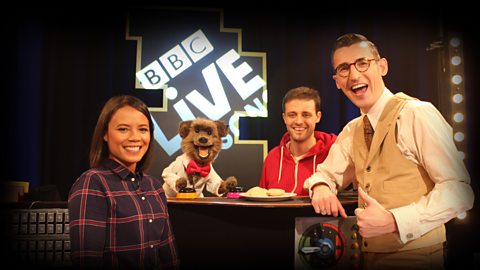
Primary BBC Live Lessons
Find out more about our Live Lessons designed for primary school students

BBC Live Lessons homepage
Return to the BBC Live Lessons homepage for more curriculum-linked Live Lessons across primary and secondary