Just over 400 years ago, a group of London merchants arrived here on the Indian coast hoping to do some peaceful trading. Those early pioneers dreamt of making huge profits.
Over 200 years, the Company they formed grew, into a commercial titan. Its wealth rivalled that of the British State.
It had its own army. And eventually ruled over 400 million people.
Its trade was vital to Britain’s commercial success and it revolutionised the British lifestyle.
Dr Andrea Major:
The East India Company changed the way we dress… Um it changed the way we eat - it changed the way we socialise.
Dan:
And, by accident, created one of the most powerful empires in history.
But the company’s rise was followed by a dramatic descent into profiteering and corruption.
And eventually a chilling story of unchecked greed with devastating consequences.
In the mid 18th century the East India company was at the heart of a global conflict.
Driven by antagonism between the great world powers of the 18th century over colonial interests, The Seven Years War raged from Europe to North America and across the world’s oceans. But in India, the ultimate prize was control over trade.
A bitter rivalry grew between Britain and France over their colonial and trading interests. They both hoped to be the greatest European power on the Indian sub-continent.
The East India Company’s hostility towards their French counter part grew into an escalating military confrontation. The British and French had set up trading posts within a few miles of each other.
The French at Pondicherry and Chandernagore, the British in Madras and Calcutta.
In 1756, rivalry exploded into open warfare.
The merchants of the East India Company had traditionally tried to avoid war. Its costs were certain but its outcomes far less so.
It was bad for business. But as the French grew more threatening in the subcontinent, the company realised it needed to get more serious about the military side of things and the motely crews guarding its forts in India weren’t up to scratch. What it needed was a serious standing army.
The Company decided to strengthen its garrison at Fort St George.
In January 1748, 150 British troops arrived in Madras, led by an irascible old soldier - Major Stringer Lawrence.
Saul:
He’s fifty years old, he’s fought in the lowlands in Spain and also in the Jacobite Rebellion. And he, he is a man with, great knowledge of military affairs and his job is really to re-form the company troops out in India.
He begins by forming them into companies, each commanded by an officer, and those companies are equipped, trained and disciplined exactly like British troops would be and of course the end result of all of this is that it becomes a much more effective fighting force.
Dan:
His new army was led by European officers, but most of the troops were Indians - known as “sepoys”, from the Persian word for soldier. Stringer Lawrence is seen as the grandfather of the modern Indian Army. Many units are the direct descendants of those he founded 250 years ago.
One young soldier in Lawrence’s new army was the future national hero, Clive of India.
Robert Clive was from a family of provincial gentry. As a young boy he was a bit of a tearaway and loved getting into fights. And he was expelled three times from school. So his father thought nothing much would come of him and he might as well gamble and send him out here to India to join the East India Company - which made men or broke them.
Saul:
He was known as a man who had a relatively short temper. He was a, as we discover in his later career, a man with tremendous energy, vigour and resolution and this must have seemed a pretty crushing way to begin his career.
Dan:
Clive would be the driving force in transforming the Company from commercial giant to the dominant political power in India.
In 1756, his great adversary was the Moghul ruler, or Nawab, of Bengal. Siraj ud Daulah an ally of the French - loathed the British and bitterly resented the Company’s hold on Calcutta. In June, he attacked the city.
Calcutta fell within hours.
And on the evening of June 20th, 146 British prisoners were taken to Fort William – now the site of the Government Post Office. One hundred yards from this spot stands a grim reminder of what happened next.
The most vivid account we have was left by a man called John Zephaniah Holwell. He’d been the Chief Magistrate of Calcutta - he’d been left in charge. And he and his men were marched into a cell just 18 foot wide at gun point. It became known simply as the Black Hole. And what happened in there became one of the most infamous stories in the whole of British imperial history.
It’s said the prisoners, crushed together, suffocating and fighting to stay upright, were gripped by claustrophobic terror.
The heat was almost unbearable.
To try to slake his thirst, Holwell took off his sweat soaked shirt and wrang it out into his mouth. Other people trampled on the weakened bodies of their comrades, desperately trying to reach the two small windows at the top of the wall and gulp down some fresh air. It was a night of unspeakable suffering and cruelty.
When the doors were flung open at dawn the next day, the cell was filled with corpses. To Holwell’s horror, just twenty-three had survived.
The news of what had happened to their fellow countrymen at the hands of a barbarous Indian despot electrified congregations right across Britain. This after all was a generation that was starting to believe that: “Britons, never, never, never shall be slaves.”
The story of the Black Hole had an immense impact on generations of Britons. To Victorian schoolchildren the events of 1756 were as familiar as the Battle of Hastings.
Saul:
What we don’t know for sure is how many actually perished that night.
The numbers range from three to over a hundred, I suspect it’s somewhere in between. What is not in question is that this was an atrocity, was it deliberate? Almost certainly not. It was unfortunate that this small airless room, it was, it happened on an incredibly hot and humid night, some of the people inside were already wounded from the battle that had taken place. And there were bound to be some fatalities, but that there were so many was a, a, a point taken very seriously by the British, the remaining British in India and also the British back home and there was very much a sense that they wanted revenge.
Determined to re-assert supremacy, Clive recaptured Calcutta, and confronted Siraj at a village called Plassey, 120 miles north of the city, in what would become a decisive moment in the history of The East India Company.
Dan:
At Plassey, Clive was terribly outnumbered by more than 10 to 1, But Clive had a plan that didn’t rely on military might alone. He’d been in secret correspondence with one of the Nawab’s key lieutenants. The commander of his cavalry. A man called Mir Jafar.
Saul:
The deal is done between Clive and Mir Jafar that at a, a certain key part of the fight, Mir Jafar will, will come onto his side,in other words he’ll leave his chief. And in return for putting him on the throne, the company will not only be paid vast sums of money, and we are talking about fantastical sums, but also it will be given a free rein in terms of its trade.
Dan:
It was all over in a matter of hours, though it had little to do with military might. Mir Jafar the traitor had been paid off and he ensured that the majority of the Nawab’s troops took no part in the battle. He was then installed as Britain’s puppet. This opened up the richest province of India to the Company. Robert Clive regarded this Machiavellian manoeuvring as the pinnacle of his career.
Clive and the Company were now rich. Better still, in exchange for a single payment of 270,000 pounds, the Company was granted the right to manage the Diwani – or the revenue and civil administration of Bengal.
This allowed them to collect land tax from the entire population of Bengal, 10 million people. It effectively turned them into the de facto government. Robert Clive estimated that it would be worth one point seven million pounds - every year. With control over the revenues of India’s richest province, The Company’s role had profoundly changed.
Saul:
It’s the point at which the East India Company really moves from being a trading enterprise to an actual ruler of territory.
The Company now had impressive armies - a robust trading network and authority over a huge swathe of territory. The Britishwere in a position of unrivalled supremacy in India - and over all Britain emerged from the 7 Years War as the world’s leading colonial power.
Video summary
Dan Snow explains how the East India Company defeated France during the Seven Years War.
This war was driven by antagonism between England and France over their colonial and trading interests.
They both hoped to become the greatest European power on the Indian subcontinent.
This led to the build-up of the East India Company's armies and the recruitment of local troops or ‘Sepoys’.
Today’s Indian Army regiments are direct descendants of these armies.
It features accounts of the Black Hole of Calcutta, Battle of Plassey, and Robert Clive.
The East India Company ended up ruling Bengal and the British were thus in a position of unrivalled supremacy in India.
Teacher Notes
This short film could be used as part of an investigation into the reasons why the East India Company was able to establish unrivalled supremacy in India.
Pupils could be asked to think about the role of a range of factors, such as military success, impact of the ‘Black Hole of Calcutta’, the role of Robert Clive and diplomacy, etc.
This short film will be relevant for teaching KS3 history in England, Wales and Northern Ireland and Third / Fourth level in Scotland.
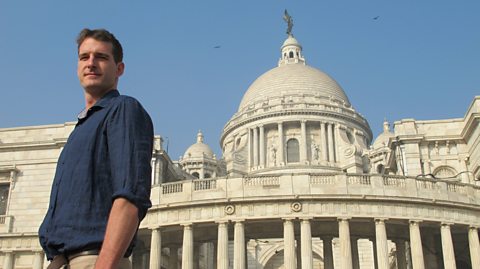
History KS3: Conflict and Mutiny. video
The position of the Company comes under threat from forces at home and in India, resulting in India eventually being given to Queen Victoria.
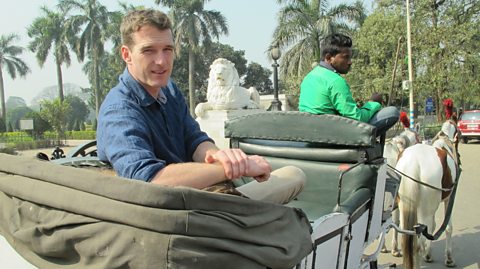
History KS3: Customs and Culture. video
A short film which describes how the British embraced Indian culture both through changes in fashions and culture.
History KS3: From Greed to Famine. video
The riches accrued from the Company’s success gave men such as Clive enormous influence in Parliament and society. However, events in India meant that it wouldn’t last.
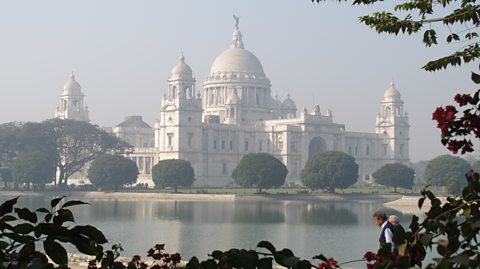
History KS3: From Merchants to Rulers. video
After the crash, the British government took over the Company, expanded its territories and built an empire.
History KS3: The Rise of a Trading Colossus. video
A short film which describes the development of the East India Company, which grew from a trading enterprise to possess the powers of a small state.