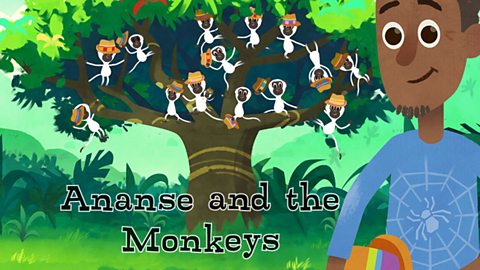
The traditional story of Ananse and the Monkeys is told by Jan Blake accompanied by members of the BBC Philharmonic Orchestra, with guest multi-instrumentalist Sidiki Dembélé.
The video
Voiceover: Come to a magical placeof fairytales and adventure.Let the music take you far away,to Musical Storyland.
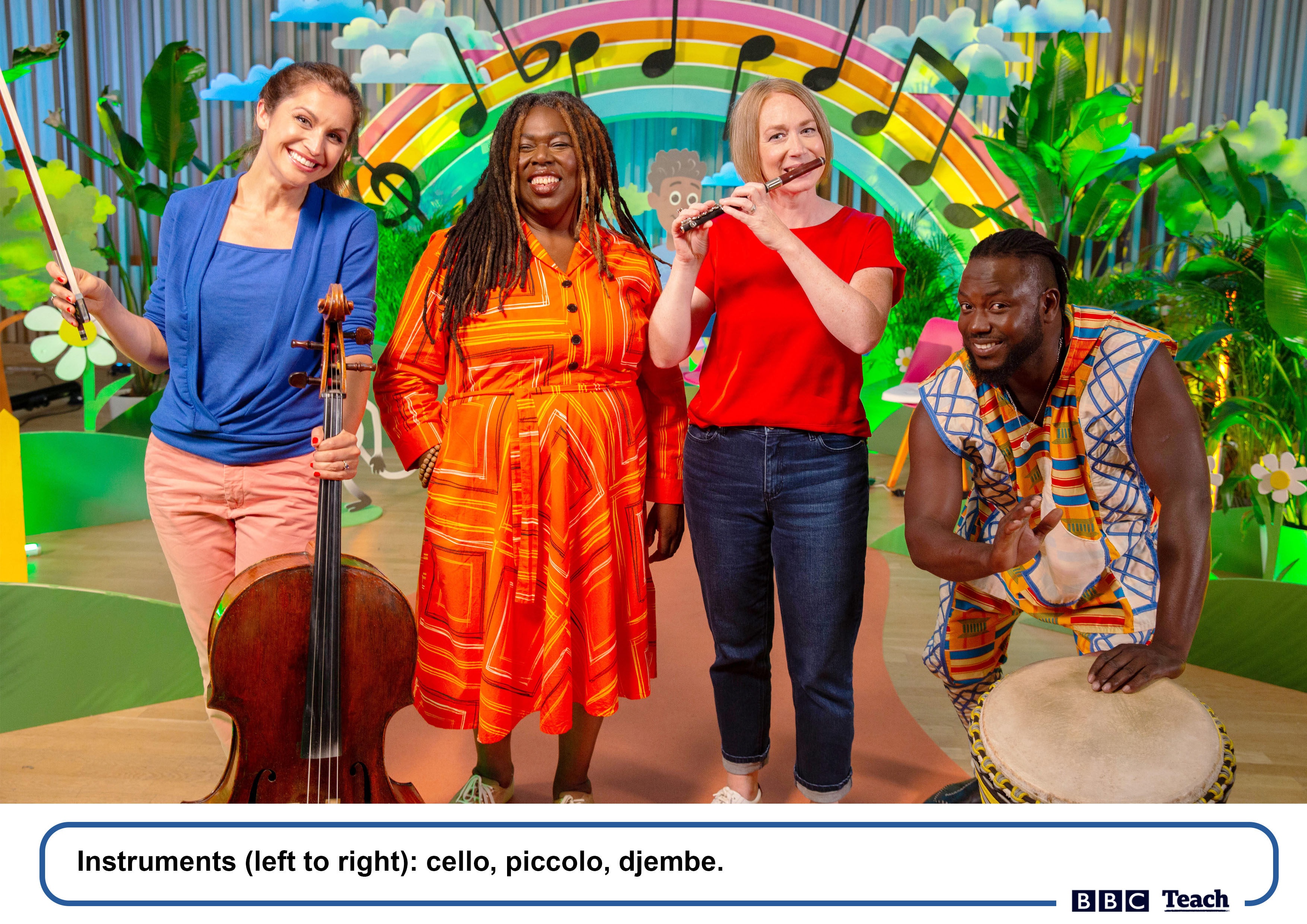
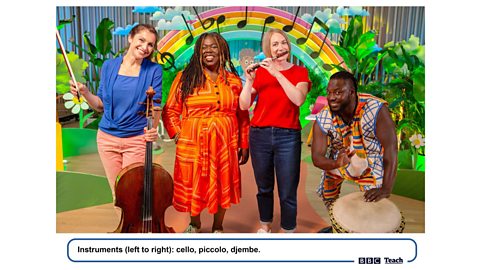
Jan: Welcome to Musical Storyland with the BBC Philharmonic Orchestra.My name is Jan and these are my friends and their musical instruments.
Sidiki: Hello my name is Sidiki and I play djembe and the calabash.
Jenny: My name is Jenny and I play the piccolo.
Jess: My name is Jess and I play the cello
Jan: Together we're going to tell the musical story of a Ananse and The Monkeys.A tale that is told in the Caribbean.
Once upon a time, Ananse lived in the house with his family.
Everyone in Ananse's house was hungry.His wife was hungry. His children were hungry and he was hungry.
Ananse and his wife talked about what they could do to earn some money.
Why don't you make something to sell at the market, she said.and then we can buy food for the children.
All right. I will, said Ananse.
Ananse had a very useful skill, he knew how to sew.
He went into a little workshop and took out some pieces of cloth his needle and his thread.
He cut the cloth into different shapes he cut the brims and crowns of hats and he began to sew.
He sewed and he sewed and he sewed until he'd made one hat.
He sewed and he sewed and he sewed until he'd made two hats.
He sewed and sewed until he'd made sixteen hats.
Ananse put the hats into a big basket, put the basket on his head
and walked through the forest towards the market.
Ananse had worked very hard that morning and after working and walkingand walking and working, he began to feel a little bit tired.
He saw a huge tree with big leaves that provided shade underneath.
Oh, I'll just take a nap he thought as he put down his basket,put on one of his hats to block out the sun and went to sleep.
Ananse didn't know that up in the tree was the family of monkeys,there were parents, grandparents, aunts, uncles, children and cousins.
The monkeys came down and each one took a hat from Ananse's basket.
Fifteen hats on fifteen monkeys heads.
The monkeys liked how they looked.
They did fashion shows and gave each other compliments like ooh ooh ahh ahh ooh ahhhh.
At that moment, Ananse woke up and saw the fifteen monkeyswith his fifteen hats and this is what he said to them:
Excuse me, those are my hats.
Ooh ooh ooh, ahhh ahhh ahhh ahhhh.
You don't understand.
Give them back.
Ananse became very frustrated.
He said give me my hats.
And the monkeys said: ooh ooh ooh ahhh
Ananse realised something.
The monkeys copied everything he did.
As an experiment he tried scratching his head.
The monkeys scratched their heads.
Ananse tried making a funny face.
The monkeys made funny faces.
This time Ananse knew what to do.
Excuse me, those are my hats.
Ooh ooh ooh, ahhh ahhh ahhh ahhh.
You don't understand give them back.
Ooh ooh ooh, ahhh ahhh ahhh ahhh.
Ananse pulled off his own hat and threw it to the ground.
The monkeys copied and the hats rained down from the top of the tree.
Ha! said Ananse. Got you!
Ananse, put the sixteen hats back in his basket, put the basket on his head
and went to the market
He sold each and every hat and used the money he had madeto buy his family a good meal.
He also bought sixteen bananas.
And on his way back, he gave each of the fifteen monkeys a banana,saving one for himself.
Everyone ate their bananas together before a Ananse set off for home.
Goodbye friends, called Ananse.
Ooh ooh ahhh, said the monkeys.
That night Ananse and his family ate a delicious mealand the monkeys slept soundly in their tree, dreaming of hats and bananas.
And from that day on, the chant that Ananse had shared with the monkeysbecame a family favourite.
Excuse me,
those are my hats.
Ooh ooh ooh, ahhh ahhh ahhh ahhh.
You don't understand.
Give them back.
Ooh ooh ahhh.
Ananse and the Monkeys
Presenter: Jan Blake
Composer: Daniel Whibley
Instruments: Djembe and the Calabash / Piccolo / Cello
Synopsis
Ananse's family are hungry and need to earn money so they can eat. Ananse decides to use his sewing skills to make hats to sell at the market.
Ananse makes sixteen hats, puts them into a big basket and walks through the forest towards the market. Feeling tired after the hard work, he takes a nap under a huge tree, but doesn't realise that up in the tree is a family of monkeys. The monkeys came down and each take a hat from Ananse's basket.
Ananse wakes up to find fifteen monkeys wearing his hats. He asks for them back, but the monkeys refuse. Ananse realises that the monkeys copy everything he does. When he scratches his head, the monkeys scratch their heads. When he makes a funny face, the monkeys make funny faces.
Ananse has an idea. He removes his own hat and throws it to the ground. The monkeys copy and the hats rain down from the top of the tree. Ananse is able to sell every hat at the market, and uses the money to buy his family a good meal. He also buys sixteen bananas and, on his way back, gives each of the fifteen monkeys one, saving one for himself.
That night Ananse and his family ate a delicious meal and the monkeys slept soundly in their tree, dreaming of hats and bananas.
Curriculum links
Music
The film and the accompanying Teacher Notes can be used to fulfil the following objectives of the Key Stage 1 music curriculum, which states that pupils should be taught to:
- use their voices expressively and creatively by singing songs and speaking chants and rhymes
- play tuned and untuned instruments musically
- listen with concentration and understanding to a range of high-quality live and recorded music
- experiment with, create, select and combine sounds using the inter-related dimensions of music.
English
The film and the accompanying Teacher Notes can also be used to target objectives from the Key Stage 1 English curriculum, particularly relating to Spoken language, Reading and Writing.

Resources
Teacher Notes. document
Download / print the Teacher Notes for this episode
The instruments. image
Click to display image full size
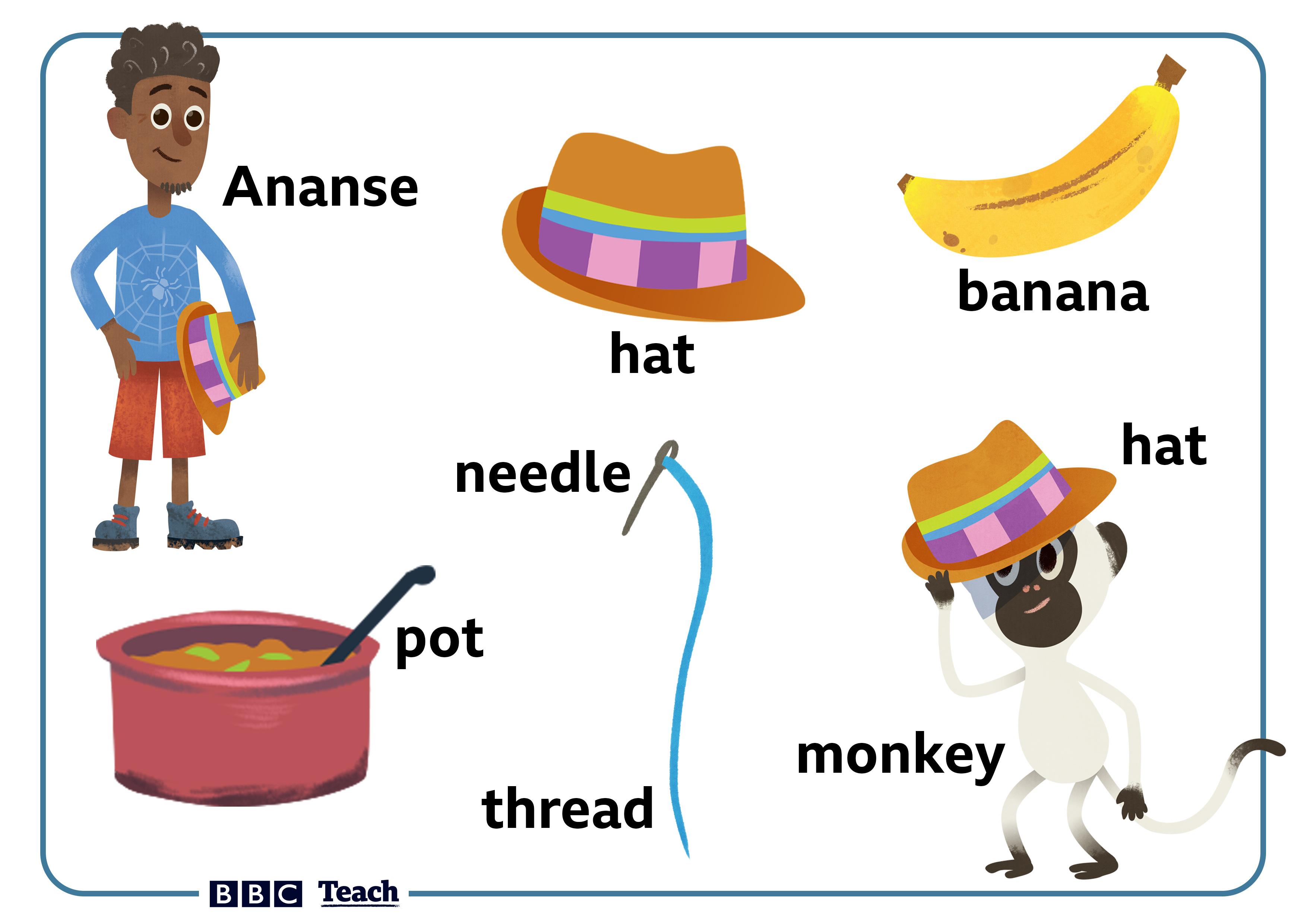
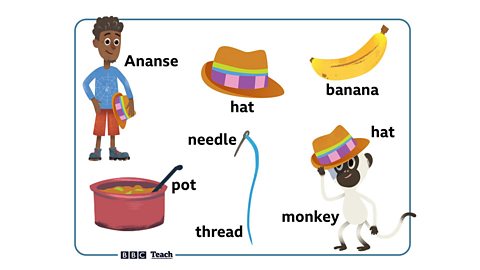
Vocabulary. image
Click to display image full size
More Musical Storyland
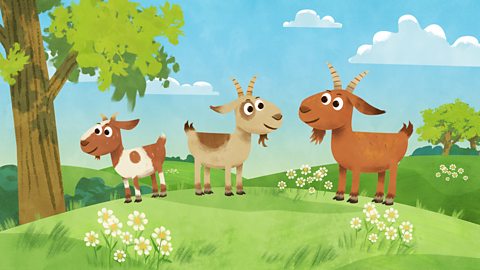
Three Billy Goats Gruff. video
Join in with the goats’ rhythmic patterns and the troll’s catchy song as they trip trap over the bridge. Which instrument size matches which goat size? And which instrument represents the grumbly troll?
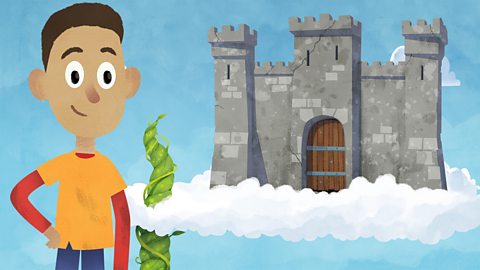
Jack and the Beanstalk. video
Jack meets a giant in his adventures at the top of the beanstalk. Join in with the giant's song and see and hear the instruments that help tell this enduringly-popular story.
The Great Race. video
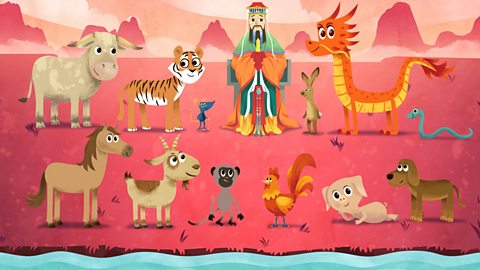
The Jade Emperor invites the animals of the world to race to decide the order of the years of the Zodiac. This Chinese story, told at Lunar New Year, features the guzheng, piccolo, violin and cello.
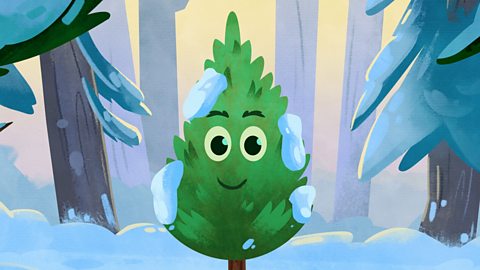
The Little Fir Tree. video
This fir tree may be little, but she has some big emotions. She contemplates what life has in store in this musical Christmas story with a sustainability theme.
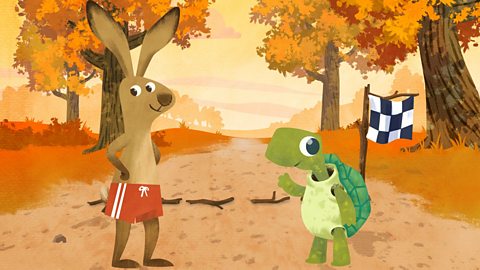
Hare and Tortoise. video
Has Tortoise got what it takes to beat Hare in a race? This upbeat version of the well-known story features bassoon, clarinet and double bass and includes activities that can help develop co-ordination.
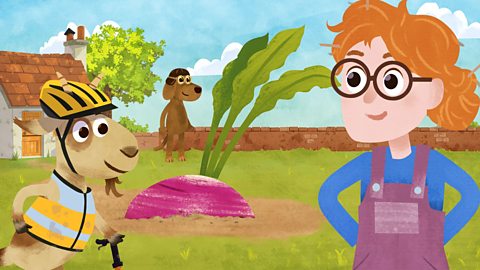
The Enormous Turnip. video
Unexpected characters arrive to help the farmer and her daughter pull up their enormous turnip. Trumpeter Sean Chandler presents and plays in this brass version of the story that’s all about team work.
The Stone Cutter. video
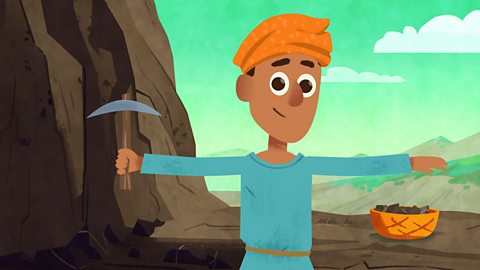
The hard-working Stone Cutter wishes for greater things in life. Join in with the chants in this cyclical story from India, featuring oboe, violin and tabla.
The Baobab Tree. video
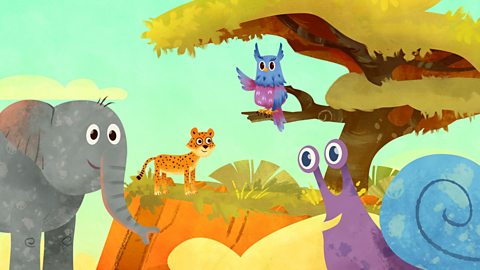
Can the hungry forest animals find the magical tree which will give them food and water? This traditional tale from West Africa features the n’goni, calabash, djembe, clarinet and cello.
The Three Little Pigs. video
Can the three little pigs make houses strong enough to keep the hungry wolf out? Children can join in with the call and response chorus in this enduringly popular tale featuring horn, clarinet and accordion.