AIMEE:So, the first thing to look at is your CV. Now, a CV is a document that basically lays out all of your skills and experience-
AIMEE:and it's the first introduction to an employer. So, if you're selling yourself to somebody, you want to really impress them. So, make sure it's full of power, full of impact. The first thing you need to do is look at your personal profile.
AIMEE:Come up with something genuine to you, personal to you, talk about your goals, a couple of lines of what it is that you want to achieve in your career. The next thing you need to do is lay out any experience that you've got. And I would tend to do this in a bullet-pointed format, rather than script-essay style. The reason being is that when you're in a rush, bullet points are much easier to read, and to gather that information. The next section is called hobbies. So, fine to talk about all of your hobbies, but as an employer, I want to know how you benefit me. So if you run a marathon, that's great, but you can then say, it shows that, "Everything I put my mind to, I achieve." Okay? And then that tells me what kind of character you're gonna be. What type of employee you're gonna be. I want to know how you're gonna get on with the team I've already got, okay? So talk about your values and your motivators. And then the next section you've got is your references, and people often just put the references available on request. I don't think that that sells you, not really. I think many years ago, that probably would have been okay, but people really need to up their game in this market. It's very competitive out there. So, if you've got somebody that's saying fabulous things about you, put it on the CV. Put a line, say this is my referee, this is their names, this is where they work, and this is what they said about me. You have to remember that your CV isn't about you, and I know that sounds really, really weird, but your CV isn't about you. Your CV is about how you benefit the company that you're applying for.
MUSIC
AIMEE:You always need to write a cover letter with a CV, But not a cover letter that just says,
AIMEE:"Please see my CV attached." Again, that's a massive opportunity to communicate with an employer that you've missed. So, in your cover letter, keep it really short, full of impact, really punchy. Tell them why they should pick you. Don't tell them why they should pick you. Actually give them examples of why they should pick you. But also, tell them why you picked them. No employee wants to feel like you've just written to a hundred different people, just hoping somebody will give you an interview. If you want somebody to like you, you've got to make them feel special. And if you want somebody to be interested in you, you need to show that you are genuinely interested in them.
MUSIC
AIMEE:So, now, it's time for the interview, and you need to really impress them, okay? So, the first thing you need to do before you impress them is prepare, okay?
AIMEE:So, sit down, and actually prepare, research the company, okay? So, when they turn around and say, "What do you know about us? What do you know about our business?" You'll be able to give them some really, really good answers. So, talk about their competitors. What type of person in this business succeeds. And remember-
AIMEE:you need to be really, really interested and focused on them.They're the people you wanna workfor. So, now you need to do somehomework on yourself, because whenthey turn around and say to you,
AIMEE:"Why you? Why should I pick you?" you need to have a really good answer. Sit down and think about all of the things that you're really good at, okay? What are your unique selling points. Make a list of them, and be prepared. And something that works really well is sending a thank you note. Tell them what you really loved about meeting them.
AIMEE:Pick out something special from your conversation. That will have a massive impact.
MUSIC
AIMEE:So, you've got the job. Now what? Well, apart from obviously doing the job, I want you to really remember that the first three months might be a bit scary, might be a bit crazy. You'll probably be doing things that you've never done before. And being out of your comfort zone can feel a little bit uncomfortable, but bed in and power through. Next, I think it's really important to remember that you will have days that are better than others, and that's normal, but you need to keep really, really positive, okay? Always show up to work tomorrow, always want to do better than you did today, always wanna be the best you can be. And that will have a massive impact on your employer, and it will make you go far.
Video summary
This dynamic series of seven short films follows a group of teenagers as they try out being an apprentice for the day in a variety of different jobs everything from a hairdresser to a dental nurse.
The films include:-
- Careers mentor Aimee Bateman offering advice on how to create a CV and cover letter
- insights into what it's like to be an apprentice for a day.
- Job roles include: engineer, hairdresser, plumber, chef, outdoor education tutor and dental nurse
These clips are taken from the original BBC series, Apprentice for a Day
Suitable for: KS3 and KS4 / GCSE in England, Wales and Northern Ireland and 3rd and 4th Level in Scotland
Teacher Notes
Staff can use this clip before students write an application for a job, apprenticeship, work experience or volunteering opportunity.
They can discuss with students how to prepare a CV and covering letter that really stand out.
Careers mentor, Aimee Bateman, tells students how to market themselves, what to include and how to communicate with a prospective employer.
Staff can prepare students for a real or mock interview by using the middle part of the clip which shows how a job candidate can best prepare for and perform at interview.
Aimee explains how to focus on prospective employers by finding out about their company and their competitors.
She emphasises that it is important to explain why you chose them and, if they choose you, how you will benefit them.
Aimee also explains why it is a good idea to send a follow-up thank-you letter.
Staff can use the final part of the clip to prepare students for making the transition to working life and adjusting to their new role as a trainee, apprentice or worker.
Aimee explains how to settle in, stay positive and keep on improving.
This clip will be relevant for teaching Business and PSHE Citizenship at Key Stage 3 and Key Stage 4/GCSE, in England and Wales and Northern Ireland.
Also at 3rd and 4th Level in Scotland.
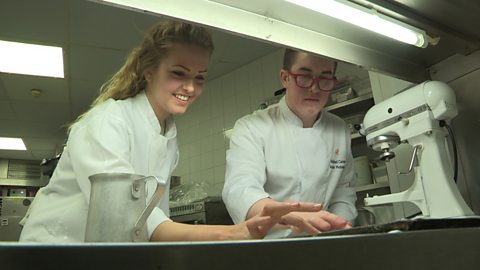
Apprentice chef for a day. video
15 year old Ellie tries out being an apprentice chef for a day.
Apprentice dental nurse for a day. video
17 year old Josh tries out being an apprentice dental nurse for a day.

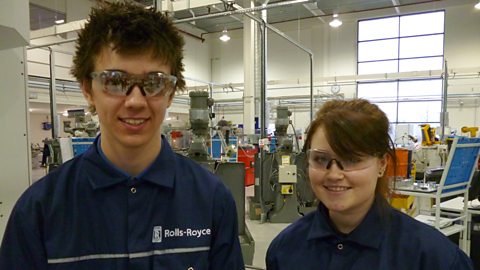
Apprentice engineer for a day. video
17 year old Lewis tries out being an apprentice engineer for a day.
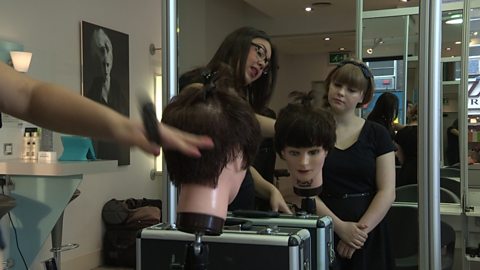
Apprentice hairdresser for a day. video
14 year old Beth tries out being an apprentice hairdresser for a day.
Apprentice outdoor education tutor for a day. video
15 year old Evie tries being an apprentice outdoor education tutor for a day.
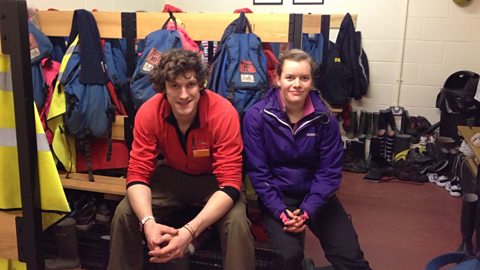
Apprentice plumber for a day. video
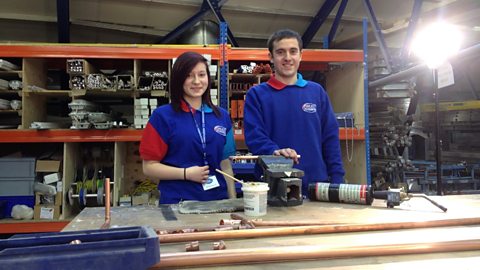
15 year old Courtney tries out being an apprentice plumber for a day.