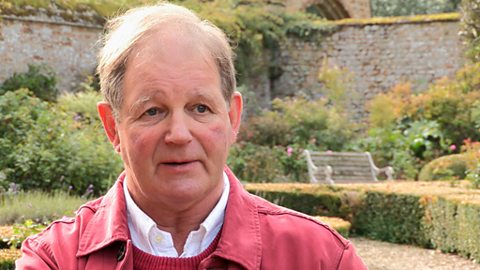
REBECCA ABRAMS:I think one of the most useful things that anyone ever said to me
REBECCA ABRAMS:was an agent, literary agent, and she said, you know, "We wouldn’t expect a violinist to pick up a violin and start playing you know, Bach's Sonata."
REBECCA ABRAMS:And yet we do expect writers to, sort of, write this peerless prose without your allowed the nuts and bolts in just the same way that a musician will have to practice their scales.
REBECCA ABRAMS:With writing as well you can write about ordinary things and you can write about familiar things. Before you make yourself go off and do the really scary, difficult stuff.
REBECCA ABRAMS:Even just getting home from school and getting straight on the phone to your friends.If that's something that really gives you pleasure and really is an important part of your life and your day, then that’s something you can use to write about, that’s a starting point for writing.
REBECCA ABRAMS:Some writers like to plot it all out and know where they're going and have you know, have a lot of stuff filled in. I remember Hilary Mantel once saying when she first started writing she used to have yellow post it notes all over the wall, saying exactly what was going to happen at each stage.
REBECCA ABRAMS:And some writers just like to dive in and start swimming and hope they don’t sink. And that's what they like, so I think it's horses for courses and again I wouldn't want to say you've got to do it this way. I think it's all about giving people permission to find the way to write that works for them.
REBECCA ABRAMS:Go off and in the next two days, just note down a bit of conversation you've overheard between two people. And then use that as the starting point for a little story or a play or you know, something. But there's material all around us all the time.
REBECCA ABRAMS:Dive right in to the character you're writing about or the situation you're writing about. And that’s the only way to forget you, as the author, as the writer.
REBECCA ABRAMS:So you think to yourself, OK, what is this character? How does this character eat? How does this character think? How does this character tie their shoe?
REBECCA ABRAMS:Or whatever, that was just an example but the only way to escape from yourself in that self-consciousness is to lose yourself in whatever it is that you're writing.
REBECCA ABRAMS:Some people write because they want to be heard, some people write because they've got something they really want to say.
REBECCA ABRAMS:And some people write just because they can't stop themselves. Some people write because they want to change the world. And they're all really valid reasons.
REBECCA ABRAMS:You only need to know why you want to write, you don’t need to know why anyone else wants to write.
Video summary
Novelist Rebecca Abrams offers advice for young aspiring fiction writers by offering tips on how to: find inspiration; learn about writing dialogue; dream up characters; devise plots; and so fill that frightening empty page.
But above all, she says, it is important to remember that no one expects someone to pick up a violin and play it straightaway.
It is the same with writing – you have to learn the basics, build on them, and practise.
This clip is from the series How to Write.
Teacher Notes
This clip can be used to show students the importance of not always relying on inspiration for a story to come from external sources, but that many stories can be inspired by their own lives.
Students are asked to recall the last conversation they had with a close friend by text or phone (they can edit this as appropriate).
Can they write the basic gist of the conversation down as two characters speaking?
What ideas does this give them for a story?
Can they use these ideas as the basis for writing a short story of their own?
This clip is relevant for teaching English Literature at KS3 in England, Wales and Northern Ireland, and 3rd and 4th Level in Scotland.
Philip Pullman on his novels. video
Author Philip Pullman gives fascinating insights into the workings of a novelist's mind.
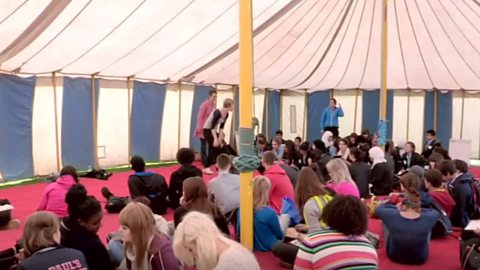
Poetry workshop - The 2 sides of me. video
Caroline Bird invites thirty teenagers to imagine the two sides of their personalities and write poems about the differences.
Michael Morpurgo on storywriting. video
Michael Morpurgo reveals how he came to write the novels Private Peaceful and War Horse.