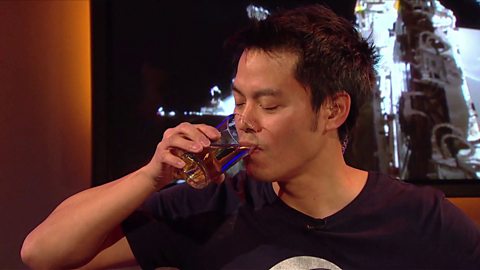
Kevin Fong discusses with Moon scientist Katie Joy why she believes that returning to the Moon is an important priority for scientists.
She explains that the samples of Moon rock collected by NASA during the Apollo missions are still being studied today.
She believes that the Moon may contain samples of rock from Earth’s early history which have been preserved due to the lack of seismic activity, plate tectonics and erosion.
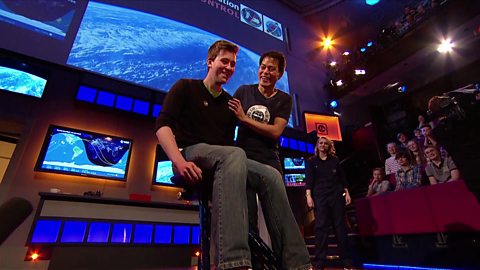
Kevin uses a volunteer from the audience to demonstrate how meteorite impact on Earth could have thrown up debris which might have landed on the Moon.
This clip is from the Royal Institution Christmas Lectures 2015.
Teacher Notes
Key Stage 3
Ask students to research where the Moon came from and why it is made from similar rocks to the Earth’s crust.
Then ask them to find out how many manned and unmanned missions there have been to the Moon.
Key Stage 4
After watching the clip, students could debate how funding for space programmes should be spent, such as on ISS missions, Moon research, Mars research, and unmanned missions to the outer solar system.
Curriculum Notes
This clip will be relevant for teaching Physics.
This topic appears at KS3 and in OCR, Edexcel, AQA, WJEC KS4/GCSE in England and Wales, CCEA GCSE in Northern Ireland and SQA National 4/5 in Scotland.
More from the Royal Institution Christmas Lectures 2015
What is Newton's Cannon and Third Law? video
Dr Kevin Fong demonstrates projectile motion, orbit and Newton’s Third Law.
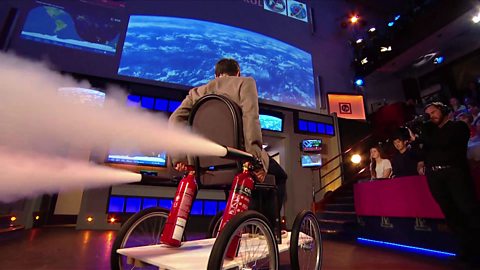
Using Earth’s rotation to launch a rocket. video
Dr Kevin Fong demonstrates how a space rocket’s launch direction affects its success in reaching orbit.
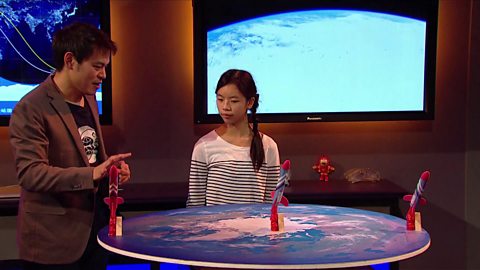
How the vacuum of space affects the human body. video
Dr Kevin Fong does a demonstration to show the lethal effects of a vacuum on the human body.
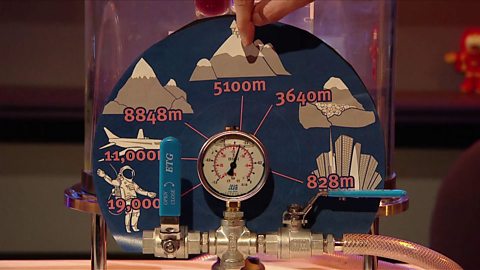
Resonant Frequency. video
Dr Kevin Fong explains how sound vibrations could pose a real threat astronauts and rockets in space.
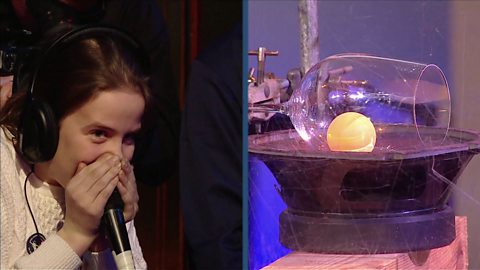
Orbital Rendezvous. video
Dr Kevin Fong demonstrates how and why it's so hard for a spacecraft to catch up with the International Space Station.
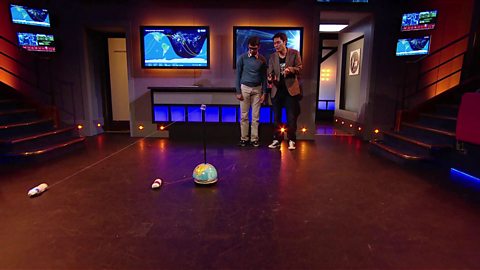
What does gas weigh? video
A demonstration that carbon dioxide can be poured because it is denser than air.
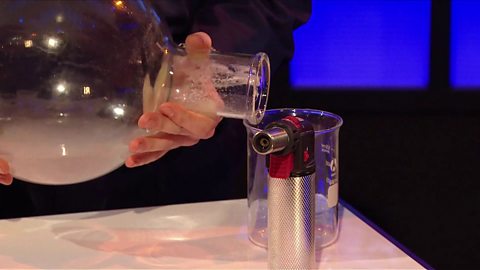
Why are bones weaker in orbit? video
Kevin Fong explains how micro-gravity can weaken bones. Models are used to show that bones are strong but light, and how low gravity weakens them.
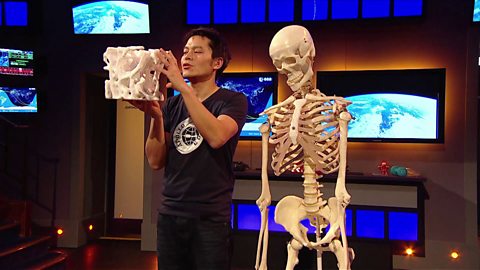
How micro-gravity disorientates us. video
A demonstration of how dizziness occurs during motion sickness or micro-gravity.
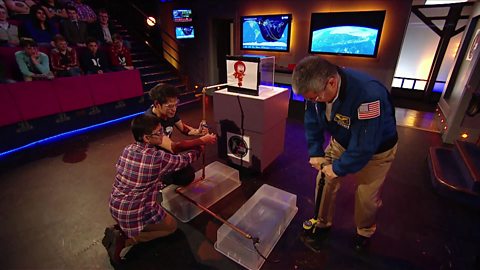
The danger of orbital debris. video
Dr Kevin Fong and NASA astronaut Dan Tani explain the danger of space debris.
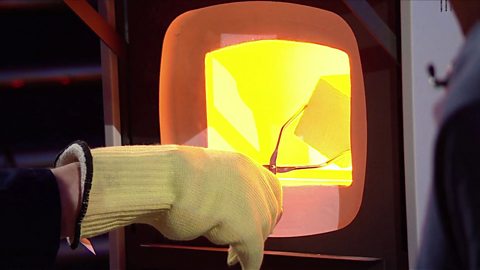
Demonstrating heat shield material. video
Dr Kevin Fong explains that space capsules heat up due to pressure not friction. He demonstrates a heat shield’s low thermal conductivity.
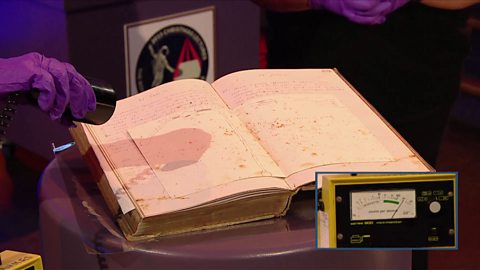
Demonstrating radiation detectors. video
Dr Kevin Fong shows how a Geiger-Muller tube can detect ionising radiation but not the type of radiation, and how detectors on the International Space Station can.
How Earth protects us from radiation. video
Dr Kevin Fong discusses the dangers to astronauts of solar radiation, and how we’re protected from it by Earth’s atmosphere and magnetic field.
Why tardigrades can survive in orbit. video
Dr Kevin Fong explains why tardigrades are so resilient when exposed to ionising radiation lethal to most other organisms.
How to recycle urine in space. video
Dr Kevin Fong demonstrates a urine recycling system that works using osmosis, concluding by drinking the liquid that is produced.