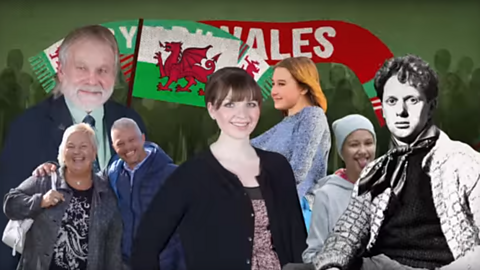
Elis James: Croeso i Gymru!
Elis James: If you ask what it means to be Welsh today, there’s a strong feeling of who we are, and not only when it’s rugby world cup time.
Elis James: Over the centuries, Wales has not exactly been immune to invasions and economic integration. But even though we speak that mish-mash of invader languages called ‘English’ - we’ve also kept our mother tongue, Cymraeg.
Elis James: There were times when it seemed the old language might die, particularly in the 1800s, when Welsh was actively discouraged in some schools, and large numbers of English workers moved here during the industrial revolution.
Elis James: But in the twentieth century there was a growing resurgence in the Welsh speaking movement - a pride in our ancient identity and a determination to protect the language, which was one of many forces that led to devolution in 1997.
Elis James: Devolution is the transfer of power from a central government to a local one. So this means that while Wales remains part of the UK, it retains independent control over certain areas.
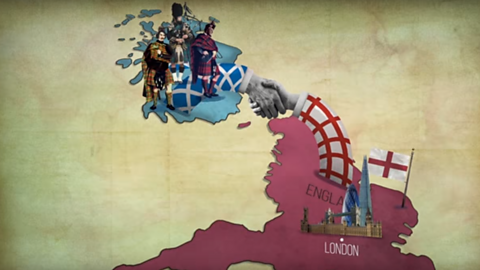
Elis James: The Welsh Assembly doesn’t have as much power as the Scottish Parliament, or the Northern Ireland assembly. This is mainly because we’re much more melded with England, and historically there hasn’t been as strong an independence movement in Wales. A sentiment reflected by the narrow voting margin in the referendum itself.
Elis James: The Assembly’s still an important institution though - it’s responsible for representing the interests of the Welsh people, making laws that apply to Wales and holding the Welsh government to account.
Elis James: Elections to the Assembly use an unusual voting system - first past the post voting for 40 of its members, plus proportional representation for the other 20, which means it’s still possible for smaller movements to win seats and make their voices heard.
Elis James: And the very first act that the Assembly passed into law? Making Welsh an official language, and decreeing that the two languages must be treated equally.
Elis James: However, language is not all that defines us. Our identities are the communities we belong to and the people we are surrounded by - the ones we can, and sigh can’t choose.
Elis James: So in some ways, Welsh identity has become stronger in recent decades. In others though, it’s been shaken by the decline of the industry that Wales was defined by for so long; coal and steel in particular.
Elis James: For many people, trade union solidarity was just as important as national identity, and we’re still trying to find our way in the post-industrial era. Certain Welsh regions are identified as suffering very high unemployment and being the most in need of economic development aid in all of the UK. A lot of that development funding has come from the European Union, but in the 2016 referendum, Wales was among the regions that voted to leave the EU.
Elis James: For some of those who voted to leave, this was an optimistic vote, one for a better future, in which Wales could have a stronger economy, more jobs, and more local control. For others, it was simply a protest – saying to Westminster that the regions have been ignored for too long.
Elis James: Going forward though, what does this vote mean for us?
Elis James: With such uncertainty, it's young voices that will need to be heard and direct our future as a nation. The future of Wales is in your hands… no pressure guys.
Through a compelling mix of traditional illustrations and modern animation, this short film for secondary schools serves as an animated summary of citizenship issues as they relate to Wales.
It examines topics such national identity, Welsh politics and Wales' relationship with the European Union.
It also outlines Wales' relationship to the United Kingdom, both historically and as it is now.
The film underlines the importance of being an active citizen in all levels of politics.
Please note that this video was created in 2018 and so some of the information within might be out of date. For example, the Welsh Assembly changed to Senedd Cymru / Welsh Parliament in 2020.
Teacher Notes
This short film underlines the importance of being an active and engaged citizen in the political process. Therefore, it could provide a springboard for further discussion about types of political engagement.
After watching the film you could have a class discussion and/or debate about their views on Wales’ relationship to the rest of the United Kingdom and towards Europe.
Curriculum Notes
This short film covers the following aspects of all UK curricula:
- The different ways in which a citizen can contribute to the improvement of his or her community, to include the opportunity to participate actively in community volunteering, as well as other forms of responsible activity.
- The legal system in the UK, different sources of law and how the law helps society deal with complex problems.
- Parliamentary democracy and the key elements of the constitution of the United Kingdom, including the power of government, the role of citizens and Parliament in holding those in power to account, and the different roles of the executive, legislature and judiciary and a free press.
More from How Government Works:
British law and the constitution. video
An animated overview of the foundation of British law and the constitution.
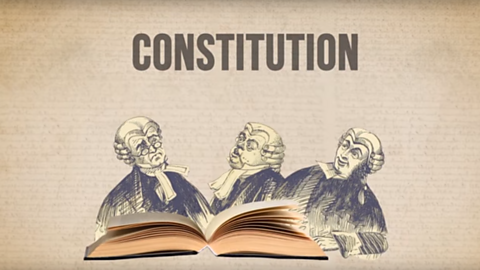
What is political power? video
A summary of the key aspects of political power, including the history, forms and ideas that make and maintain it.
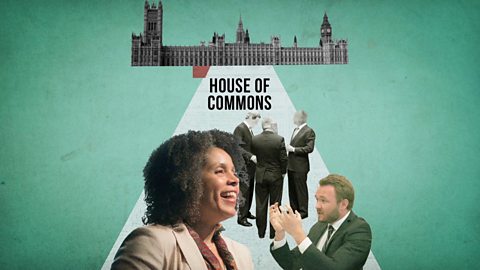
Citizenship and politics in Northern Ireland. video
An animated summary of citizenship in Northern Ireland, including national identity and the independence movements.
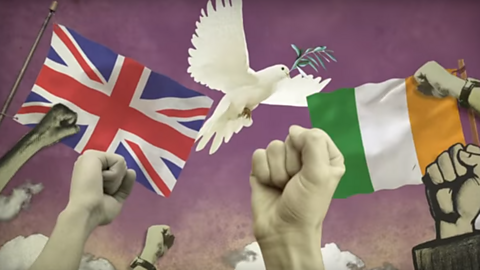
Citizenship and politics in Scotland. video
An animated summary of citizenship in Scotland, including national identity and the relationship with the European Union.
Dinasyddiaeth a Gwleidyddiaeth yng Nghymru. video
Ffilm animeiddiedig fer yn crynhoi materion dinasyddiaeth a pha mor berthnasol ydyn nhw i Gymru.