Ariba:
And they have wings.
Sabrina:
Ooh. There it goes!
Jake:
Different sizes for different …people?
Orla:
This looks like a balloon.
Kit:
Click!
Jesse:
Crystal clear.
Euella:
OK, so you know what a period is. But do you know how themenstrual cycle affects people?
Tyla:
I'm quite argumentative. I'm quite, like up and downish.
Sabrina:
I can become very drained, my emotions aren't the greatest thatweek.
Euella:
For most people starting your period is a big deal. For some peopleit's something to look forward to, for others, not so much. Andsometimes, it can even be a surprise. But whatever feelings itbrings, you should know that they are all valid.
Ariba:
When I first started my period, I was ten years old. I was reallynervous and I was really scared and I knew a little bit aboutperiods, but I didn't know enough.
Sabrina:
As I started my period fairly young, it was a little bit awkward.There was only one other girl in my whole entire class and year, infact, who had started her period. And we kind of would relate toeach other on that.
Orla:
It wasn't something I'd ever experienced before, so for me, I wasreally nervous about it.
Euella:
It's normal to be nervous, or maybe excited in the early days ofyour period. But besides the nerves, people can experience a wholerange of emotional and physical changes over the course of themenstrual cycle.
Euella:
Many people experience Premenstrual Syndrome or PMS. This iswhen you have symptoms in the weeks just before your period. Itcan change from month to month and the symptoms are wide andvaried.
Ariba:
I have suffered from Premenstrual Syndrome. I tend to suffer withit a week before I start my period, and I tend to get, like, moodswings and I tend to get really hormonal and really angry.
Sabrina:
The week leading to my period, I'm very drained and, yeah, I justbecome quite lethargic, in that sense, and very fatigued.
Tyla:
It just aches a lot. I get really bad stomach cramps, mood swings. Ifyou say "Hi' to me I'll probably tell you to shut up.
Orla:
Just on the lead up to my period, I would know my period wascoming, because I would get loads of spots and acne.
Ariba:
And my hair gets greasy as well.
Sabrina:
There's just so many things, I get really hot and sweaty as well,actually.
Ariba:
And sometimes I have like a really intense appetite, where I'm reallyhungry.
Euella:
Not everyone experiences PMS, but for those who do here withsome of the common symptoms: Mood swings; feeling upset,anxious or irritable; tiredness or trouble sleeping; breasttenderness; headaches; bloatedness or tummy pains; spotty skin orgreasy hair; changes in appetite.
Euella:
There are lots of ways that the menstrual cycle can affect how youfeel and how you look. But the good news is that there are lots ofthings that you can do to help yourself. You can: Exercise regularly;eat a healthy, balanced diet; get plenty of sleep and try and reduceany stress you feel.
Euella:
If you find these things don't help and your periods are very painful,have a chat with a parent, guardian or GP and they can help youdecide if pain relief might be the thing for you.
Euella:
It's also a good idea to keep a diary of your symptoms for at leasttwo or three menstrual cycles. If you find your symptoms aredifficult to manage or they don't pass as you move through yourcycle, make an appointment with your GP and bring the diary withyou, as this can help give a clear picture of what's going on.
Euella:
Of course, if you are experiencing severe pain and discomfort oryou're feeling seriously low, you should seek medical adviceimmediately.
Euella:
Everyone who menstruates, will find that having a period impactson their life in some way. And for most people, this will mean a fewdays of not feeling so good. But for some people, this can be moredifficult.
Sabrina:
There's just been so many situations where my period has affectedmy life. You know, it's affected my schooling in my work life, mysocial life.
Orla:
It definitely wasn't a pleasant experience trying to sit in lessons orexams when having really bad cramps.
Kit:
As a trans man, it's very difficult to have a period. Even all thesupport that you try to find online, it's always talking aboutwomen's health problems, feminine products. So it's forcing you tomisgender yourself in order to get the help that you need.
Euella:
But help is out there. Start by trying to communicate with yourfamily or the people around you, and remember you are not alone.
Ariba:
I feel like we need to just learn more about our bodies.
Tyla:
So I think it's important that it's normalised, it is normal.
Sabrina:
And you know when you go, "Check the back," like you know whenyou ask your friend to do that? Yeah.
Sabrina:
Always doing that, secondary school, it was pretty, like, normal,especially as we got older.
Euella:
So go on, reach out, support each other and just keep talkingperiods.
Video summary
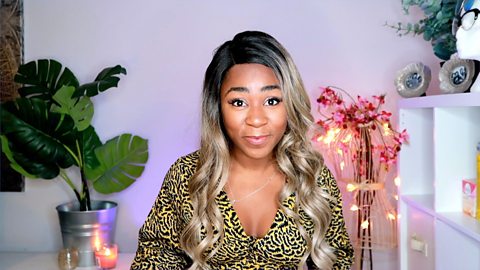
Young people share their experiences of the effects of the menstrual cycle, whilst Euella Jackson offers information and advice on PMS.
Many people experience Premenstrual Syndrome, or PMS. This is when you have symptoms in the weeks just before your period.
Euella goes through some of the common symptoms, including: mood swings; feeling upset, anxious or irritable; tiredness or trouble sleeping; breast tenderness; headaches; bloatedness or tummy pains; spotty skin or greasy hair; and changes in appetite.
Euella also explain that there are lots of things that you can do to help yourself, such as: exercise regularly; eat a healthy, balanced diet; get plenty of sleep and try and reduce any stress you feel.
This short film is from the BBC Teach series, Talking Periods.
Teacher Notes
Before watching the film
During the planning stage, be sure to watch the film first to fully consider whether it will be appropriate for your specific pupils and how it can be best utilised. An initial assessment of your pupils' understanding of periods ahead of using this film is strongly recommended.
It is advisable to check government guidance and your school policies in order to make sure you follow guidelines and talk to a member of the SLT (Senior Leadership Team) if you have any queries or concerns. You could also consider inviting the school nurse in to support the learning further.
Setting up a working agreement with the class and creating a list of ground rules for the session together will make sure everyone feels safe and able to talk and join in without feeling judged. Remember to include a reminder to talk to a trusted adult if anything in the film makes them feel worried or uncomfortable. Creating a list of ‘go-to’ people in the school with students might be useful.
Watching the film
You may find it useful to pause the video at certain points to discuss or clarify certain aspects or check for understanding.
Here are some questions and timings along with some activity suggestions you could use as you go through the film:
01.16: Ask the class to discuss in pairs what they think PMS is. They could write down a statement and then feed back. (The film will answer this.)
02.40: Pause the video on the list of PMS symptoms. Put the class into small groups and give them some or all of these symptoms written on a large sheet of paper. Ask them to imagine they have these symptoms but had to come to school. How would they feel and what could they do to help themselves? Once the task is completed, allow time for the class to feed back and discuss together.
The list of symptoms mentioned in the film are below. For more information you can visit the NHS website
- Mood swings
- Feeling upset, anxious or irritable
- Tiredness or trouble sleeping
- Breast tenderness
- Headaches
- Bloatedness or tummy pain
- Spotty skin or greasy hair
- Changes in appetite
03.00: Pause the video on the list of things people who menstruate can do to help themselves. Put the class into small groups or pairs and give them a timetable of an average school day or week. Ask them to come up with an achievable timetable to fit in regular exercise, enough sleep, stress reduction and mealtimes (and maybe healthy eating plans.)
The list of ways to help yourself mentioned in the film are below:
- Exercise regularly
- Eat a healthy, balanced diet
- Get plenty of sleep
- Try to reduce any stress you feel
03.45: This could be an opportunity to look up where the local GP surgery and family planning/sexual health centres are and to look at how to book an appointment. You expand this session to talk about what to expect at an appointment.
Where appropriate, you could invite a fully inclusive group of older, confident peers who do and do not have periods, to come into this lesson to sit with small groups and talk about some of the symptoms they experience with their periods, and how they cope with them and how they support others they care about when they are experiencing symptoms.
Pupils could do a research project on the positive aspects of periods and the menstrual cycle.
After watching the film
At the end of the film allow time for any questions or further discussion, pull everything together and make sure you allow for some quiet reflection at the end. This might be a good point to do an assessment to find out what they have learnt and what they would like to know more about.
Remind students to talk to someone if anything they have seen or discussed has made them feel uncomfortable and remind them of the importance of visiting a GP if they are worried about anything.
These lessons will fit within:
- Relationships and Sex Education (RSE) and Health Education at KS3 and GCSE in England
- The Curriculum for Excellence (Health & Wellbeing Education) at National 4 and 5 in Scotland
- Learning for Life and Work at KS3 and GCSE in Northern Ireland
- Personal and Social Education (PSE) at KS3 and GCSE in Wales
What is a period? video
Young people from across the UK talk about what they know (and don't know) about periods, while Euella Jackson puts the record straight.
Just say the word. video
Young people from across the UK talk about their experiences of shame and embarrassment around periods. Euella Jackson examines the consequences and promotes open conversation.