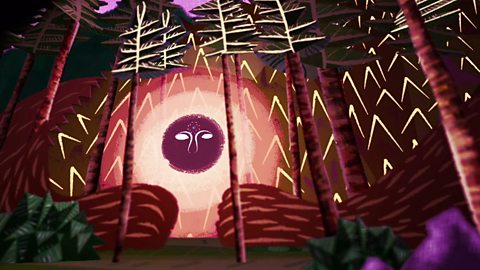
Once upon a time there lived a King and Queen in a grand palace. They were very worried about their son, the prince, who had started to behave rather strangely. If anybody tried to talk to him,
QUEEN: Hello?
All he would say was…
PRINCE: “Cock-a-doodle-dooo!!”
“Oh my goodness!” exclaimed the Queen. “He thinks he is a rooster! I have tried talking to him but I don't think he hears me.
“Hmmm…We must do something!” said the King.
So they brought the Prince’s best friends into the Palace to play with him.
But that didn’t work.
They brought the Princes' teachers from school, with books and stories and pictures.
But that didn’t work either.
They brought the Palace chefs with all the Prince’s favourite foods. And even that didn’t work – the only thing the Prince would eat was birdseed, which he pecked off the floor.
The King and Queen were starting to despair, when a wise man came to the Palace.
“Perhaps I can help” said the wise man. “Could I talk to your son please?”“Yes of course” replied the King. “But I don't think he will talk to you, I'm afraid."
The wise man did not say a word, but calmly took off his robes, got under the table, and started pecking. The Prince was just as astonished as the King and Queen and suddenly spoke for the first time in months.
“Are you a rooster too?” he asked the wise man.
“Yes” replied the wise man. “And you have some very fine birdseed here.”
PRINCE & WISE MAN (together): “Cock-a-doodle-doooo!!!”
The poor King and Queen did not know what to think. They left, shaking their heads, hoping that the wise man knew what he was doing.
(The Prince crows)
The next day, after he had pecked his breakfast of birdseed, the wise man stood upand put on his robes.
“What are you doing?” asked the Prince. “I thought you were a rooster. Roosters don't wear clothes!”“Yes, I am a rooster” replied the wise man. “But you know, there is no law that says a rooster cannot wear clothes. Sometimes I’m cold, and I choose to wear a robe.”
The Prince thought about this for a while.
PRINCE: “I think you are right…sometimes a rooster may wear clothes.”
(The Prince crows)
The next morning, the wise man stood up again, and fetched some of the food that the cooks had left for the Prince.
“What are you doing?” asked the Prince. “Roosters don’t eat peoples food! Roosters eat birdseed!”
“Well” replied the wise man. “I certainly like to eat birdseed. But you know, sometimes I like to eat other things too. Of course if you prefer to eat only birdseed, that's fine.”
The Prince watched the wise man eating. He realised that he was just as hungry.
(The Prince crows)
The next morning, once again, the wise man fetched some food. But this time, instead of sitting down on the hard floor under the table, he sat on a chair.
“What are you doing?” asked the Prince. “Roosters don’t sit on chairs!”
“Well.” said the wise man. “I think roosters may sit where they like. It’s good to be on the floor, but just because I’m a rooster doesn't mean I can't enjoy being on a comfortable chair.”
The Prince thought about this for a moment, then decided to have his breakfast sitting at the table too.
The King and Queen were amazed to see their beloved son wearing clothes, eating food and sitting at the table.
“Would you like to have breakfast with us?” the wise man asked them.
“How can this be?” they asked. “How can you have worked such a miracle when nobody else could help?”
“Your son did not want to talk to people, but he was happy to be with another rooster,” explained the wise man. “And I just showed him that we can all make choices all the time. We are indeed who we choose to be”.
Video summary
A beautifully animated tale from Israel exploring the importance of individuality.
In this story the prince, who thinks he is a rooster, learns that regardless of what or who he is, he can choose to eat at the table and wear clothes and celebrate the Sabbath. The prince is taught the ability to make choices and to think about the choices he makes.
This story will encourage children to think about individuality and agency, and provides a tool to explore the Israeli prince’s values and cultural beliefs.
Teacher Notes
This short film could be used to support the teaching of key literacy skills such as reading, writing and listening. It could encourage pupils to explore decisions of characters, and examine their actions to understand their cultural belief, values, differences and similarities.
The story could engage pupils in the way others see and imagine life, and ask questions on what is familiar and unfamiliar. This could be used in connection with learning about stories from other cultures, as well as in conjunction with teaching about traditional stories and fables to explore the differences or similarities in storytelling.
The tale could be incorporated into specific and creative reading and writing exercises (e.g. pupils can write about a specific dramatic scene or a descriptive setting in the film).
This short film will be relevant for teaching English at KS1 and KS2 in England and Wales.
Where The Night Came From. video
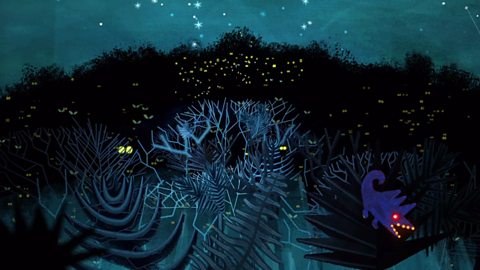
A beautifully animated tale from Brazil that playfully imagines how the night came to be.
The Tale Of How The Caliph Became A Stork. video
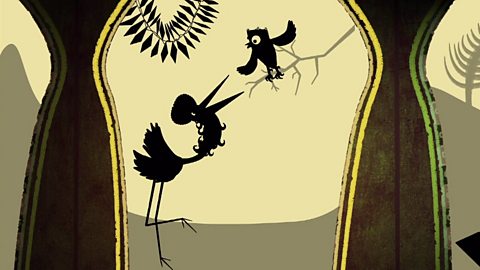
A beautifully animated tale from Iraq about a wicked sorcerer who turned the great Caliph of Baghdad into a stork.
The Strongest Man In The World. video
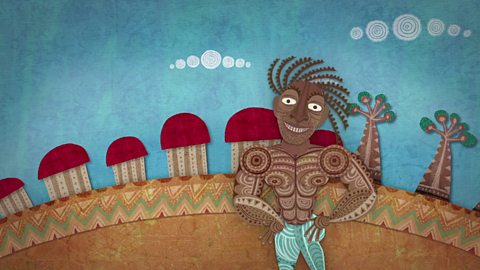
A beautifully animated tale from Nigeria about a man whose boasting lands him in trouble.
The King Who Was Eaten For Breakfast. video
A beautifully animated tale from India about a Punjabi King who allowed himself to be fried and eaten for breakfast each day by a hermit, in return for gold.
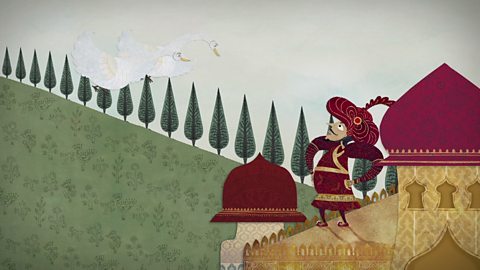
The Story Of Wali Dad. video
A beautifully animated tale from Pakistan about a grass cutter, who is both happy and generous with the little that he owns.