DERMOT O’LEARY: In 1969, Neil Armstrong was the first human being to set foot on the Moon and in doing so completely changed our view of the world.
18 years earlier, as a 21-year-old fighter pilot in the Korean War, he flew dozens of missions, almost losing his life on one of them. Later as an elite test pilot pushing the limits of the rocket-propelled X-15, the fastest plane in the world, he almost lost control when he flew beyond the Earth’s atmosphere to the edge of space.
Most of NASA’s astronauts were test pilots but even amongst them, Armstrong’s ability to stay calm was exceptional.
In 1969, John Tribe was part of the team responsible for getting Armstrong and his crew to the moon. The only rocket with the power to do it was the Saturn V.
The Saturn Rocket, it’s huge. Can you try and paint the picture of how brave these guys must have been to be sat on top of it with quite a lot of hardware and explosives underneath them?
JOHN TRIBE: The crew will tell you that they were very aware that they were riding a monster. They are sitting on the equivalent of an atomic bomb.
DERMOT O’LEARY: In fact, the Saturn V rocket that took Armstrong, Aldrin and Collins to the Moon had over two million working parts, and if anyone of them went wrong it could have meant death for the astronauts.
ARCHIVE AUDIO: 5, 4, 3, 2, 1, zero. Lift off, we have a lift off.
DERMOT O’LEARY: By the 20th of July, 1969, four days after the launch, the astronauts were orbiting the Moon. Armstrong and Aldrin were in the lunar module preparing to descend to the surface. On Earth, tension was building in mission control. But as Armstrong began his final descent…
ARCHIVE AUDIO: The Eagle has wings …
DERMOT O’LEARY: …mission control lost contact.
ARCHIVE AUDIO: We've lost data with Eagle
ARCHIVE AUDIO: Charlie Duke, putting in a call to the crew.
DERMOT O’LEARY: Then…
ARCHIVE AUDIO: Programme alarm
DERMOT O’LEARY: …the main computer flashed up an urgent message.
ARCHIVE AUDIO: 1202
DERMOT O’LEARY: Error 1202.
ARCHIVE AUDIO: Give us a reading on the 1202 programme alarm
DERMOT O’LEARY: Mission control scrambled to figure out if it meant they had to abort the landing. But Armstrong, the Mission Commander, calmly continued his descent.
ARCHIVE AUDIO: Three feet down, two and a half… the Eagle has landed.
ARCHIVE AUDIO: We got a bunch of guys about to turn blue, we’re breathing again, thanks a lot.
ARCHIVE AUDIO: Thank you.
JOHN TRIBE: There was an immense source of pride, this had been my whole life, for four years. So…relief that we had achieved it.
ARCHIVE AUDIO: It’s one small step for man, one giant leap for mankind.
DERMOT O’LEARY: It was a symbolic triumph. But not everyone was celebrating.
The Apollo programme cost 25.4 billion dollars and accounted for 5% of America’s GDP. And this was at a time when the country was struggling with deep social divisions.
BOB SIECK: The Vietnam War polarised a lot of our society and we had all the ugly things that happened less than a year before the assassinations of Martin Luther King and Bobby Kennedy, but the Apollo programme was one of those… we got this, and this is a good thing.
DERMOT O’LEARY: Did you feel that at the time?
BOB SIECK: It felt that at the time, we’ve got all this ugliness over here, but keep in mind, people, society, we’re doing this, and this is good.
DERMOT O’LEARY: Apollo showed the power of exploration to inspire and unite, and turned Armstrong into a symbol of hope for the future of mankind.
What for you would single him out for the Icon he is?
JOHN TRIBE: Armstrong was the reflection of a nation’s will to go to an unknown and he was a true explorer, mankind’s first triumphant step off this world.
Dermot O’Leary learns how American Neil Armstrong took a “giant leap for mankind” to become the first person to walk on the Moon.
Aged 21, Armstrong was a fighter pilot for the US in the Korean War - nearly losing his life on one of his missions.
After the war he tested some of the fastest planes, including the rocket propelled X-15, which he flew beyond the edge of Earth’s atmosphere to the edge of space.
On July 16, 1969, he was sat in an Apollo spacecraft atop the Saturn V, a rocket with the power of an atomic bomb, that sent the spacecraft to the Moon.
Four days later Armstrong commanded the ‘Eagle’ lunar module as it landed on the Moon’s surface, despite a warning signal and briefly losing contact with mission control. The whole world watched on television as Armstrong stepped onto the Moon’s surface and spoke the words, ‘One small step for man, one giant leap for mankind’.
The moonwalk happened at a time when America was struggling with deep social divisions and helped bring society together for a common cause.
Neil Armstrong’s achievement was a reflection of a nations will to go to an unknown and he became a symbol of hope for the future of mankind.
This short film is from the BBC series, Icons.
Teacher Notes
Key Stage 3 - History
This short film could be used to prompt a discussion on:
- Key American figures in the 20th century
- The American space programme
- American national identity in the 1960s
- Social history of America in the 1960s
- The history of exploration
- The American/USSR space race
- 20th century science history
Key Stage 3 - Physics
This short film could be used in a science class to introduce:
- Space travel
- Rocket engineering
- 20th century scientific advancement
Curriculum Notes
This short film is suitable for teaching history and physics at KS3 in England, Wales and Northern Ireland and Third and Fourth Level in Scotland.

More from Icons:
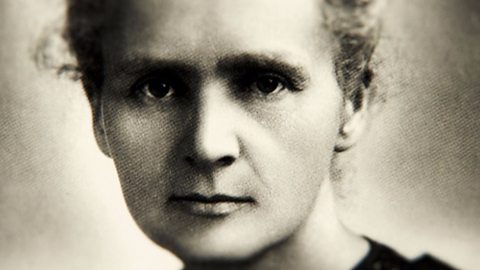
Marie Curie - The person who discovered radium and polonium. video
Chris Packham explains how Marie Curie’s discovery of polonium and radium changed atomic theory and how her study of radioactivity helped doctors save thousands of lives.
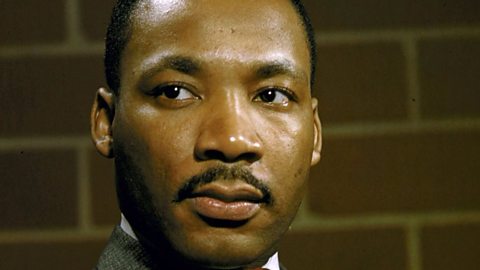
Dr Martin Luther King - American Civil Rights leader. video
Sanjeev Bhaskar finds out how Dr Martin Luther King advanced the Civil Rights movement in America through non-violent resistance.
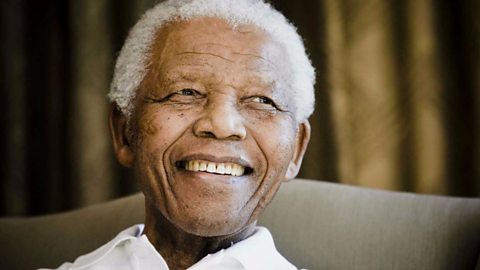
Nelson Mandela - Freedom fighter and South Africa's first black president. video
Sir Trevor McDonald reports on Nelson Mandela, who went from freedom fighter to become South Africa’s first black president.
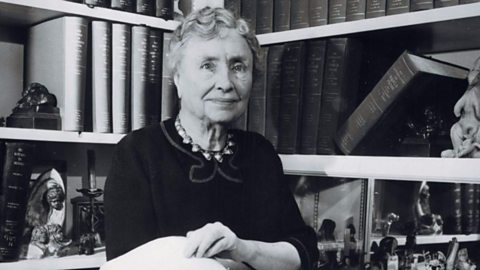
Helen Keller - The writer who proved her disability was not debilitating. video
Sanjeev Bhaskar explores the life of Helen Keller, a writer, journalist, activist and ambassador who was deaf and blind but proved her disability was not debilitating.