Science presenter Jon Chase explains Newton’s third law with the help of some skateboarders.
The skateboarders stand on separate boards and then one of them pushes away from the other one, causing them to both move.
Newton’s second law is also referred to, as the demonstration is repeated with two people standing on one of the boards.
Jon defines Newton’s law as ‘If body A exerts a force on body B, then body B will exert an equal opposite force on body A.’
Teacher Notes
The demonstration with the skateboarders could be repeated in class. The class could then construct water rockets and observe Newton’s third law in action.
They could investigate the optimum ration of water to air volume needed for the highest flight. Include a discussion of fair testing and reliability, as well as issues of how to measure the height.
Curriculum Notes
This short film will be relevant for teaching physics and science in general at KS3 and KS4 in England, Wales and Northern Ireland and National 4/5 in Scotland, and Cambridge IGCSE Physics
More from Physics Bites:
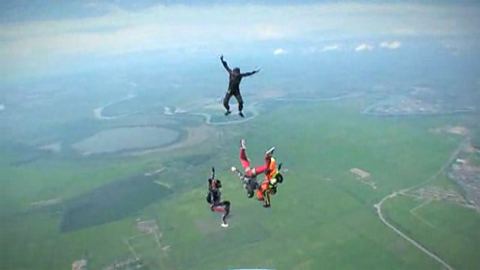
A demonstration of friction. video
Jon Chase explains friction.

Falling bodies. video
Jon Chase describes Aristotle’s and Galileo’s theories about falling bodies.
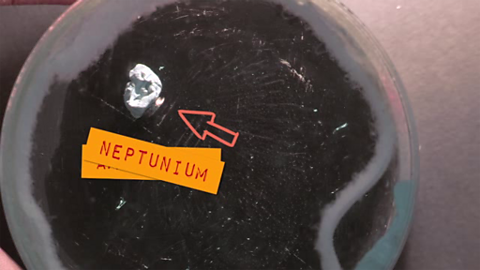
Radioactive decay. video
Jon Chase explains radioactive decay.
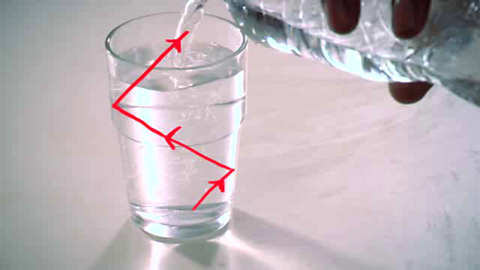
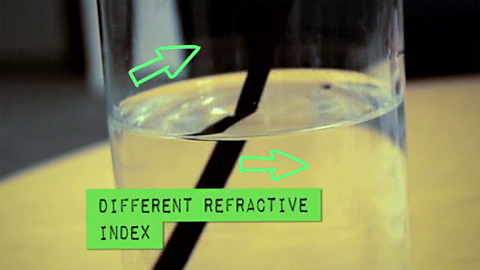
Refraction of light. video
Jon Chase explains the refraction of light.
Total internal reflection. video
Jon Chase explains total internal reflection.