Themes: reflecting on the reign of Queen Elizabeth II (1926 - 2022).
Summary: Queen Elizabeth II was born in London on 21 April 1926. She became Queen when her father King George VI died in February 1952 and reigned for over 70 years. Earlier this year the 70th anniversary of her succession was marked with the Platinum Jubilee.
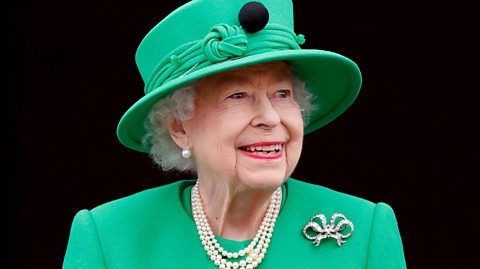
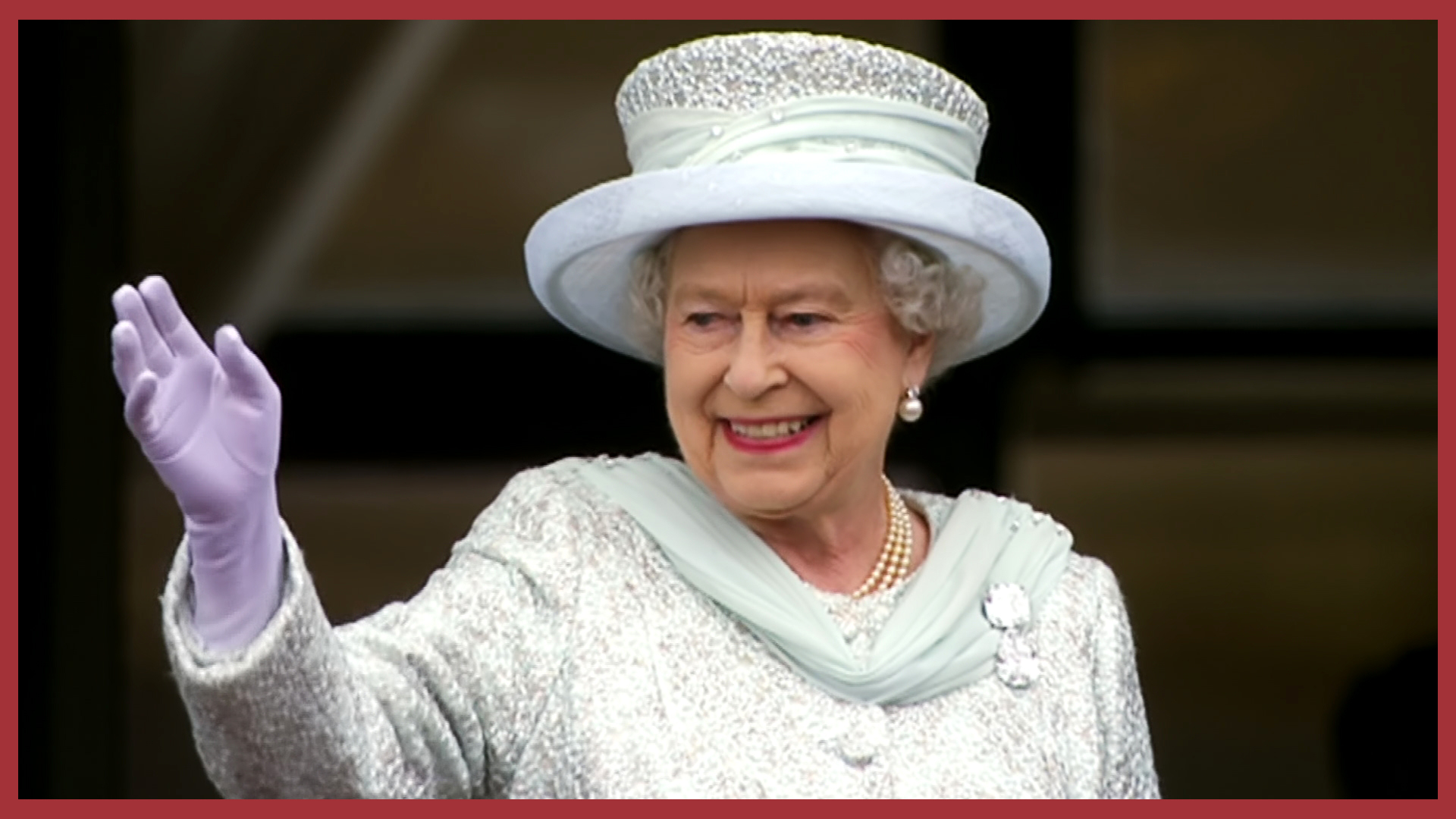
Resources: a portrait of Queen Elizabeth II taken from our film.
A classroom video about Queen Elizabeth II
Elizabeth became Queen in 1952, aged 25, after the death of her father, King George VI.
During the last 70 years the Queen has devoted herself to her role as Head of State - taking part in national ceremonies; working with her Prime Ministers and governments; travelling around the globe meeting other world leaders.
In that time she’s also been a mother, and become a grandmother, and a great grandmother.
And our country has changed a lot in that time, too.
Elizabeth was crowned Queen during the Coronation of 1953. And people all around the country were able to join in and watch it because of a recent invention: the television. In most streets, only one or two families had one, so everyone else crowded in to try and get a glimpse.
It was a special day full of excitement - but everyday life in 1953 could be very different.
Many families lived in crowded housing with poor facilities. And childhood didn’t last as long. Most children left school to start work when they were just 14 or 15. Many of the jobs available were in heavy industry, so the work was often hard, dirty, and exhausting.
If you were a girl, you'd also go out to work - but only until you got married. After that you’d most likely become a stay-at-home housewife - which wasn’t easy.
Things were changing fast, though.
In the 1950s and 60s Britain welcomed people from places all around the world, like Asia and the Caribbean. They moved to this country and made it their home, helping to make Britain a diverse, multi-ethnic, and multicultural nation.
And more and more women proved that they could have families and pursue careers. After all, even our hard working Queen balanced her duties to the country with bringing up a family.
By the time of the Queen’s Silver Jubilee in 1977 the United Kingdom had become a very different country.
But perhaps the biggest changes to all our lives have come about through technology. New inventions have changed how we work, how we travel, and, most of all, how we communicate.
At the time of the Queen’s coronation in 1953, a computer was a machine that filled a whole room and was operated by a team of people. Nobody then could have predicted that 70 years later, everyone would be carrying a powerful computer around in their pockets.
The Queen has made sure to keep up with these changes too; for example, with social media accounts for herself and the Royal Family.
In the last 70 years there has also been much discussion about the environment and concern regarding climate change. In 2021 it was the Queen who welcomed scientists and world leaders to the United Nations Climate Change Conference - or COP26 - held in the UK.
The world has the chance to join in the shared objective of creating a safer, stabler future for our people and for the planet on which we depend.
This short film for primary schools celebrates the life of Her Majesty Queen Elizabeth II, as well as exploring some of the changes that took place during her long reign.
The video covers changes in the work place, in technology and communications, in the increasing diversity of UK society, and our understanding of the environment and climate change. It was a period marked by great change, but also by one notable constant – the presence of Queen Elizabeth herself.
Teachers might find this video useful for playing in an assembly or classroom. You could share it with your pupils as a way of commemorating the Queen's remarkable life.
Questions for classroom discussion
Below are a number of question prompts you might like to share with pupils, in order to help them reflect on the life of Queen Elizabeth II:
- When have you seen pictures of the Queen? What was the occasion?
- Where else might you see pictures of the Queen? (On coins/stamps/banknotes).
- When the Queen was young she wasn't expected to become the Queen. But when her father became King she knew that one day she would become the Queen. How do you think she felt knowing that?
- The Queen reigned for 70 years. How can we describe that length of time to help us understand how long it is? How many times older than you is it?
- What do you think life was like when Elizabeth became Queen in 1952? What things do you think were different then? What things the same? What important changes do you think happened during the reign of Queen Elizabeth?
- In 2012 the Queen repeated a promise, or pledge, that she had first made at the age of 21. She said: "I dedicate myself anew to your service." What do we mean by the words "dedicate" and "service"? What is "dedication"? How does a monarch, like the Queen, "serve"?
- What parts of the being Queen do you think Queen Elizabeth enjoyed most? Do you think she found some of her duties less enjoyable? Do you think you would enjoy the duties of a King or Queen?
- The Queen was part of a special family – the Royal Family. Although the Queen has died her son, Charles, will now reign as King Charles III. Why is that continuity important? What does it mean for the country as a whole?
- What words would you use to describe the Queen? What things about her inspire you?
- We've heard many tributes paid to the Queen – people saying why they think she was important. How do you think we should remember Queen Elizabeth II?

More resources about The Royal Family
Our Queen: A Newsround Special. video
In a special programme, Newsround remembers the life of Queen Elizabeth II and her 70 years on the throne.
King Charles III: What does a King do? document
A Newsround article explaining what a Head of State is and what a King does.
Queen Elizabeth II: A Bitesize guide for primary schools. document
A Bitesize guide for primary schools with key facts, dates and images from the Queen's life.