The lessons of history
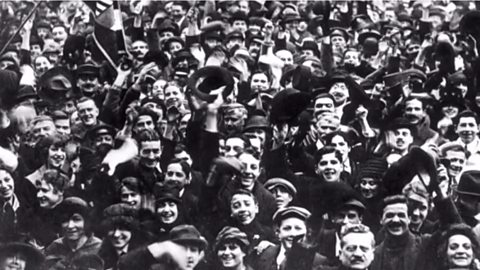
Over 100 years on from the start of the First World War, the British Army is learning about the conflict that shaped so much of our world today.
It's impossible to understand the conflicts of the 20th century without understanding what happened during those four and a half years between 1914 and 1918. The methods of fighting developed during the conflict set the template for warfare ever since. But for soldiers serving in conflicts 100 years on, what lessons - if any - does the First World War have to offer?
Battles that changed warfare
Napoleon would have recognised the way war was fought in 1914. But the Western Front soon became a stalemate. Both sides experimented to break the deadlock. Click or tap the image below to find out what impact the battle had on warfare.
Realities of battle
For the soldiers of the First World War, going into battle meant facing weapons that had never been seen before in war. Hear WW1 soldiers describe what it felt to go over the top.
[DR JONATHAN BOFF]
Throughout history, one thing binds soldiers of all conflicts together. They know what it’s like to go into battle, they know what it’s like to risk their lives and they know what it’s like to be prepared to kill.
These trenches on Salisbury Plain were used to train troops deploying to the Western Front. A hundred years on, it feels like an appropriate spot to visit soldiers of more recent conflicts and to listen to some of those voices of the First World War.
[Clip from archive interviews]
[JOSEPH MURRAY, SEAMAN]
We stood there packed like sardines, unable to even stand up in comfort. Men were fast asleep on their feet. Others just stood staring into the cloudless sky.
[RICHARD TOBIN, NCO]
I remember those lads standing there. Dead silent, couldn’t make a noise. The fellow next to you, he was your best friend, you loved him. You perhaps didn’t know him the day before.
[JOSEPH MURRAY]
I wondered if I would live long enough to get out of the trench and if I did, would I have enough courage left to rise again and face that rain of lead?
[DR JONATHAN BOFF]
Fear is naturally a part of any conflict but the First World War unleashed many new terrors; the machine gun, the tank, aircraft, the shells. And those were the threats you could hear coming.
Deadly poison gas was used for the first time in 1915 at Ypres. But soldiers faced those fears and yet remained an effective fighting force. To achieve this, then as now, training was key.
By 1917, the British Army could do this within a few months of intensive training. Communications technology became much more sophisticated and innovations such as air reconnaissance meant that detailed calculations – and even replica battlefields – could be made to create the clearest possible picture of the dangers that lay ahead.
The army continues to innovate to prepare its soldiers for the front lines but the human aspect of battle remains startlingly similar. A hundred years on that means the young men and women deploying into battle share those same emotions of nervousness, excitement and fear.
Importance of strong bonds
Living together, working together and, in many cases, growing up together - the bond between soldiers is a crucial factor in enabling them to do their job.
Importance of strong bonds
[DR JONATHAN BOFF]
Far from home, in difficult conditions, often under intense pressure, the powerful bonds that form between soldiers are one of the most important parts of army life.
These friendships built under fire are unique and a crucial factor in enabling them to do the job that they do. It was this loyalty to their comrades that kept many soldiers motivated to fight even in the horrific conditions of the First World War.
As millions of citizen soldiers adapted to the hardships of military life, they pulled even closer together – uniting in something that few at home could even imagine.
And in the years that followed, the 11th hour of the 11th day of the 11th month would be just one of the anniversaries which would give them pause to remember those they had lost.
The men who came back and the bereaved wrote a new language of commemoration – the poppy, the two minutes’ silence, the Cenotaph – a language which we all speak still today. These commemorations helped them to remember lost friends, lost colleagues, their brothers in arms.
I’m interested in what remembrance means to the soldier serving in today’s army so I’ve come to talk to Captain Alan Williamson who has served in the infantry in deployments to Afghanistan.
[CAPTAIN ALAN WILLIAMSON]
I think institutionally, remembrance is still very important within the army. With the campaigns in Iraq and Afghanistan certainly a lot of recent memory of loss and therefore remembrance plays an important part in our working lives.
From a personal point of view, having served on a couple of tours of Afghanistan and lost soldiers under my command, I find it quite cathartic to have a bit of personal reflection and remembrance.
[DR JONTHAN BOFF]
For the soldiers I have met both here on Salisbury Plain and on visits to the Western Front, remembrance takes on a much greater significance. Men like me who have never fought can perhaps only begin to imagine but standing amongst the memorials to those who died almost 100 years ago, it’s clear that the commemorations created after what was then known as the Great War still resonate with serving soldiers today.
Learn more
WW1: Did the machine-gun save lives? document
Despite the thousands of deaths attributed to the use of the machine-gun in WW1, did its awesome threat actually save lives?
WW1: What caused Verdun to be the longest battle of the war? document
Verdun was the longest battle of World War One, lasting a total of 300 days. Logistics, politics, pride and strategy all helped to prolong the conflict.
WW1: Can the Treaty of Versailles help us tackle climate change? document
BBC correspondent David Shukman asks whether the legacy of Versailles is still a useful approach to one of our most complex challenges: climate change.