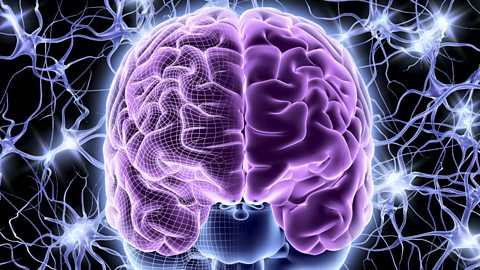
Exploring the human hard drive
Whether it’s remembering our route to work, finding the keys we just put down or making sure that birthday card is posted, we all rely on our memories every day.
Most people can remember and retrieve massive amounts of information, including thousands of names and faces, different bank PINs and complex directions.
A select few can achieve amazing feats of memory, with minds that never forget. But our powers of recall pale in comparison to some other species.
The wildest memories in the world
Click on the labels to discover how we rank amongst the eight most powerful performers in nature.
Total recall
When someone has super memory, also known as hyperthymesia, their minds retain everything they process.
There are only a handful of cases of hyperthymesia in the world. It's controversial, and some think it doesn't even exist. But whether you have super memory or not, your brain is quite brilliant. It's made up of billions of interconnected neurons, which communicate through thousands of connections called synapses. When a connection between these is strengthened, a memory is formed. This is what our memory is based on – millions of tiny connections in our brains.
IS MY MEMORY AS GOOD AS AN ELEPHANT’S?
Animation narrated by Rachel Riley featuring Professor Giuliana Mazzoni
Rachel Riley: Imagine being able to remember what you wore on your first day at work, the weather on the day you started school… or what time it was the moment you learnt to ride a bike. Now imagine if you could remember these, and thousands of other events in your life, as if they happened minutes ago.
Incredible as it may seem, some people can; those with a rare psychological condition known as hyperthymesia – or Highly SuperiorAutobiographical Memory.
This massively enhances an aspect of our memory known as autobiographical memory, allowing the tiniest details of an abnormally large number of life experiences to be remembered perfectly. In the UK, Aurelian Hayman is one of the few people who have been identified as having the condition.
This has given specialists new insights into the inner workings of the human mind…
Giuliana Mazzoni: His brain is wired differently than the average brain, so he has connections that we don’t have, to that extent. And we have also observed that when he tries to remember, you know when you said the date, I could picture actually what was happening in his brain and what he was activating was mainly the occipital areas, the visual areas, which light up immediately, and also some frontal areas that reveal that actually his memory, for his personal events, is mediated by visual experiences and they are represented as facts.
Rachel Riley: A brain that remembers everything could make life a lot easier. But then again, super memory may well be something that those with hyperthymesia would rather forget. It’s been described as experiencing an unstoppable stream of memories that cannot be turned off and is "non-stop, uncontrollable and totally exhausting".
In fact, too much information can produce interference, which impairs memory.
So perhaps we should ponder on the thought that for most people, the ability to forget the unnecessary could be preferable to being able to remember everything.
86 billion brilliant bits
Some experts estimate that we can save and process about 100 terabytes of information in our heads. Click or tap on the labels to discover the bits that make our memory work.
Learn more about World War Two and the Holocaust
How do I keep my brain young? document
Worried about staying mentally sharp as you grow older? Find out how learning new skills, diet and exercise can all play a part in keeping your brain young.
Did climate change make us intelligent? document
Professor Brian Cox asks whether climate change made our ape ancestors evolve bigger brains, two million years ago in East Africa.

Have I reached my peak intelligence? document
Have you reached your peak intelligence? Can you learn no more? Has your brain processed all it can?