It can happen to anyone who notches up achievements in life – at some stage, many people feel unworthy of their success.
They may tell themselves they've just been lucky, and fear that one day they’ll be unmasked or found out.
Does this feeling sound familiar? It describes a condition called "imposter phenomenon" and teachers are one of the groups that suffer with it.
The idea of an “impostor phenomenon” was introduced by Dr Pauline Rose Clance and Dr Suzanne Imes in 1978. Their study focused on the experience of high-achieving women who felt they were intellectual frauds.
This problem has since been debated by psychologists and business mentors. It's often linked to perfectionism and fear of failure, and can have consequences on how we handle our careers and relationships.
False pretences
Feeling like a fraud can have an impact on the way we relate to the world.
The good news for those who recognise these thoughts is that they’re not alone – and there are positive steps they can take to get their impostor feelings under control.
Click on the labels to see how dwelling on negative or critical thoughts can influence our behaviour.
Managing your thoughts
A major part of feeling like a fraud or impostor is listening to – and believing – our own inner critic. Many psychologists use a talking therapy called CBT (Cognitive Behavioural Therapy) to help people manage these feelings.
Chartered counselling and health psychologist Linda Papadopoulos offers some practical tips to help when we feel like a fraud.
Managing your thoughts
Every day I see people in my clinic who want to retrain their thoughts, and it never ceases to amaze me how many intelligent, successful women sit across from me and tell me that they feel like frauds.
I use cognitive behavioural therapy to help people with this feeling of being a fraud. The way that you think affects the way you feel, which actually affects your behaviour, so if you tweak those thoughts and change them then, in turn, so do the feelings and so do the behaviours.
Here are some things that you can do if you’re feeling like a bit of a fraud in your personal life or, indeed, at work.
Remember that these are just your thoughts, so if someone compliments you on a job well done and your immediate thought is: “I didn’t do a good job and they don’t really mean it,” stop right there! They’ve said it – take it at face value, accept it and move on.
Secondly, try writing down all the steps that’ve led you to where you are now. It may be a course that you did, an important decision or a meeting that you arranged. Ultimately you need to take some responsibility for your success, and by remembering what you’ve done, it’ll make it easier.
Try and speak to someone about the way you’re feeling – a mentor, perhaps. Getting it out in the open about how you feel, about being a fraud, is really important because it’ll allow someone you respect to challenge those thoughts.
Finally, and most importantly, feelings aren’t facts. So name your fears, and remember: no matter how hard we try none of us are going to be perfect, so being able to acknowledge your accomplishments, own them, and be happy with both those and the times when you haven’t got it right is the way to feel better about who you are and, most importantly, to stop feeling like a fraud. Remember: it’s important to do these steps and to do them regularly, because eventually they’ll become habitual and, when they do, those positive, rational thoughts will outweigh those negative ones. And don’t forget: there are many successful and admirable people who share these feelings – so you’re not alone.

How did I get here?
Have a think about why you may feel like this.
Feeling like a fraud can sometimes have its roots in childhood. Constantly praising a child when they haven’t necessarily earned it may mean that, as an adult, they don’t always trust praise, even when it is deserved.
Some of us feel we have to strive to live up to high expectations, either from early success or from family or community. We may also try to create an impressive social media persona, or look at others’ profiles and feel we can never live up to their glamour.
Those of us who feel like a fraud are in good company. Many well-respected academics, business people and celebrities have publicly said they can relate to this, including writer Maya Angelou and actresses Emma Watson and Kate Winslet.
Learn more
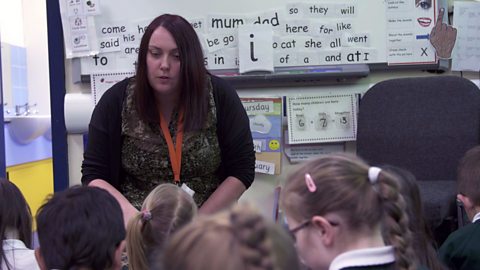
Teachers open up about Mental Health. video
Teachers share tips to help your mental health in this new film.
Ros Atkins On… collection
This collection of BBC News explainer videos could be used for helping students understand complex topical stories.
Back to school with Dr Ranj Singh. video
Dr Ranj encourages a teaching assistant to believe in himself in this short film.