Storm in a teacup
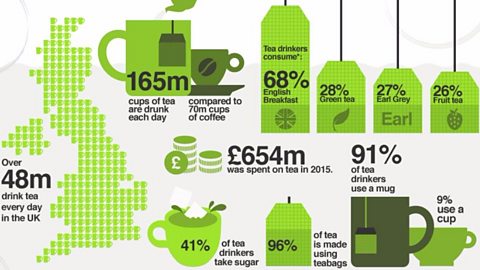
Britain is a nation of tea lovers – 76% of us drink at least one cup every day. Yet we can't seem to agree on the best method to make it.
From the type of tea to use, to how long to brew it, and if (or when) to add milk – everyone's got their own opinion on how to make a great cuppa. But using scientific analysis, can we find a definitive answer?
Discover four simple steps to transform your daily brew into the perfect cup of tea.
A national obsession
WATCH: Four-step formula
Click or tap the video to see how to top up your tea technique.
Voiced by materials scientist Mark Miodownik.
Everyone’s got their own ideas about how to make the perfect cup of tea. But there are some rules, based on the chemistry of tea-making.
Using this state-of-the-art machine, I’ll show you how to transform your daily brew in four easy steps. Number one. Use loose leaf tea.
When you add hot water to loose tea leaves, convection currents swirl them around, allowing the fragrant flavours to diffuse.
But, if those leaves are tightly packed into a teabag well they can’t move freely. And some of the flavours that dissolve from the leaves won’t make it into the water.
Using loose leaves means you know you’re giving your tea the best chance to release its flavours. But if you love the convenience of a tea bag, make sure it has lots of space inside.
Number two. Use soft or filtered water.
That horrible waxy layer that sometimes floats on top of your tea is technically called ‘tea scum’. And the culprit is hard water.
Hard water contains much more calcium than soft water and this binds to the plant extracts in the tea leaves to form scum.
So if you live in a hard water area, make sure you filter your water before putting the kettle on.
Number three. Boil water for black tea – but not for green.
Black tea and green tea are both made from the same plant. What makes them different are the ways the leaves are processed.
Black tea leaves are crushed so the chemicals inside them get exposed to the air – a process called oxidation. This alters the bitter-tasting compounds, such as tannins, into more floral and fruity flavours that we love.
The tea leaves that become green teas remain more intact and so less of the tannins get oxidised. Tannins dissolve in water at 80 Celsius. This means that the temperature of the water will affect the taste of your tea. Black tea needs boiling water to bring out its characteristic flavours.
But for green tea, you want to use water at a much lower temperature – ideally below 80 degrees C – to prevent your drink from becoming too bitter.
Number four. Be patient and let it brew.
The evidence on brewing time varies. But researchers are sure of one thing… Brits just don’t let their tea brew for long enough.
There are more than 30,000 chemicals in tea – all of which need time to emerge. So, while most people wait for well under two minutes, studies show we should be brewing for at least two and even up to eight minutes.
We’re ready.
Adding milk or sugar comes down to personal preference. But if you’ve followed my top tips, you’ll be able to enjoy tea black without any bitterness.
WATCH: Scientists provide the answer
Watch this two-minute animation to find out what the experts say about the great milk debate.
Does science have the answer?
Voiced by Materials scientist Mark Miodownik
Seventy years ago, the British author George Orwell wrote an essay called ‘A Nice Cup of Tea’.
He famously listed 11 golden rules for tea-making, including what he considered “one of the most controversial points of all”… when to add the milk!
Orwell argued for putting the milk in last, because if you put it in first you might add too much. Case closed for George. But is it really that straightforward?
When it comes to making your tea in a teapot, the Royal Society of Chemistry disagrees. Its study concluded that milk should be added to the cup first.
It argued that when milk is poured into hot tea, the high temperature could affect its taste. As droplets of milk fall down through the tea, their proteins degrade as they’re heated above 75°C.
This is similar to what happens in UHT milk and that’s why it doesn’t taste like the fresh stuff.
Is that case closed for the chemists? Nonsense says the Institute of Physics, which claims it has more to do with the cup.
Tea was supposed to be drunk from fine porcelain, which could withstand high temperatures. But as most people could only afford cheap china, they had to pour the milk in first to prevent their cups from cracking.
A victory for physics? Maybe… but hang on, what if you’re skipping the teapot and brewing your tea straight into a mug, as most of us do?
Scientists at University College London suggest that, in this case, it’s best to add the milk last, so you don’t interfere with the brewing process.
Compounds that make black tea taste delicious need to be brewed at high temperatures, so you want to start with water that’s just been boiled.
But if you add hot water to cold milk and a tea bag, this lowers the temperature considerably and stops those flavours from being released.
So milk first if using a teapot, but last if you’re using a cup. A small consolation, perhaps, for George Orwell.
Learn more
Real World Chemistry. collection
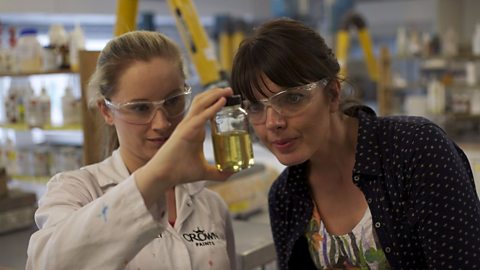
In this series of short films, Fran Scott discovers how huge-scale chemical processes go into producing the world's most used materials.
Materials. collection
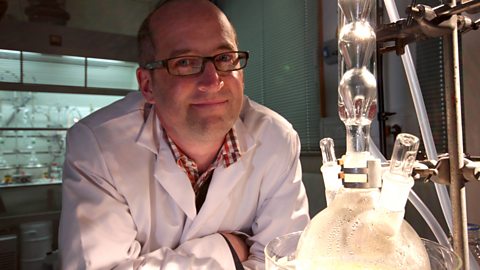
In this series of short films, materials scientist Mark Miodownik takes a look at the inner world of materials such as metals, ceramics, plastic and graphene.
Chemistry Bites. collection
These chemistry focused short films are from the BBC series Chemistry Bites, and are presented by scientist and rapper Jon Chase.

