The animals went in two by two
The idea of an ark is an old one.
Most of us have heard the tale of Noah's ark - the magical procession of animal pairs onto a large boat which saved these species from catastrophic floods that lasted 40 days and 40 nights.
But this is merely a tale. Arks can’t really exist… can they?
Surviving against the odds
The romantic notion of animals finding salvation in a boat remains - and in March 2013 it was remarkably realised.
A small open topped fishing boat was swept from the coast of Japan when the devastating tsunami raged across the Far East in 2011.
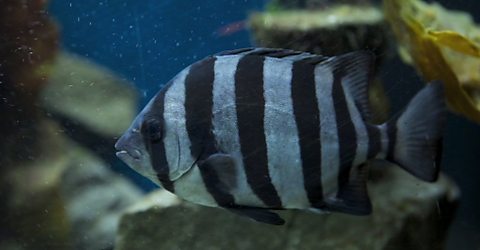
It appears that the vessel filled with water and provided a home for 30 stowaway species including a striped beak fish. When the boat finally reached Washington state in the US, this fish was too young to have survived the entire journey.
A functional ecosystem
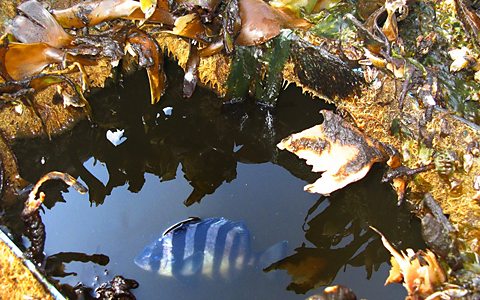
The fish had either jumped ship from the waters around Hawaii where the craft may have drifted en route or, even more remarkably, it was the result of breeding inside the boat.
It appears that this tiny body of water carried by the boat was a functional ecosystem; a capsule of life that travelled thousands of miles across the ocean.
It reveals something of the way species have probably travelled around the world to colonise new islands and continents. These global hitch-hikers are accidental tourists with enormous potential to survive against seemingly impossible odds.
Learn more
Why do islands give rise to such unusual creatures? document
In this interactive article, Richard Fortey explores the weird and wonderful animals and plants that have evolved on Hawaii and Madagascar.
Life Lessons. collection
These short films offer an introduction to key concepts in biology, focusing on the seven important lessons from the natural world.
How did complex life begin? document
Professor Brian Cox visits the Burgess Shale fossil field in the Canadian Rockies, to see evidence of an explosion in life on Earth during the Cambrian period 540 million years ago.