Please note that this article and videos contains content which some viewers may find upsetting. Teacher review recommended before using in class.
The threat from Europe
In 1938, Nicholas Winton was a young stockbroker in London. He was keenly aware of the events unfolding on the continent.
Jews were under threat in Nazi-occupied Europe. Anti-Semitism was established in law and violence against Jewish buildings and businesses was increasing. It was clear to many that worse would follow.
Instead of wringing his hands, he headed to Prague and hatched a plan that saved the lives of hundreds of children in the months before the outbreak of World War Two. Look back on the remarkable achievements of Sir Nicholas Winton.
Lives in danger
In the early years of Hitler's rule, the Nazis attempted to make life so unpleasant for Jews that they would be forced to emigrate. Yet few other countries were willing to accept an influx of Jewish refugees.
Many countries, including Britain, tightened their immigration policies. In the summer of 1938, 32 countries met in Évian, France, to address the growing refugee crisis. But virtually all refused to allow more Jews in.
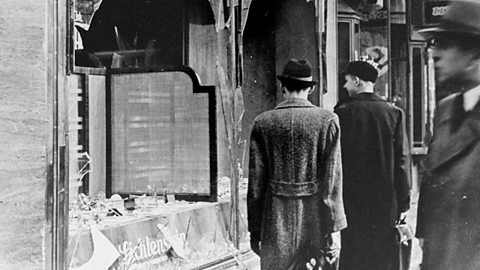
However, 9 November 1938 saw an alarming turning point in Nazi anti-Semitism. Throughout German occupied territory, a wave of violent protest broke out against the Jews. Synagogues were burned, businesses attacked and windows smashed in what became known as Kristallnacht - the 'Night of Broken Glass’.
Kristallnacht set warning bells ringing. As a result, Britain agreed to open its borders to refugee Jewish children.
Robert Hall explains the sinister events of Kristallnacht and the growing threat to European Jews.
The call for help
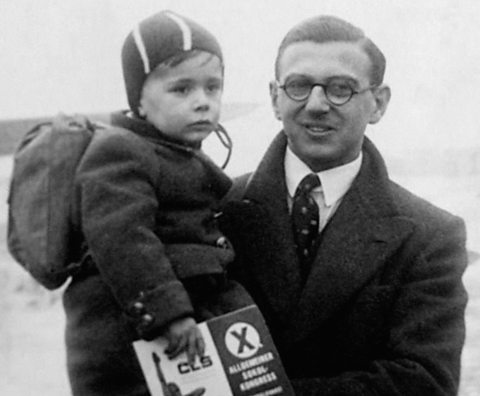
Nicholas Winton was a socialist with an interest in international affairs and links with many Labour politicians. However, one thing set him apart from the British establishment.
Winton was born Nicholas Wertheimer in 1909, to parents of Jewish descent who were keen to integrate into British life. They anglicised their name and Winton was baptised into the Anglican church. His family contacts provided him with a particular insight into what was happening in Europe and what the Nazi regime might be capable of.
In December 1938, Winton had been planning to take a winter sports holiday. Just before he left, he received a letter from his friend Martin Blake, who had already travelled to Prague on behalf of the British Committee for Refugees from Czechoslovakia. It contained an invitation: 'I have a most interesting assignment and I need your help. Don't bother bringing your skis.'
This simple appeal would thrust Winton into the heart of a rapidly developing humanitarian crisis.
Putting together a plan
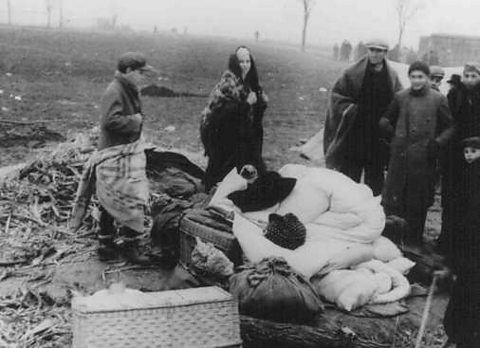
In Prague, Winton saw for himself the full scale of the problem facing Jews in German-occupied Sudetenland.
Refugee camps were filling with families forced from their homes. Occupants were struggling to survive the harsh European winter. Winton was struck by the appalling conditions and his greatest concern was for the children.
As a British citizen with contacts, Winton was convinced he could arrange the evacuation of young refugees to England. Winton and his colleagues Martin Blake and Doreen Warriner set up a makeshift headquarters in a hotel in Prague and began taking the names of families who wished to send their children to safety.
Winton's work began in London
Transporting hundreds of young refugees across Europe required careful planning. Winton returned to London and a mountain of paperwork. The British government was only willing to let vulnerable children enter the country if strict conditions were met.
Winton had to arrange a foster family for every refugee who left Czechoslovakia. A few children had relatives waiting in Britain. But in most cases, Winton had to persuade complete strangers to take the children in. He placed ads in newspapers calling for volunteers. Fortunately, the British government had already begun plans to evacuate British children from city centres in the event of war so the British public were familiar with the idea of opening their homes to those in need.
The escape route
To get to safety, Winton's children had to travel through the heart of Nazi Germany. Eight trains departed from Warsaw between March and August 1939.
Click or tap on the locations below to discover more.
Remembering those left behind
In this extraordinary clip, Nicholas Winton remembers how the outbreak of war prevented him bringing his final group of refugees to Britain.
Remembering Those Left Behind
Nicholas Winton remembers how the outbreak of war prevented him bringing his final group ofrefugees to Britain.
Robert Hall:
Thumbing through the lists of the children he saved Nicholas Winton’s over-riding regret is that he couldn’t do more.
Nicholas Winton:
My chief thoughts when I look into this box is not of the children who came but of the children who should have come and didn’t come, couldn’t come. Some because foreign countries wouldn’t help and others because of just a day war broke out. I mean that was a big thing - that was our biggest transport – 250 children on that train. And just put there for the Germans to take – they didn’t have to go round looking for them – awful business.
Robert Hall:
A handful of those children survived; most died with their parents in the concentration camps. Eve Leadbeater’s older brother should have been on that train – he was transported east from Prague with her mother and her father but no one could tell Eve until the war ended.
Eve Leadbetter:
I used to get letters through the Red Cross from concentration camp and they stopped – and so I guessed I knew really. But I used to fantasize that after the war we’d all meet again. I made up little stories of how we’d recognise each other particularly my brother who I adored. It didn’t happen.
Learn more about World War Two and the Holocaust
Holocaust Memorial Day - Teaching Resources. collection
A collection of teaching resources for both primary and secondary classrooms.
Children of World War Two. collection
In this series of short films modern children meet people who grew up during World War Two to learn about their experiences.
WW2: The Holocaust year by year. document
A timeline of the events that unfolded in Europe between 1933 and 1946. What happened? And how much was known at the time?