Imagination and creativity are at the heart of 500 Words – our mission is to encourage children to write stories they would love to read. That’s because, to be a great storyteller, you need to be an eager reader too!
According to the ‘Children and young people's reading in 2025’ report released by 500 Words’ partner, National Literacy Trust, the percentage of children reading for pleasure was ‘at its lowest in 20 years’. The report notes that the drop in reading enjoyment was notably steep in primary school-aged children.
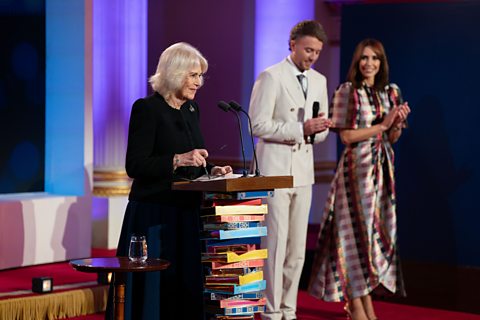
500 Words continues to inspire passion in children to read more books - the bronze, silver and gold winners, (in both categories) win a bundle of books to deep-dive into. Our gold winners also win brand-new books for their school library too.
Reading and writing go hand in hand, and every brilliant author will have that one unforgettable book that sparked their own creativity and inspired them to go on to write their own tremendous tales. That’s why we reached out to our panel members; Frank Cottrell-Boyce, Francesca Simon and Malorie Blackman, for some insight into what book inspired their love of story writing as a child.
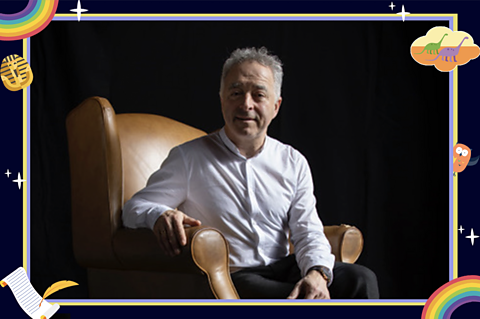
Frank Cottrell-Boyce – 'Where the Wild Things Are' by Maurice Sendak
_"The book that got me writing was called Where the Wild Things Are. It happened like this; when I was little, we lived in a tiny flat near the docks in Liverpool. My Mum used to take me and my brother to the library a lot - just to get a bit of space. _
She read us this amazing book about a boy who got into a bad mood and sailed off in a tiny boat to an island full of dancing monsters. I loved everything about that book - the monsters, the boat, the crown, the hot dinner at the end. But it was a library book so after we read it, it went back to the library, and we never saw it again.
After a while I began to think I’d dreamed it. That the monsters and the boat came out of my own head. So when I started school, whenever we were asked to draw or write anything, I would draw dancing monsters and write about a little sailboat. The teachers thought I must be a genius to have come up with such amazing things. They encouraged me to write and draw more. Then we moved to our own house, and a brand-new school.
The brand-new school had a library and there, in pride of place, was a copy of Where the Wild Things Are. The moment I saw it, I thought, “Oh no. I’m busted.” But it was too late by then. I’d already learned to love writing and drawing. So, where the Wild Things Are was like Dumbo’s feather - it let him fly because he thought it was magic. Even though it was just a feather."
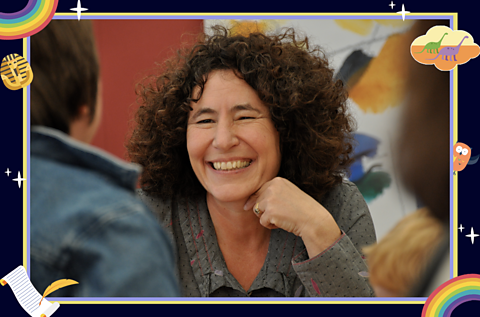 Image source, Helen Giles
Francesca Simon – 'Half Magic' by Edward Eager
_"I was nine years old when I discovered Edward Eager’s fantastic books about four children’s magic adventures. Half Magic was the first. Katherine, Jane, Mark and Martha pick up a coin on the way to the library. They think it’s an ordinary nickel, but gradually discover, after a series of misadventures, that it’s a magic coin.
The catch is, it only grants half your wish. So, when the youngest, Martha, is sick of being bossed around by her siblings, she wishes she weren’t there. Half of her remains, the other flits about wrecking ghostly havoc on the town. I used the idea of an unpredictable magic coin in my book Helping Hercules. And of course, the squabbling children definitely inspired Horrid Henry.
I was intrigued by the idea of magic’s wilfulness: that magic got fed up, that magic wasn’t controllable, that magic happened here on earth, not on a planet far, far away. I also loved the range of adventures, from fighting pirates to—unknowingly—meeting their future children on a desert island. What was even better was having the same scene again in a later book, this time from their children’s point of view, a trick I used in my novels The Sleeping Army and The Monstrous Child.
The books enthralled me. The children were unlike story-book children: they fought and argued, their widowed mother had big money troubles, they were bookish and imaginative. If magic could happen to them, an ordinary family, it could happen to anyone. Perhaps even to me."
Image source, Helen Giles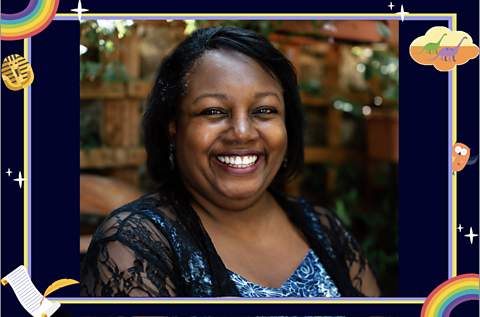 Image source, Paul Akinrinlola
 Malorie Blackman: 'The Silver Chair' by C.S. Lewis
"The book that inspired me to write was The Silver Chair by C.S. Lewis. I must’ve been maybe eight or nine when I first read it and it meant so much to me. It became my favourite of the Narnia series.
It made me realise that I didn’t have to get things right all the time. It taught me that we all have our fears and imperfections and it’s how you tackle them, embrace them or try to rise above them that counts - even if you fail. Especially if you fail. The message I received was ‘believe in yourself - even if no one else does.’ That was a very powerful message that I needed to hear at the time and it has stayed with me to this day.
It was the book that made me desperate to write my own stories, to create my own characters and worlds. The Silver Chair and every good book I've ever read have all inspired me. That’s the beauty of reading for pleasure - stories stimulate your imagination and nurture your creativity."
Image source, Paul Akinrinlola What will be the book that inspires your child to write? Find out more about the BBC 500 Words children’s story writing competition here.

Need more inspiration?
Back to 500 Words
Click here for more information on 500 Words.

The winning stories of 500 Words 2024/25
Watch Her Majesty The Queen present the winning stories at the 500 Words final 2024/25
What are the 500 Words prizes?
There are many prizes to be handed out to the gold, silver and bronze recipients.