| 13 November 2014 |

| |
| BBC Homepage | | |
| |||
| Contact Us | | |
FeaturesYou are in: Suffolk > BBC Radio Suffolk > Features > Ivan Howlett dies 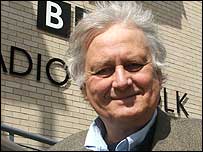 Ivan Howlett diesBBC Radio Suffolk has been saddened to learn of the death of Ivan Howlett. Ivan was the station's Managing Editor when it went on the air in 1990. He'd had a long battle with cancer and he passed away at his home in Swilland. He was 66. Listen as BBC Radio Suffolk goes on-air:
Help playing audio/video He was married to Lindsey and they had four children - Adam, Oliver, Nancy and Tom. BBC Suffolk's current Managing Editor Peter Cook said: "Ivan was always full of energy and passionate about radio. He was a very talented broadcaster who commanded enormous respect. "He was a Suffolk boy through and through - born and bred in Lavenham and he delighted in any opportunity to celebrate the county he loved." On leaving BBC Radio Suffolk in 1998 Ivan went back to hands-on programme making. He won a Spoken Word Gold Award for the Radio 4 series The Century Speaks and presented The Shanghai Sailors. He also worked on BBC Radio 4's Making History and Home Planet shows as well as being a theatre critic for the East Anglian Daily Times. BBC Look East reporter Kevin Burch was Ivan's first News Editor at BBC Radio Suffolk: "I think he liked the fact that he was a west Suffolk boy and I was an east Suffolk boy [from Ipswich] so it was a bit like Butch Cassidy and Sundance! "It was a very successful team and he was very politically astute at persuading people that Suffolk needed a local BBC radio station. He was so full of passion." Listen to Kevin Burch's full appreciation which he gave on BBC Radio Suffolk's Breakfast Show with Stephen Foster: Help playing audio/video From the archiveIvan wrote the following feature in April 2008 to celebrate BBC Radio Suffolk's 18th birthday: As the first Managing Editor, I was there [wrote Ivan] when the station began broadcasting on 12 April 1990, and I remember it very clearly. 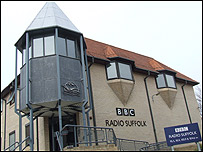 Had we gone on air the next day it would have been Friday 13th - that would have been tempting fate a step too far, and I wasn't having that. So BBC Radio Suffolk went on air on Thursday, April 12th with the voice of Chris Opperman. It was a pretty edgy business that we had a station at all. By the time BBC Radio Suffolk became a dim gleam in the Beeb's eye, BBC Local Radio had already changed out of sight from its beginnings. Origins in the MidlandsIt was all very different when the first BBC Local Radio station - BBC Radio Leicester – went on air in 1967. The pirate stations had been growing in popularity and the BBC was preparing the Radio 1 counter-offensive. Meanwhile, Frank Gillard, the much-respected war correspondent and at that time Managing Director of BBC Radio who created Radios 1,2, 3 and 4, was going about his other commitment. This was to set up a BBC Local Radio service. He'd seen it at work in the United States and vowed that, though he wanted to bring it here, it "would not be, as in the States, an amplified jukebox.” Rather, it would reflect the interests, concerns, cares and issues of the places where it was centred, giving the station managers a free editorial and programme-making hand. 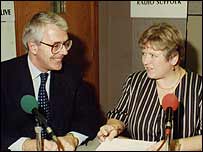 Rachel Sloane interviews John Major, '92 After due government consultation and approval an experiment as was set up in eight places. Local radio had just two years to prove itself, and would only exist where there was local authority co-funding. This was an idea, because of the political implications, which was soon dropped. The further difficulty was that local radio was to broadcast on VHF only on very low power transmitters. This was at a time when few people had VHF (FM) radios and many had no idea what it was. At first, Gillard got little support even from the BBC hierarchy, but the experiment was deemed overall to have worked. The only one of the eight stations dropped was Radio Durham, ironically where Kate Adie had got a job. However, local radio was added to the licence fee costs, and was run as a network by a controller. The plan was to set up 40 radio stations to cover England. Coverage areas were extended; some becoming county stations, and Medium Wave was acquired. Money was always a problem and the next batches of stations - the ‘B’ stations and then the ‘C’ stations were smaller and had much smaller budgets. As time went on it seemed unlikely that the 40-station plan would be completed and East Anglia was the slowest region to be filled in. BBC Radio Norfolk was the first in 1980. Cambridgeshire and Northampton were added 1982, Beds, Herts and Bucks in 1985 (aka BBC Three Counties) and BBC Essex in 1986. Late developerSuffolk was hemmed in on three sides by stations all of which understandably, cast dark eyes over their borders. Radio waves don't obey administrative borders and new near neighbours aren't necessarily welcome. The rules changed too. Not only was there less money available than ever, new stations could only broadcast on FM. There were pressures to give heavily populated metropolitan boroughs radio stations before Suffolk. Suffolk's difficulty was that its main centres of population, except for Bury St Edmunds and Stowmarket, were on or near the coast and the county borders. When stating our case we swept our hands across the county map and hide the parts of High Suffolk where the population was at its most sparse, and held our breath. Of course, the case was accepted and we prepared to go on-air in 1990. Team buildingHowever, when we went on air we still had a case to prove, an audience to capture. I wasn't going to take any chances. Of the initial team, I'd worked with several of them in the BBC around the country and knew them to be out of the top draw, as planners, editors, producers and engineers. As for a radio station's broadcasters, they always emerge - from other stations, from the community, from perceptive managerial chasing and selecting, or from individual persistence. Natural talent will always out, which explains BBC Radio Suffolk's continued success to this day. In 1990 we had a state-of-the-art, though not expensive studio. Within months, ironically, the technology changed. It's almost unthinkable now that when we went on air we were using reel-to-reel tape and razor blades. Getting and keeping an audienceSurvival was a near thing though. BBC Radio CWR in Warwickshire was a good station which went on air just months before Suffolk. However, it didn't make the required audience figures, and was closed down, fortunately to re-open successfully at a later date. BBC Radio Suffolk lifted itself above the bar the first time around and has always continued successfully to do so, becoming a member of the BBC Regional Broadcasting family of which I am very proud. We had our early battles and all were won. We got an extra transmitter for Lowestoft to add to the ones serving Ipswich and Bury St Edmunds, though it was no more powerful than a light bulb. We were able to broadcast all the day because at first we had to share afternoons with BBC Radio Norfolk. 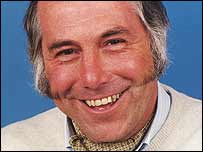 Chris Opperman We also managed to persuade Ipswich Town Football Club that commentary on home matches did not keep the crowds away, and the happy relationship that now exists was set up. One blip, which I have never quite understood, happened on the very first morning. We'd been broadcasting for less than an hour. Suddenly, for a minute, which felt like an age, we went off-air. Had somebody leant on something? Who knows? But soon, to everyone's immense relief we were off again. The main body of staff arrived for training in the January of the year we went on air. I remember telling people to enjoy the quiet. When we went on air, there'd be no relief, just non-stop action. Things would roll on for evermore, getting busier and faster, more exciting, more important and more entertaining. And that's exactly what's happened. I thank and congratulate those that started us off and continue the tradition 18 years on. Heartfelt birthday greetings. Listen as BBC Radio Suffolk goes on-air:
Help playing audio/video (Ivan Howlett was the managing editor at BBC Radio Suffolk 1990-1998). last updated: 05/01/2009 at 11:13 Have Your SayAdd your tributes to Ivan Howlett Richard Davis Brian Keith (previously Morpeth) ABC Coast FM, Aus jonathan mendenhall david dawson Mark White Jo Lawrence Emma Howlett Nick Martin Tony Mallion Radio Norfolk David Arscott Sam Salter Nancy Howlett Mike Day Alan Bramwell Peter Laverock Jim Ensom Clare Phillips Mark Ward lesley dolphin Mark Murphy Iain Langdon diane and john waters JAMES EASTER Dave Muller You are in: Suffolk > BBC Radio Suffolk > Features > Ivan Howlett dies |
| | About the BBC | Help | Terms of Use | Privacy & Cookies Policy |