| 27 November 2014 |

| |
| BBC Homepage | | |
| |||
| Contact Us | | |
No HomeYou are in: Suffolk > People > No Home > Graveyard for the homeless 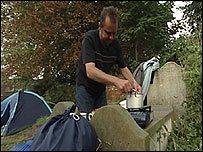 Steve in the churchyard Graveyard for the homelessThe Church of England is giving over one of its Suffolk churchyards to homeless people. They're being provided with tents which they're pitching amongst the headstones. It's feared charities are having to take more of the burden. Steve is a 43 year old and he used to live in Stowmarket until the break-up of his marriage. He's one of several people who were sleeping rough, but then started sleeping in tents among the gravestones in Ipswich in the summer of 2006. Listen to some BBC Radio Suffolk interviews
Help playing audio/video He says homelessness is a massive problem in the county town: "You don't see them because they come out at night mainly. I estimate there are between 500-600 people on the streets of Ipswich. There can be up to 50 people in in this graveyard in one evening." 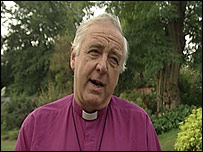 Bishop Richard Lewis The tents and sleeping bags come from the Resource Centre. The Bishop of St.Edmundsbury and Ipswich, the Right Reverend Richard Lewis says it's only a short-term measure: "There's a bigger problem to be addressed, particularly with the hidden homeless. There are many sleeping round friend's houses simply because they aren't able to move on anywhere else." "The church has got a willingness amongst its members to help homeless people make the contacts they need to make." Steve says local authorities aren't doing enough to break the vicious circle: "The churches and charities seem to be stepping in to fill the breach. "You can't get employment when you're on the street with nowhere to wash and with no permanent address. Some of us are an eyesore, and the councils need to provide a drop-in centre which can help with advice and health." 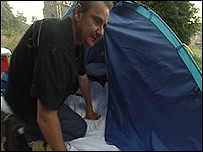 Steve with his tent Number crunchingIpswich Borough Council says it's survey found only 2 people sleeping rough. The Conservative councillor with responsibility for homelessness issues is Steven Wells. He says they are doing something: "We do have emergency direct access beds for rough sleepers who come to us. We only have a 30 per cent occupancy rate on those beds. "We are working with local agencies and charities to provide a solution. We have to understand that a lot of homeless people have issues with alcohol or drugs and are nervous of authority." "We are also trying to get the message to older people who're living on their own in 2 or 3 bedroom council houses, that a smaller home may be better for them. This would then free up homes." The cost on the coastIn Lowestoft, the 27 beds at the main hostel are all occupied and have been for most of the year. John O'Sullivan from the St John's Housing Trust says seaside towns are still magnets for people with no fixed abode: "They tend to be an attraction to itinerant people who wander around the country, but hostels are also filled by people who have holiday jobs, but when the season finishes they may become homeless because their accomodation was tied to the job." Back in the graveyard, Steve says the Church of England is carrying out its Christian message: "I'd have probably been dead right now, but the church people have come out to talk to me and have given me some self-respect back. "If it hadn't been for them I would probably be in the gutter by now." Silver liningAs a result of hearing and seeing Steve's story on BBC Radio Suffolk, this website and Look East, a property developer came to the rescue a week later. He's offered Steve and another man one of his houses - without the need to pay a deposit. Steve says, even though he's now sorted, he'll continue to work to raise the profile of others in the same situation. The graveyard has become a regular venue though. In November 2006 during the BBC's No Home campaign, 18 year old Ali was sleeping in a tent. She'd left her home in Felixstowe - claiming her family had 8 children and didn't have room for her. last updated: 26/06/2008 at 14:45 SEE ALSOYou are in: Suffolk > People > No Home > Graveyard for the homeless |
| | About the BBC | Help | Terms of Use | Privacy & Cookies Policy |