 | 13 November 2014 |

| |
| BBC Homepage | | |
| |||
| Contact Us | | |
Nature featuresYou are in: Suffolk > Nature > Nature features > What have you got and what do you want? 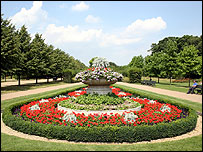 Garden design on a grand scale! What have you got and what do you want?Lucy Redman Garden designer, Lucy Redman, has come up with a fact sheet for any BBC Radio Suffolk listeners who are thinking of re-designing their gardens. 1) SITE SURVEYA lot of time can be saved if you have plans of the garden including its boundaries from maybe when you brought the house. Alternatively here is how to basically measure your garden, but if there are many huge changes in levels etc and you want to put in retaining walls etc it maybe worth asking a qualified surveyor to carry out a full survey of the garden.  A splash of colour enhances any garden Measure your garden starting with the house. Lay a long tape measure down (or use a measuring wheel) and record running measurements where your doors and windows are. Take lines off these to plot in your terrace, and nearby borders. Measure the boundaries of your plot and record any falls or rises, hedging, gates and fencing types etc. Take diagonal measurements across the plot and note down any trees by taking two measurements from known points, say the corner of the house and a gate. Transfer to paper with a scale rule: medium size garden 1:100 (1m on ground is 1cm on paper) or 1:200 for a large garden or 1:50 for a small garden. 2) TAKE PHOTOSStand at the back door and take several photos starting on the left and moving to the right, which will give you a panoramic shot of the garden, repeat at the end of the garden looking back. These photos will act as a good reference of how the garden is at this time. Date the back of them. You can also use them as a basic perspective by creating what we call photographic overlays, where you put some tracing paper over the photo and draw on your idea for the garden, transfer this onto acetate with a permanent pen and you have a quick 'before' and hopefully 'after' view!! 3) SITE ANALYSISLook at the garden, what have you got? Write down the condition of literally everything whether hard (fences, paving etc) or soft (trees, shrubs and perennials). Take soil samples across the garden at depths of 25,30 and 45cm using the simple soil testing kits (£1.00) per test, which can be brought at Garden Centres. Is your garden sunny and south facing or north facing and shaded? Think about views you'd like to retain or maybe hide. Consider nearby footpaths, services and last but not least what do you want to use the garden for - entertaining the whole family, wildlife areas, fruit and veg, greenhouse, small holding, low maintenance etc? Look in magazines and books or visit gardens open to the public to get ideas for your garden, whether its help with deciding whether to have a formal style (straight lines and box hedging) or an informal style (curved beds with lots of movement maybe prairie planting incorporating grasses and seed heads). 4) SITE APPRAISALThe Site Appraisal is really your proposals bearing in mind all the elements you have considered above. So if the soil is poor feed it with manure, or if a shrub has died remove it or screen the neighbours with a new hedge etc. Try to link the houses proportions as much as possible with the garden so take lines out from the window and doors to echo the house in the garden and link the materials of the house, so if it is a red brick house, create red brick paths and if it's Tudor maybe incorporate a Knot Garden! last updated: 26/11/2008 at 13:32 Have Your SayYou are in: Suffolk > Nature > Nature features > What have you got and what do you want?    [an error occurred while processing this directive] |
| | About the BBC | Help | Terms of Use | Privacy & Cookies Policy |
