 | 24 September 2014 |

| |
| BBC Homepage | | |
| |||
| Contact Us | | |
Nature featuresYou are in: Suffolk > Nature > Nature features > Shingle is special 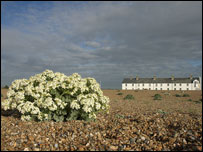 Sea kale Shingle is specialThe Suffolk Coast and Heaths Partnership is keen to raise awareness about the special wildlife to be found on Suffolk's shingle beaches. Sea birds such as the little tern and rare shingle plants such as the sea pea are under threat as a result of human activity. Little terns are migratory seabirds that nest on shingle beaches in Suffolk between April and July each year. Sometimes called sea swallows due to their buoyant, effortless flight, these birds have become increasingly rare as disturbance, mainly by walkers, dogs and predators has threatened their breeding sites.
Suffolk's shingle beaches also support some of the largest concentrations of shingle plants to be found anywhere in the world. However a recent survey by English Nature found that all Suffolk's shingle beach SSSIs (Sites of Special Scientific Interest) were in unsatisfactory condition, mainly due to trampling by beach visitors. The plants are specially adapted to the harsh conditions found on our beaches but are often low-growing, making them very vulnerable to being walked on. Malcolm Farrow, Communications Officer with the Suffolk Coast and Heaths Unit said: 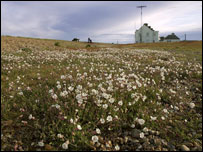 Sea campion "Please also keep a look out for little terns and other shingle nesting birds. Little terns "But other shingle-nesting birds such as ringed plover can be much harder to see, so please be careful, keep any dogs under close control and avoid any areas that have been fenced off to protect shingle wildlife." Plants that depend on shingle in Suffolk include sea kale, sea pea, yellow horned poppy, sea campion, sea holly and sea spurge. Birds that nest on shingle include little tern, ringed plover and oystercatcher. last updated: 27/06/2008 at 14:12 Have Your SaySEE ALSOYou are in: Suffolk > Nature > Nature features > Shingle is special    [an error occurred while processing this directive] |
| | About the BBC | Help | Terms of Use | Privacy & Cookies Policy |
