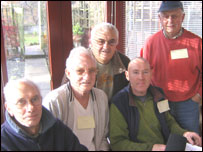
All through 2005, the BBCs Voices project employed so-called "audio-gatherers" to record the ways of speech of at least 1,000 interviewees from a mix of people from all corners of the UK.
The project organisers also hoped that some 10,000 people will have had their say on the BBC Voices on-line survey.
Much of this information will help university academics get a much better understanding of the ways of speech of people all across the country.
See more about Staffordshire's audio-gatherers at the bottom of this page.
Staffordshire?
So
. what are the local ways of speaking in Staffordshire, do you think? If you've ever lived in the county, you'll know that each town, village and district has words, and dialects that are unique to them - and some of them were used for the online survey here on the web.
Just log on to the Voices website. And there's more
Language is not just about words, or accent.
Do men and women use different ways, or special words, to express themselves?
Do people change accents depending on whom they are talking to - or where they are?
Do kids have special ways of talking, or special words? Do you remember the words you used when you were a child?
For example, do you know WHERE you might... profit from a five-finger discount, or WHEN you might take tranklements to work, or wear daps or sweat cobs?!! The more information supplied, the more the School of English at the University of Leeds (who get the info) will be able to update their "Survey of English Dialects".
The first version, created in 1962, was the first scientific attempt to map the accents we have in the UK and the special local peculiarities in our language.
It will also provide content for an online interactive dialect map of the British Isles.
Any interviews taken by our audio-gatherers will also be deposited with the National Sound Archive at the British Library and sound archives in Scotland, Wales and Northern Ireland.
|