:: See Also » | Features
Click here to return to our features index |
:: Facts » | Robins belong to the Thrush family of birds.
About mid winter, the female goes mate hunting and she does the choosing!
Although the Robin is considered to be a mainly shy bird, they have a friendly personality and interact well with humans which is why the bird is often referred to as the "Gardeners Friend". |
:: Have your say » | What do you think of this story? Send us your opinion...
Have your say |
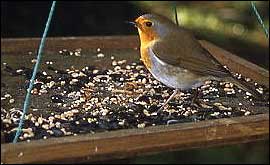
| | Variety, that's the key - Provide a wide variety of foods in different positions from different types of feeders. More feeders will encourage more birds to visit. Give the birds a chance to locate and become used to new feeders. It may take a week or two.
Foods to avoid - Avoid putting out heavily salted foods, highly flavoured foods, whole bacon rinds, uncooked rice or any foods that swell when moistened. All sorts of kitchen scraps make a welcome meal. The menu includes:- moist crumbled bread, pastry, stale cake and biscuits, cooked potatoes, suet, fruit, pet foods and mild cheese.
Birdcake recipe
Ingredients: about 250g of lard or fat (it needs to be an animal fat so that it will set hard) plus any combination of the following ingredients which you might have leftover at home: breadcrumbs, biscuits, nuts, millet, grated cheese, stale cake, sultanas, sunflower seeds, apple, bacon rind and peanuts (only unsalted as salted peanuts will make the birds ill). Method: Chop up all the ingredients, except for the fat, and mix them up well in a bowl.
Melt the fat in a pan over a low heat. When it's melted, remove the pan from the heat and leave the fat to cool a little. Be really careful as melted fat gets very hot.
While it's cooling, you can make the cake moulds. You'll need some empty yoghurt pots, twigs and some string. Make a hole in the bottom of each pot, poke the string through, then tie a twig to the bottom to make a perch. When the fat is just lukewarm, it's ready to add to the cake mix.
Give it a good stir so all the ingredients are mixed together well.
Then spoon the mixture into the yoghurt pots and leave it to set. If you use the fat before it's cooled properly, it might melt the yoghurt pot! When the mixture has set, gently pull the pot off over the string.
(Bet you couldn't guess - it's the yoghurt pots that give it away, huh? -that this recipe has been kindly lent to us byBlue Peter) |
Special supplies - Try offering chopped peanuts, sunflower hearts, flaked maize, pinhead oatmeal, hemp seed, and mealworms These are high protein, high energy foods with zero handling time. Birds require a fast fix!
Quality foods - Only buy quality nuts and seeds or quality foods. If in doubt look for Bird Care Standards Association hallmark of approval. Keep bird foods fresh and store safe, well away from vermin.
 |
When to Feed - Provide food all year round. Early morning and mid afternoon are the best times of day - and once you`ve started to feed, don`t suddenly stop. By doing so you may pull the rug from under the birds.
Site feeders carefully - Site feeders away from areas that could be dangerous to birds. If sparrowhawks are a problem place feeders close to cover to allow feeding birds a quick escape. Clip the shrubs back hard at the base so cats can`t hide.
Hygiene is vital - Clean feeders and tables regularly - scrub down with scalding water, fortnightly.
Do not overfeed - Only provide as much food at ground level or on the bird table as is consumed in a day. Food left out overnight will attract vermin.
Avoid build-up - Never allow food or detritus to accumulate. Supply and Demand. Reduce the feeding at quiet times.
Water - Birds need water for drinking and for bathing. Make sure you have clean fresh water available at all times.
David Tideswell
David is happy to take all your questions on garden birds and their habits - e-mail him here
|